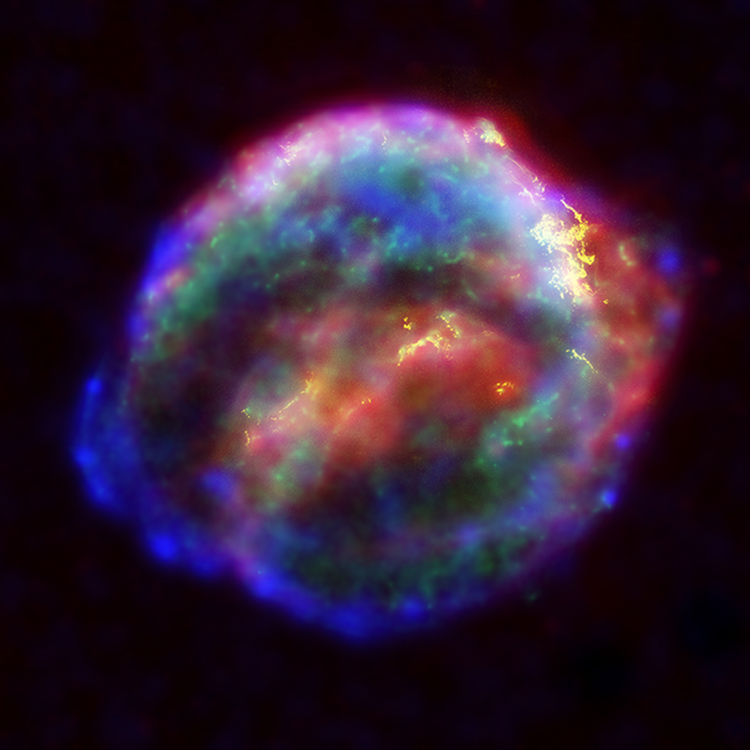
A rapid and poorly understood process in which neutrinos switch identities at almost unimaginable speeds may be the deciding factor in whether a collapsing star blows apart as a supernova or simply collapses in silence, according to new research published in Physical Review Letters.
The research was led by Ryuichiro Akaho at Waseda University in Tokyo. The process at the center of the study is called fast flavor conversion, a form of neutrino oscillation in which dense swarms of neutrinos trigger collective flavor switches on extraordinarily short timescales. According to a report by Phys.org, the conversion can happen over distances of just centimeters and timescales of nanoseconds, far below the resolution that current supernova simulations can reach.
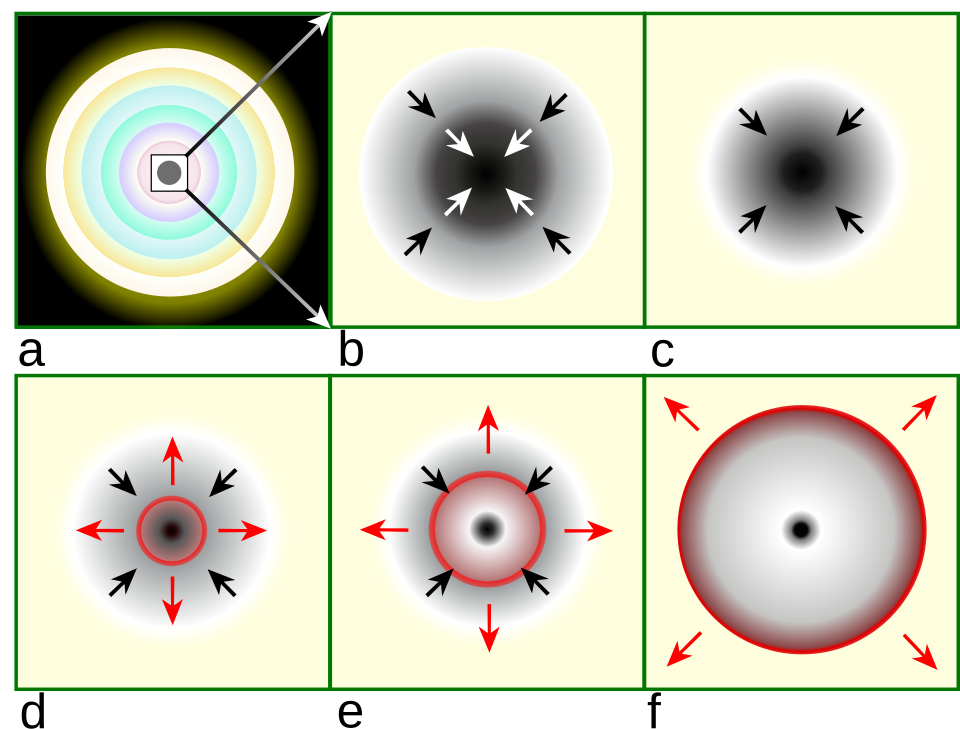
Neutrinos come in three types, or flavors, and only certain flavors interact strongly enough with surrounding matter to heat it and power an explosion. When a massive star exhausts its nuclear fuel, its core collapses under gravity and forms a hot, dense object called a proto-neutron star. The collapse generates a shockwave that, if energized sufficiently, blows the star apart. Neutrinos produced in the collapsing core are the main driver of that energization, making the timing and direction of any flavor switching critically important.
To study the process, Akaho's team built theoretical models of collapsing stars across a range of masses and incorporated a detailed treatment of fast flavor conversion into simulations that tracked how neutrinos travel and interact in all directions. That approach was far more computationally demanding than standard methods, but it allowed the researchers to capture the distribution of neutrinos in much greater detail and with fewer built-in assumptions.
The results showed that the outcome of a stellar collapse is closely tied to the mass accretion rate, the speed at which material falls inward onto the proto-neutron star. When the accretion rate is low, fast flavor conversion increases the energy deposited by neutrinos and helps drive an explosion. When the accretion rate is high, the conversion reduces the overall neutrino output enough to suppress an explosion instead.
The team also found that simpler, less detailed treatments of neutrino behavior can produce misleading results, a finding that carries practical weight for the field. Supernova simulations are among the most computationally intensive calculations in astrophysics, and many rely on simplified treatments of neutrino physics to keep them manageable. The new work suggests that those shortcuts may lead researchers to wrong conclusions about which stars explode and which do not.