

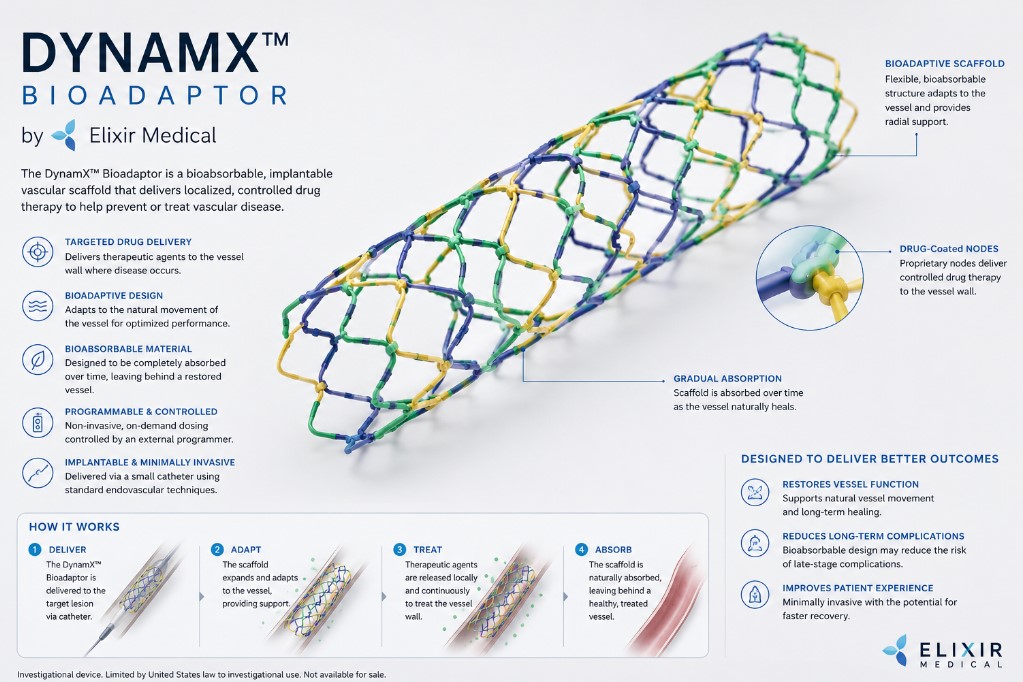
A new coronary device from Elixir Medical performed favorably against a standard drug-eluting stent in a clinical study, according to a report by MassDevice.
The device, called the DynamX bioadaptor, is designed to treat coronary artery disease, which occurs when the arteries that supply blood to the heart become narrowed or blocked. The study results back the bioadaptor as a competitive option compared to drug-eluting stents, which have been the standard of care in coronary intervention for years.
Drug-eluting stents are small mesh tubes inserted into narrowed arteries to hold them open. They are coated with medication that is slowly released to prevent the artery from re-narrowing, a process called restenosis. While drug-eluting stents represented a major advance over bare metal stents, the search for devices that can improve outcomes further has continued.
The DynamX bioadaptor takes a different approach. Rather than permanently holding the artery open as a conventional stent does, a bioadaptor is designed to interact with the vessel in a way that may allow more natural movement and function over time. The concept is based on the idea that restoring some degree of natural vessel behavior could reduce complications associated with permanent implants.
The Elixir Medical study results, as reported by MassDevice, support the safety and effectiveness of the DynamX device relative to the drug-eluting stent it was tested against. The findings add to the body of evidence the company is building for the technology as it pursues broader clinical use and potential regulatory approvals.
Coronary artery disease remains one of the leading causes of death globally. The continued development of devices and treatments aimed at improving outcomes for patients undergoing coronary intervention reflects the scale of the clinical need. Study results from devices like the DynamX bioadaptor contribute to the evolving evidence base that physicians and regulators use to evaluate new options.
The Elixir Medical findings are expected to inform further stages of clinical evaluation for the DynamX bioadaptor, and the company's development timeline will depend in part on the reception of these results within the cardiology community and among regulatory bodies.