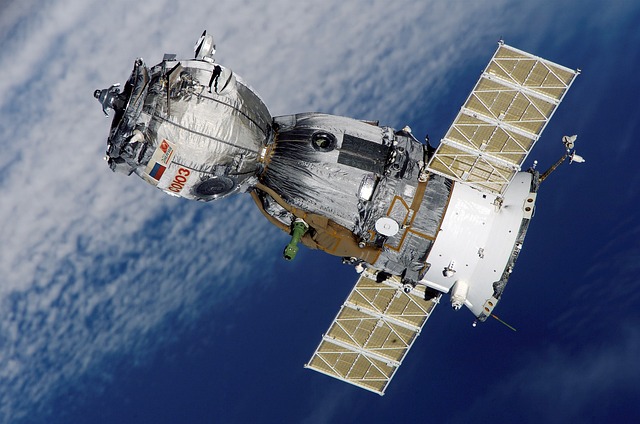
Vast Space, the California company developing the world's first private space station, announced Tuesday it plans to begin selling high-powered satellite buses, expanding beyond its original mission and drawing directly on technology tested during a successful demonstration mission last year.
The announcement follows a small test spacecraft the company built and launched in early November of last year. That vehicle completed dozens of test objectives before making a controlled de-orbit three months later. The mission tested power, propulsion, tracking, and other technologies intended for Vast's Haven-1 space station, and the company says the results were strong enough to justify moving into a new line of business.
"Every single successful space company is diversified in its products," said Max Haot, chief executive of Vast Space, in an interview. "So for us it really was a question of when, not if."
The company's first satellite offering is a 15 kW-class bus, roughly 3 meters long and 4 meters tall, with a mass of 700 kilograms and a payload capacity of at least 350 kilograms. The design lifetime is five years, and the satellites are intended to operate anywhere from low-Earth orbit out to lunar orbit. Vast is targeting customers in telecommunications, Earth observation, and data services.
The satellite bus functions as a backbone, providing power, propulsion, and navigation for whatever payload a customer needs to carry. Most of the underlying technology comes directly from Haven-1, though Haot said the company is already developing new components specifically for the satellite line, including electric propulsion and a deployable solar array, both being built in-house.
Haot also said Vast plans to offer an NVIDIA Space-1 Vera Rubin Module as part of the satellite package to support orbital data center inferencing needs.
The company has already secured its first customer, with a signed contract for four satellites and an option to purchase up to 200 additional ones. Vast is targeting a launch of at least 10 satellites in the fourth quarter of 2027.
Haven-1, meanwhile, remains on track for its first launch next year, which would make it the world's first private space station.