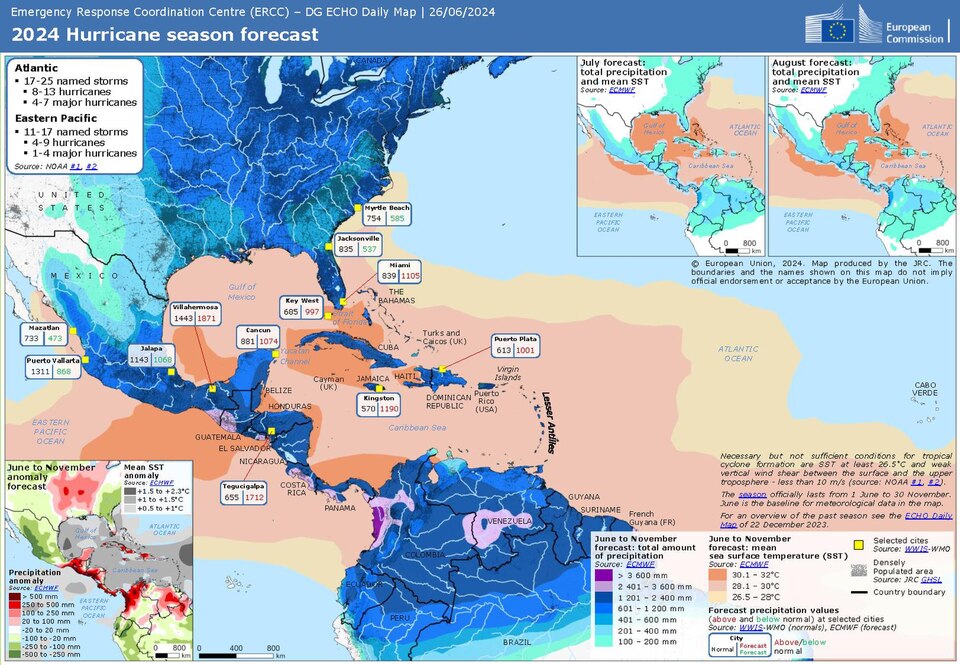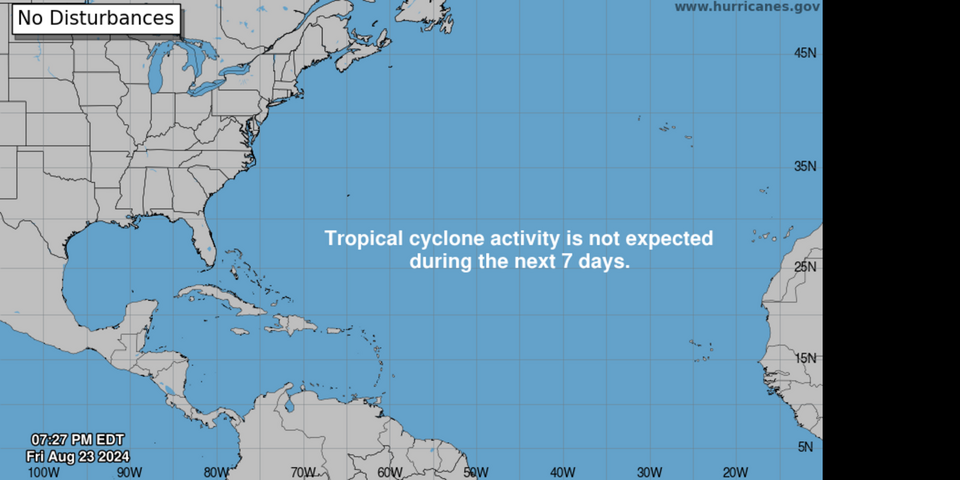
Forecasters tracking Atlantic hurricanes this season will have access to a new set of tools, including artificial intelligence, that the federal government says will improve the accuracy and speed of storm predictions, according to NOAA Research.
The National Oceanic and Atmospheric Administration has deployed new technology, advanced models, and AI systems specifically designed to strengthen hurricane forecasting. The effort represents one of the more significant updates to the agency's forecasting infrastructure in recent years.
NOAA's hurricane forecast system has long relied on a combination of satellite data, aircraft reconnaissance, and computer modeling. The new additions build on that foundation by layering in AI-driven analysis, which can process large volumes of atmospheric data faster than traditional methods allow. That speed matters when a storm is intensifying rapidly and forecasters have only hours to issue updated warnings.
Rapid intensification, when a hurricane's wind speed increases by 35 miles per hour or more within 24 hours, has historically been one of the hardest phenomena for forecasters to predict. Storms like Hurricane Ian in 2022 and Hurricane Michael in 2018 both intensified sharply before landfall, catching some coastal communities with limited time to evacuate. Better AI tools are aimed at closing that gap.
The advanced models being deployed are also designed to improve track forecasting, which tells emergency managers where a storm is most likely to make landfall. Even small improvements in track accuracy can shift evacuation zones and resource staging in ways that protect more people.
NOAA has not specified which AI platforms or vendors are involved in the new deployment, but the agency indicated the tools are already being integrated into operational forecasting ahead of the 2026 hurricane season, which officially begins June 1.
The update comes as hurricane seasons have trended more active in recent years, with warmer sea surface temperatures in the Atlantic providing more energy for storm development. Forecasters and emergency managers have pushed for better predictive tools, particularly for intensity forecasting, which has lagged behind track forecasting in accuracy.
NOAA also noted that the new systems include improved ensemble modeling, which runs multiple simulations with slightly different starting conditions to give forecasters a range of possible outcomes rather than a single projected path. That approach helps communicate uncertainty to the public and to emergency management officials who must make decisions days in advance of a storm's arrival.
The agency said the combination of AI, new observational technology, and upgraded models is intended to work as an integrated system rather than as separate improvements. Whether the tools perform as expected will become clearer as storm season progresses and forecasters work with them under real conditions.