

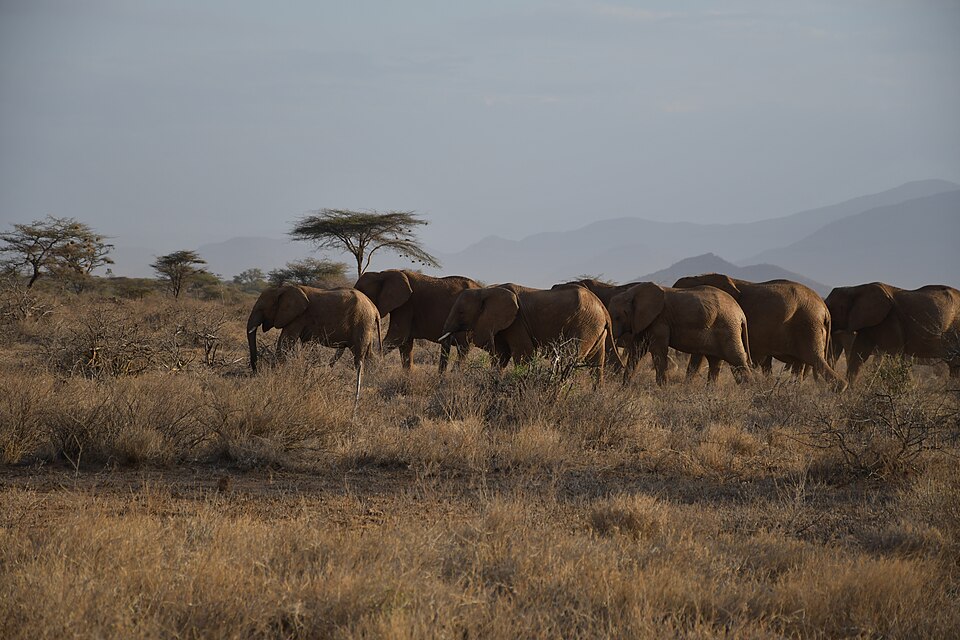
A 4-month-old elephant calf wandered alone into a tourist camp in northern Kenya, setting off an intensive search across Samburu National Reserve that ended with her reunion with her family.
According to a report by Phys.org, the calf had been found by campsite staff, who tied her to a tree and called a research team led by Colorado State University Professor George Wittemyer. Wittemyer has studied elephants in the Samburu region for nearly 30 years and works as chief scientist for Save the Elephants, a nonprofit conservation organization.
The researchers gave the calf water and a cooling mud bath before loading her onto a truck and searching the reserve for the family most likely to be missing a calf of her age. The calf was disoriented from the ride and did not immediately move toward the other elephants when she was delivered to the herd.
Then an elephant known to the researchers as Adelaide, the calf's aunt, noticed the baby and came to investigate. Adelaide called to the calf. The calf called back. That exchange set off a chain reaction across the herd.
The entire family rumbled, trumpeted, and converged on the calf, surrounding her in what Wittemyer described as the greeting ceremony elephants perform after extended separation. Researchers later found the body of the calf's mother, who is believed to have died of natural causes.
"Elephants are highly social, forming powerful bonds between each other that last a lifetime," Wittemyer said. "Similar to our societies, these bonds make up the social fabric of elephant society and underpin the rich behaviors elephants exhibit."
Wittemyer and his colleagues at Save the Elephants track births, deaths, and the social networks of elephants living in Samburu National Reserve. That long-term fieldwork made it possible to identify which family was missing a calf and to confirm the reunion was successful. The call-and-response between Adelaide and the calf was the confirmation the researchers needed.
The rescue was a detour from the team's planned work on landscape protection for African elephants. But Wittemyer said the detailed knowledge his team had built over decades was exactly what made it possible. Identifying an individual animal and her likely family within a large reserve requires years of tracking data, familiarity with individual animals, and an understanding of how elephant social groups are structured.
Wittemyer's research has produced discoveries about elephant communication, including work showing that elephants call each other by name. His fieldwork is conducted during two to four months spent in Africa each year as part of his work both as a CSU faculty member and with Save the Elephants.
!["Appendix: a list of the Lepidoptera collected by Mr. Arthur H. Neumann, by Emily Mary Sharpe" : p. [437]-447
Subjects: Elephant hunting; Hunting](https://freenewspress.com/media/2026/05/22/african-elephant-herd-samburu-1ebf57.jpg)