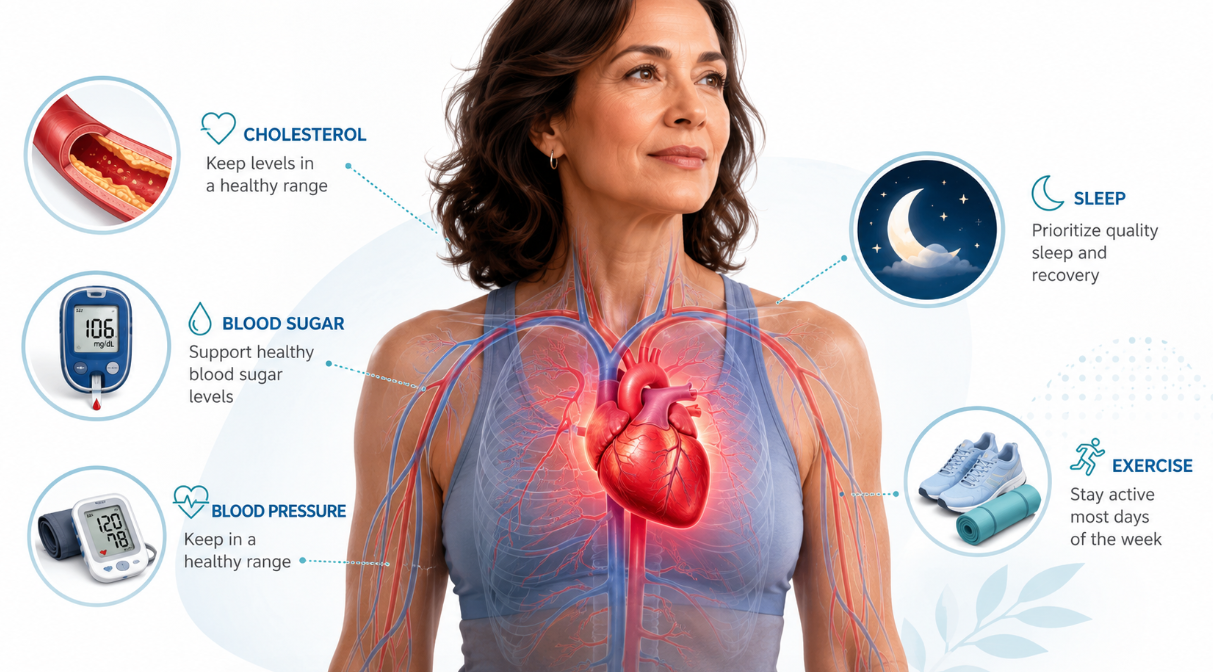
Women entering perimenopause face significantly higher cardiovascular risks than their younger counterparts. The study found that perimenopausal females are twice as likely to have a low cardiovascular health score compared to women who are still regularly menstruating.
Perimenopause is the transitional period leading up to menopause, during which the ovaries gradually produce fewer hormones, particularly estrogen. The analysis drew on data from 9,248 females between the ages of 18 and 80.
Researchers used the American Heart Association's Life's Essential 8, or LE8, scoring system to measure heart health. The LE8 system evaluates eight factors on a 100-point scale: diet, physical activity, tobacco use, sleep, blood pressure, blood sugar levels, cholesterol levels, and body weight. Average scores declined steadily across menopausal stages. Premenopausal women, with an average age of 34, scored 73.3. Perimenopausal women, averaging age 50.5, scored 69.1. Postmenopausal women, averaging age 60, scored 63.9, according to a nationwide analysis reported by Healthline.
After accounting for the effects of aging, the data showed perimenopausal women were 76% more likely to have a low cholesterol score, meaning higher cholesterol levels, compared to premenopausal women. They were also 83% more likely to have a low blood sugar score, meaning higher glucose levels.
Jossef Amirian, MD, a board-certified cardiologist with Manhattan Cardiology in New York, who was not involved in the study, explained the biological mechanics behind the numbers. "From a cardiovascular standpoint, perimenopause is a very important time in which there are changing hormone levels, specifically with a declining estrogen level, which can have not only an impact on how one may feel but also on how one's cardiovascular system is impacted and responds," he said. He added that "the end result is potentially a change in body fat distribution, cholesterol and blood glucose levels, blood pressure, and this can all have an impact on blood flow and circulation as well."
Jennifer Wong, MD, a board-certified cardiologist and medical director of noninvasive cardiology at MemorialCare Heart and Vascular Institute at Orange Coast Medical Center, offered a clinical description of what happens metabolically during this period. "During perimenopause, women commonly experience adverse metabolic changes, including worsening lipid profiles, increased insulin resistance, and greater accumulation of visceral adiposity," she said.
The study authors described perimenopause as a "window of opportunity" for women to reassess cardiovascular risk and make lifestyle changes before those risks compound further in postmenopause. The findings point to cholesterol and blood sugar as the two factors most likely driving lower scores during this transitional phase, and researchers suggest that targeted attention to those markers during perimenopause could meaningfully affect long-term heart health outcomes.