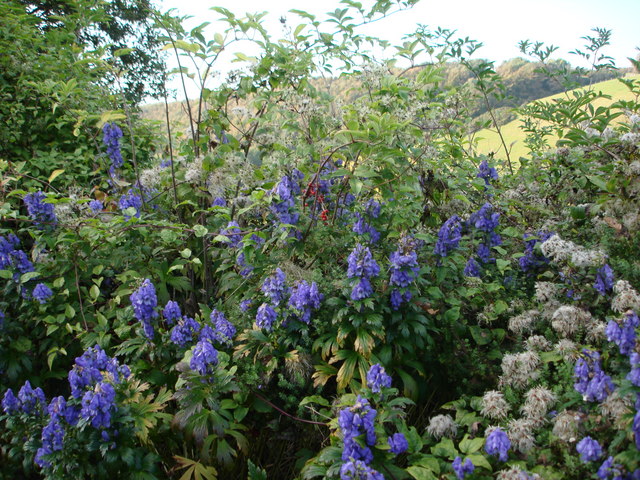
A pair of iron scissors and tweezers pulled from a centuries-old tomb in eastern China have yielded the world's oldest direct chemical evidence that surgeons used a topical anesthetic during operations. The residue on the tools points to aconitine, a potent alkaloid derived from the plant Aconitum, commonly known as wolfsbane or monkshood. The find pushes confirmed use of controlled chemical pain management back to at least the 14th century.
According to a study published May 26 in the journal Antiquity, the tools came from the tomb of Xia Quan, an early Ming dynasty physician buried in the city of Jiangyin, roughly 90 miles northwest of Shanghai. The tomb dates to between 1348 and 1411 CE.
Researchers at Northwest University in China used a non-destructive technique called stimulated Raman scattering microscopic imaging to analyze three tiny particles of rust-colored residue on the tools. The method works by firing a laser at a sample, causing photons to scatter in patterns that reveal the structural fingerprint of molecules present. The team first confirmed through X-ray fluorescence analysis that both the scissors and tweezers were made of iron, then turned to the Raman imaging to identify what had been left behind on their surfaces.
The analysis detected the cyano functional group, which is associated with hydrogen cyanide, along with organic components of oils and fats. Those results pointed researchers toward aconitine as the most probable compound. "Combined with records of anesthetic prescriptions in Ming dynasty medical texts, the study confirms that Aconitum was employed as a topical anesthetic, safely and precisely applied during surgical procedures," said Professor Congcang Zhao, co-author of the study and an archaeologist at Northwest University. "Ming physicians used iron surgical instruments and controlled the toxicity of aconitine through topical application, compound prescriptions and strict procedural controls, demonstrating a practical ability to balance drug potency with patient safety."
Aconitum plants are native to Asia, Europe, and North America. They are among the most toxic flowering plants known, but practitioners in traditional Asian medicine had long recognized both their dangers and their analgesic potential. By the time of the Ming dynasty, physicians had developed several methods to reduce the plant's lethality before applying it to patients. Those methods included boiling the plant material in vinegar, treating it with mung beans, and using the urine of young boys to chemically neutralize the poison and convert it into a usable anesthetic powder or liquid.
Recipes for producing such powders already existed in Ming dynasty medical texts, but until now there had been no physical evidence that those preparations were actually used during surgery. The tools from Xia Quan's tomb fill that gap. Researchers believe the anesthetic was applied directly to the patient's skin to numb the area before an incision, a technique that would have required careful dosing and strict procedural control to avoid killing the patient instead of helping them.
Zhao described the significance of the find in plain terms. "Six centuries ago, a Ming Dynasty surgeon performed an operation with a pair of iron scissors and tweezers, and today we have read the traces of anaesthetic medicine left on those instruments using a beam of laser light," he said.
The researchers noted that standard archaeological techniques for identifying pharmaceutical residues are difficult to apply to ancient Chinese medical materials, which are rarely preserved and often too sparse to meet minimum sample requirements. The laser-based imaging method used in this study was chosen specifically because it can identify material compositions accurately without destroying the sample, a critical factor when working with irreplaceable artifacts.
The study places sophisticated surgical knowledge in China at least as far back as the 14th century, connecting physical evidence directly to a known body of medical literature for the first time.