[ARTICLE]
The Federal Reserve's preferred measure of inflation climbed to its highest level in three years in April, driven largely by a surge in gasoline prices, according to data released Thursday by the Bureau of Economic Analysis.
The Personal Consumption Expenditures price index rose 3.8% over the past year, up from 3.5% in March. On a monthly basis, the index increased 0.4%. Excluding food and energy, the so-called core PCE rose 3.3% year over year, up a tenth of a point from March. That is the highest level for core PCE in two and a half years, according to a report by Yahoo Finance.
Economists surveyed by Dow Jones had forecast a 0.5% monthly gain and a 3.8% annual increase. Monthly core prices came in at 0.2%, below the 0.3% estimate. CNBC reported that the softer monthly readings could provide some hope that the burst in prices over the previous month had begun to ease, though traders still expect the Fed to stay on hold until at least late in 2026.
Goods prices jumped 0.7% in April, pushed by gasoline, which surged 5.5%. Services prices rose 0.3%, which included a 0.6% increase in the housing and utilities category and a 0.5% rise in food services and accommodations. Housing prices broadly increased 0.5%, the biggest monthly gain going back at least until January 2025.
The data came the same day the Bureau of Economic Analysis revised first-quarter GDP growth downward. Real gross domestic product increased at an annual rate of 1.6% in the first quarter of 2026, according to the second estimate from the BEA. That is a downward revision of 0.4 percentage point from the advance estimate of 2%. The revision primarily reflected lower readings for investment and consumer spending. In the fourth quarter of 2025, real GDP had increased just 0.5%.
Corporate profits also slowed sharply. Profits from current production increased $40.4 billion in the first quarter of 2026, compared with an increase of $246.9 billion in the fourth quarter of 2025, the BEA reported.
On the income side, personal income in April was essentially flat, decreasing less than $0.1 billion. Disposable personal income fell $19.9 billion, or 0.1%. Consumer spending, however, rose $111.1 billion, or 0.5%, for the month. The personal saving rate stood at 2.6% in April.
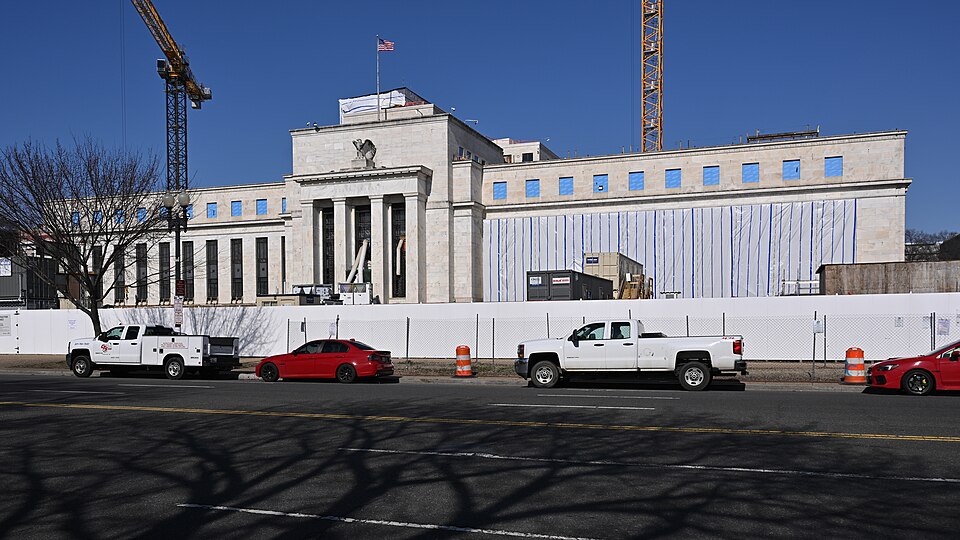
The gap between flat income and rising spending drew attention from Fed watchers, as did the broader inflation picture. Fed Vice Chair Philip Jefferson said Wednesday night he expects inflation to decline later this year as the effects of tariffs and the energy shock wane, but he views risks to the upside around the inflation outlook. Fed Governor Lisa Cook said in a speech Wednesday that she is "prepared to raise rates" if inflation doesn't fall in a "timely manner."
Cook's comments followed remarks from Fed Governor Chris Waller, who said last Friday that he is looking to hold rates steady in the near term because he has become concerned that higher oil prices could have a lasting impact on inflation, but he cannot rule out rate hikes if inflation does not come back down. Waller, who was previously one of the more dovish members of the Fed and supported rate cuts, now says inflation is his bigger concern. He has joined four other committee members, Boston Fed's Susan Collins, Dallas Fed's Lorie Logan, Minneapolis Fed's Neel Kashkari, and Cleveland Fed's Beth Hammack, who would like to change language in the Fed's policy statement that currently reflects the next move could be either a rate cut or a hike.
The 2-year Treasury yield, a leading indicator of Fed policy direction, remained around 4% this week, sitting 25 basis points above the upper end of the Fed's target range of 3.5% to 3.75%. Bond markets are now pricing in the prospect of one rate hike this year. The next set of GDP figures, including the third estimate along with state GDP and corporate profits data, is scheduled for release on June 25.
In other economic data Thursday, initial jobless claims for the week ended May 23 totaled a seasonally adjusted 215,000, up 5,000 from the prior period and slightly above the forecast of 213,000. Orders for durable goods soared 7.9% in April, well ahead of the 3.5% estimate, though excluding transportation, new orders were up just 1.1%.