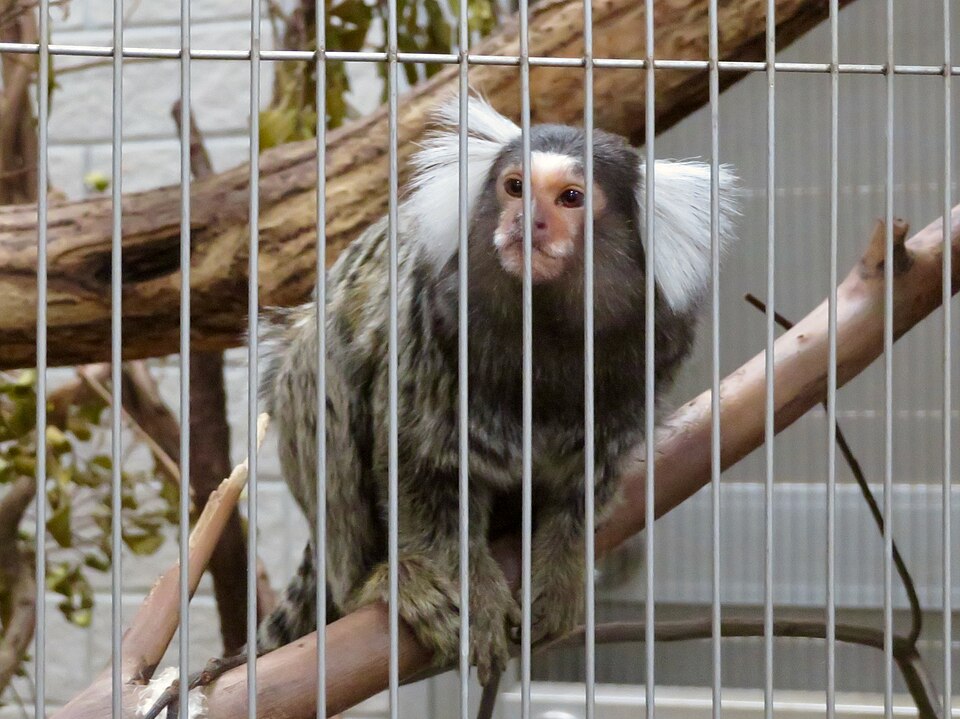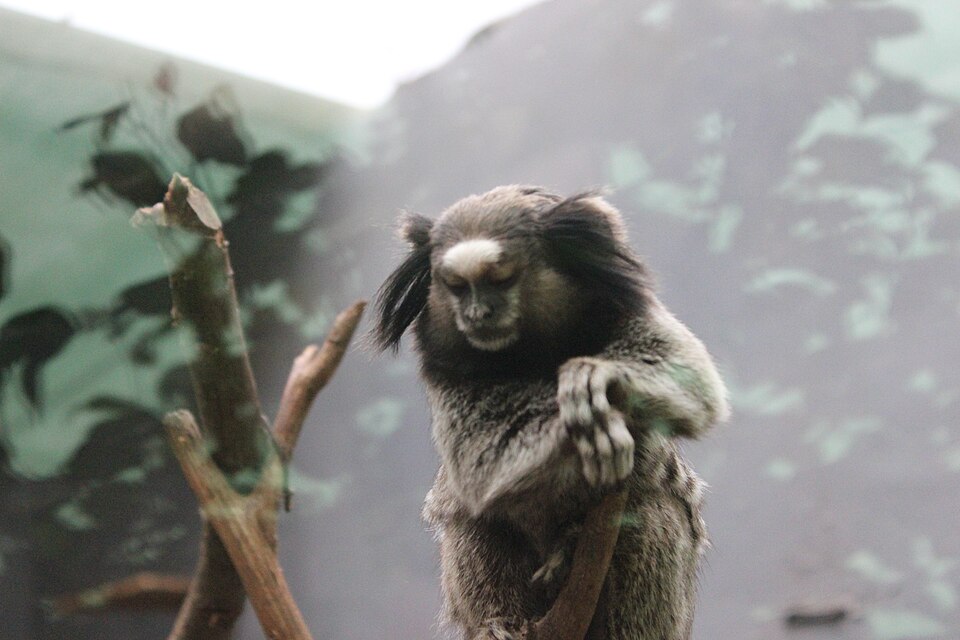
Two marmoset monkeys sit across from each other. There are levers in front of each of them. If they pull the levers within one second of each other, both get a treat. If not, nothing happens.
They pulled it off. And the reason why is now clearer than it has ever been.
A new Yale study published in the journal Neuron found that marmoset monkeys coordinate cooperative behavior by watching each other closely, gathering social information in real time, and using a specific region of the brain to turn that information into action, according to a report by Phys.org.
The researchers called the key behavior the "social gaze." The monkeys focused especially on each other's eye movements and body positions to judge when the other animal was ready to act. They did not rely on a signal or a cue from researchers. They read each other.
"It's all about gathering evidence from your partner to figure out, 'Okay, is this is a great time to work together?'" said Steve Chang, an associate professor of psychology in Yale's Faculty of Arts and Sciences and associate professor of neuroscience tenure at Yale School of Medicine.
The team recorded activity in a brain region called the dorsomedial prefrontal cortex, known as the dmPFC, while the animals performed the task. Neurons in that region showed a clear pattern. Their activity steadily increased as the monkeys moved closer to pulling the lever together, a process the researchers described as evidence accumulation. The brain was essentially building up a case for when to act based on what the eyes were taking in.
The study was led by Weikang Shi, a postdoctoral fellow working across the labs of Chang, Monika Jadi, and Anirvan Nandy. Jadi is an associate professor of psychiatry and neuroscience at Yale. Nandy is an associate professor of neuroscience and psychology.
The researchers said marmosets were a good model for this kind of work because they display complex social behaviors in relatively natural conditions. Nandy noted that the three labs brought different strengths together, with Chang focused on primate social behavior, Nandy on dense recordings from primate brains, and Jadi on computational modeling.
The findings may reach beyond animal behavior. The dmPFC is also involved in certain psychiatric conditions in humans. Understanding how this region processes social information during live interaction could eventually inform research into disorders where social coordination breaks down.