

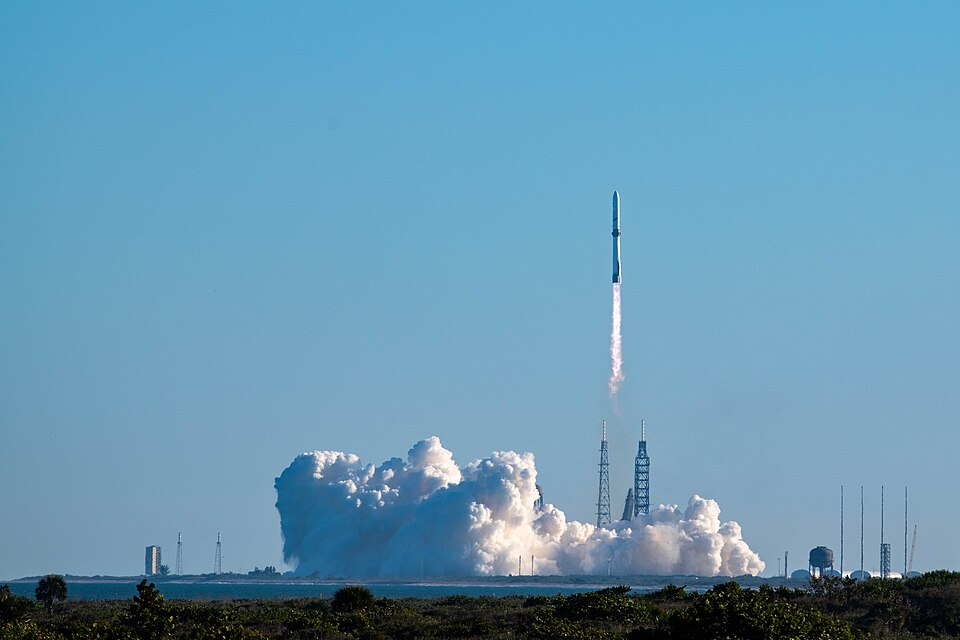
Thursday night, Blue Origin's New Glenn rocket detonated during a static-fire test at its launch site in Florida, sending a fireball into the night sky and scattering debris across the coastal scrubland and into the sea. The explosion was visible for miles.
According to a report by Ars Technica, the blast caused major damage to LC-36A, Blue Origin's launch pad at Cape Canaveral. The company had spent years and at least hundreds of millions of dollars building out that facility. With sunrise Friday, teams from Blue Origin, the US Space Force, and NASA began assessing the damage on the ground and collecting pieces of the destroyed rocket.
The loss of the launch pad is one of the most immediate problems Blue Origin now faces. The company does not have another operational launch site for New Glenn. It has begun early work on a nearby pad, LC-36B, and has plans for a site at Vandenberg Space Force Base in California, but both projects are only in early stages.
The scale of what was lost at LC-36A is hard to overstate. The pad's massive lightning towers alone represent an enormous construction effort. Rebuilding the site, or completing a new one, will take significant time and money, pushing any future New Glenn launches further into the future.
The risks to ground infrastructure during early rocket testing have been widely discussed in the industry. Before the first Falcon Heavy launch in 2018, SpaceX founder Elon Musk set a low bar for success. "I hope that it makes it far enough away from the pad that it does not cause pad damage," he said at the time. "I would consider even that a win to be honest." Musk made similar comments before Starship's first launch, saying he would consider anything that did not destroy the launch mount a win.
The consequences of Thursday's explosion reach beyond Blue Origin. NASA has been counting on New Glenn as part of its launch planning, and the failure ripples through broad segments of the US space industry. The Ars Technica report described the situation as catastrophic, not just for Blue Origin but for NASA and its partners who had built schedules and contracts around the vehicle's eventual operation.
New Glenn had only completed its first successful flight earlier this year, making it one of the newest and least proven heavy-lift rockets in the US fleet. The vehicle was positioned as a direct competitor to SpaceX's Falcon 9 and United Launch Alliance's Vulcan Centaur. That competition is now on hold indefinitely while Blue Origin works through what went wrong during the static-fire test and what it will take to rebuild the infrastructure needed to launch again.
As of Friday morning, no timeline had been given for when Blue Origin expects to return to flight or when either LC-36B or the Vandenberg site might be ready to support a launch attempt.