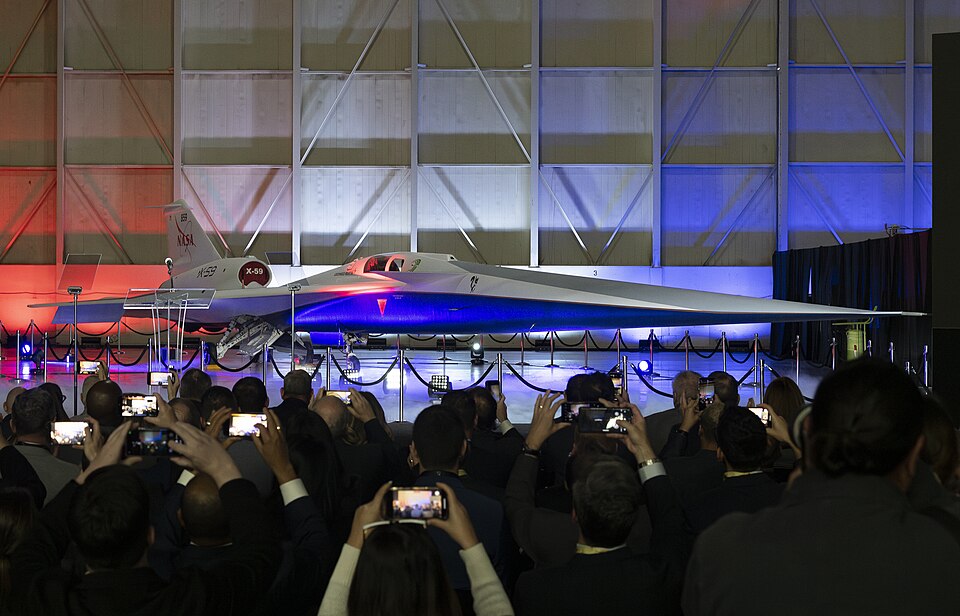
NASA's experimental X-59 aircraft is about to fly faster than the speed of sound for the first time, a major step in the agency's effort to make supersonic passenger travel over land possible again.
According to NASA, the X-59 team reviewed their progress in late May and is now targeting a series of test flights in early June. The aircraft is expected to break the sound barrier at approximately 43,000 feet altitude. After that milestone, it will attempt a mission conditions flight, reaching Mach 1.4, or 925 mph, at approximately 55,000 feet.
That combination of speed and altitude matters because they represent NASA's performance targets for the X-59's ultimate purpose: flying over U.S. communities to demonstrate quiet supersonic flight and collecting public feedback on the aircraft's sonic signature, described by NASA as a quiet sonic thump rather than a traditional boom.
"What comes next is the first time this one-of-a-kind aircraft will fly supersonic," said Cathy Bahm, project manager for NASA's Low Boom Flight Demonstrator. "We are starting toward the mission conditions test point that X-59 was designed for."
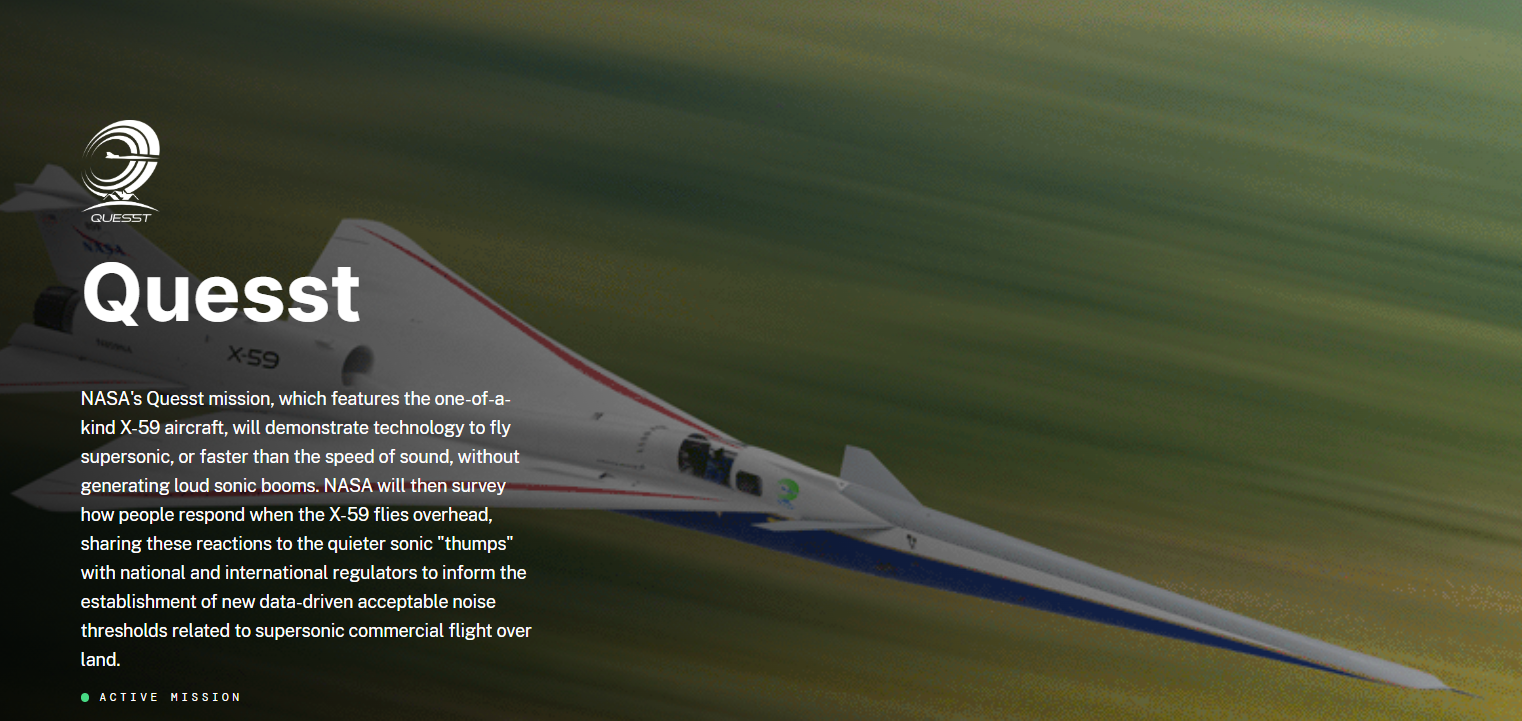
The X-59 is part of NASA's Quesst mission, which is investigating whether commercial supersonic flight over land could return if aircraft are quiet enough not to disturb people on the ground. Supersonic passenger flights over land have been banned in the United States since the 1970s because of the disruptive noise traditional supersonic aircraft produce.
The aircraft made its first flight in October 2025 and went through a scheduled maintenance period before returning to flight in March 2026. Since then it has completed 14 additional flights. Those flights reached altitudes up to 43,000 feet and near-supersonic speeds of Mach 0.95, or approximately 627 mph. The team also completed the aircraft's first gear swing, which showed off the X-59's sleek aerodynamic profile for the first time, and worked through both dual-flight days and a range of lower-altitude, slower-speed conditions to gather data on how the aircraft behaves across different flight regimes.
The upcoming supersonic flights will include a traditional supersonic chase plane flying alongside the X-59. Because of that, any quiet thump the X-59 produces will be covered by louder sonic booms from the chase aircraft. The chase plane will also carry a specialized shock-sensing probe to take initial measurements of the X-59's shock waves.
Those measurements will give engineers early data on how the aircraft's shape influences the shockwaves it generates, which is central to whether the X-59 can eventually prove its case to regulators and the public. The broader goal is for that data, combined with community feedback gathered in later flight phases, to inform the Federal Aviation Administration and international regulators about whether overland supersonic flight rules should be updated.
The early June flights represent the first time the X-59 will operate at the speeds and altitudes it was actually designed for, and NASA considers them among the most significant milestones in the program to date.