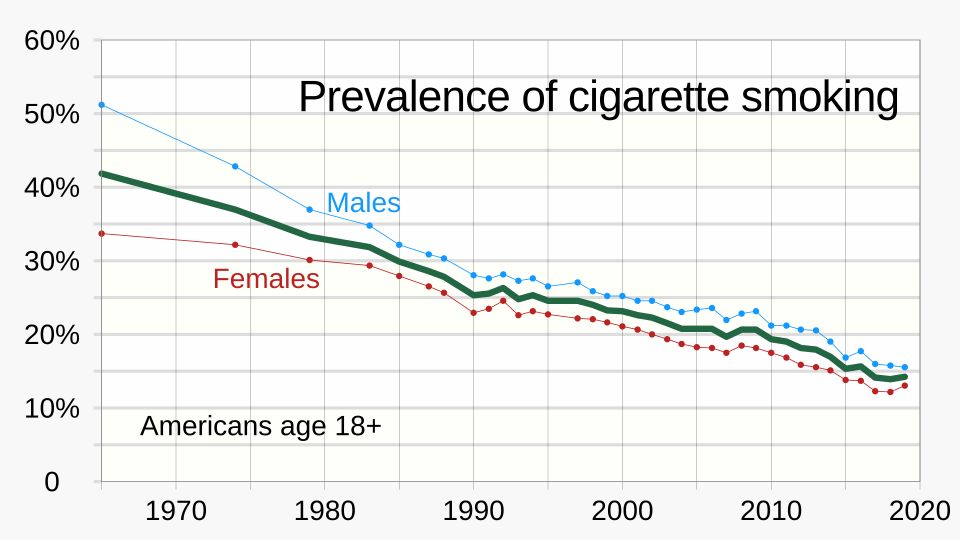
The share of American adults who smoke cigarettes has reached another all-time low, according to a report by ABC News. The decline continues a decades-long trend that public health officials have tracked since smoking rates peaked in the middle of the twentieth century.
At their height, cigarette smoking rates among American adults were above 40 percent. For much of the mid-twentieth century, smoking was common in workplaces, restaurants, and homes across the country. The long decline since then has been driven by a combination of public awareness campaigns, tobacco taxes, restrictions on advertising, and laws banning smoking in public spaces.
The new data shows that fewer adults are smoking today than at any point since the government began tracking the statistic. Health researchers consider the smoking rate one of the most closely watched indicators of preventable disease in the United States, since cigarette smoking remains the leading cause of preventable death in the country.
Despite the overall drop, smoking rates are not falling equally across all groups. Rates tend to remain higher among adults with lower incomes, adults without college degrees, and adults in rural areas. Mental health is also a factor, with higher rates of smoking among people diagnosed with depression or other mental health conditions. These gaps have remained persistent even as the national average has fallen.
The rise of alternative nicotine products, including e-cigarettes and vaping devices, has added complexity to the picture. Some adults have switched from cigarettes to these products, which may partially explain some of the drop in traditional cigarette use. Health officials have noted that while e-cigarettes may carry lower risks than combustible tobacco, they are not without their own health concerns, particularly for younger users.
Public health advocates have pointed to the continued decline as evidence that tobacco control policies work over time. They have also called for continued investment in cessation programs, particularly those aimed at the populations where smoking rates remain stubbornly high.