

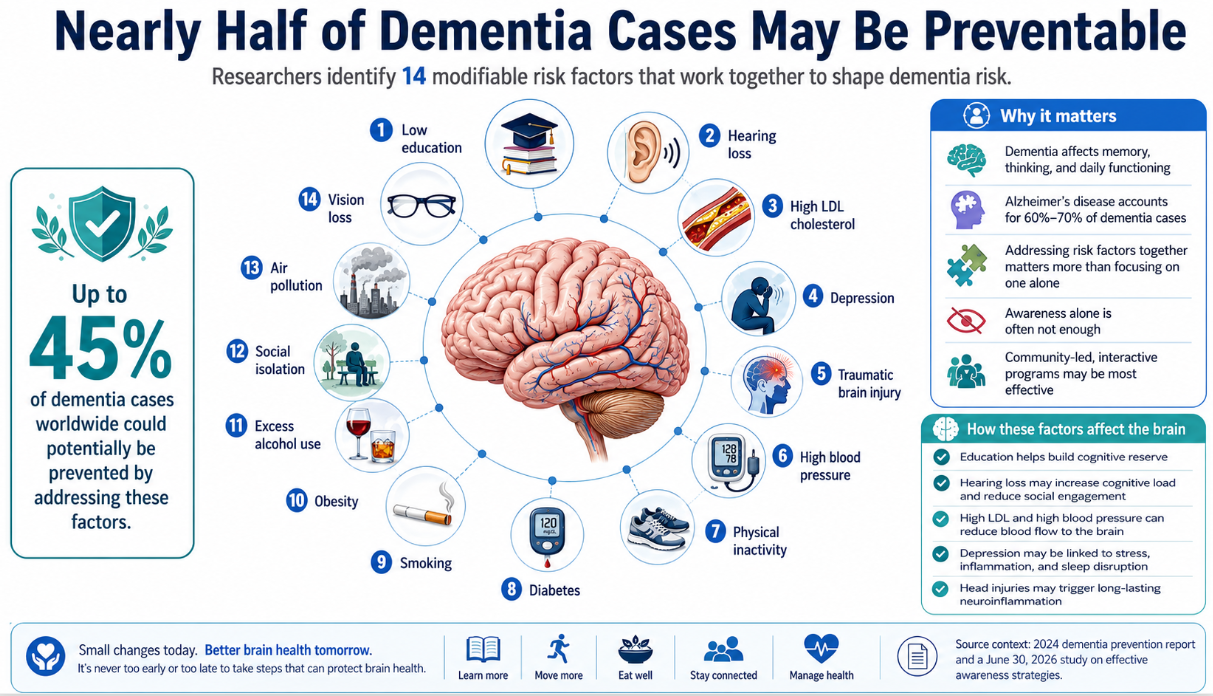
Nearly half of all dementia cases worldwide could potentially be prevented. The key is addressing 14 modifiable risk factors, according to a report by Healthline. Those factors range from early-life education levels to high blood pressure, and researchers say they work together rather than independently to shape a person's risk.
Dementia is an umbrella term for conditions that impair memory, thinking, and daily functioning. Alzheimer's disease is the most common form, accounting for 60% to 70% of cases. Millions of people around the world currently live with some form of cognitive impairment related to dementia.
A 2024 report identified the 14 modifiable risk factors. A newer study, published on June 30, 2026, found that awareness campaigns alone are not enough to drive behavior change. The study found that interactive approaches led by trusted community members are the most effective way to reach people.
To explain what the risk factors actually mean for the brain, Healthline spoke with Laura Bojarskaite, PhD, a neuroscientist and sleep researcher at the University of Oslo. Bojarskaite was not involved in either the report or the newer study. She told Healthline that the research highlights "an important but often misunderstood message."
Low education in early life is one of the 14 factors. Bojarskaite explained that education builds what researchers call cognitive reserve. "Education likely builds cognitive reserve, giving the brain greater resilience against age-related pathology," she said. "Lifelong learning and cognitively stimulating activities may help maintain this reserve."
Midlife hearing loss is another factor. Bojarskaite said that untreated hearing loss can increase cognitive load, reduce social engagement, and accelerate brain atrophy. "Early hearing assessment and appropriate hearing aids are important interventions," she said.
High LDL cholesterol also made the list. "Elevated LDL contributes to vascular disease and may impair blood flow to the brain, increasing the risk of both vascular dementia and Alzheimer's disease," she said. Diet, exercise, and medication are cited as relevant interventions.
Depression is on the list as well. Bojarskaite pointed to links between chronic stress, inflammation, sleep disruption, and changes in the brain's hippocampus. She said early recognition and treatment are essential. Traumatic brain injury is another factor. "Head injuries can trigger long-lasting neuroinflammation and increase the accumulation of pathological proteins linked to neurodegeneration," she explained. She listed sports safety and fall prevention as examples of protective measures.
High blood pressure rounds out several of the vascular-related factors. "High blood pressure damages blood vessels throughout the body, including the brain, impairing blood flow and increasing the risk of vascular injury and dementia," Bojarskaite said. The full list of 14 factors includes both behavioral and environmental conditions, and experts emphasize that addressing them together matters more than targeting any single one.