

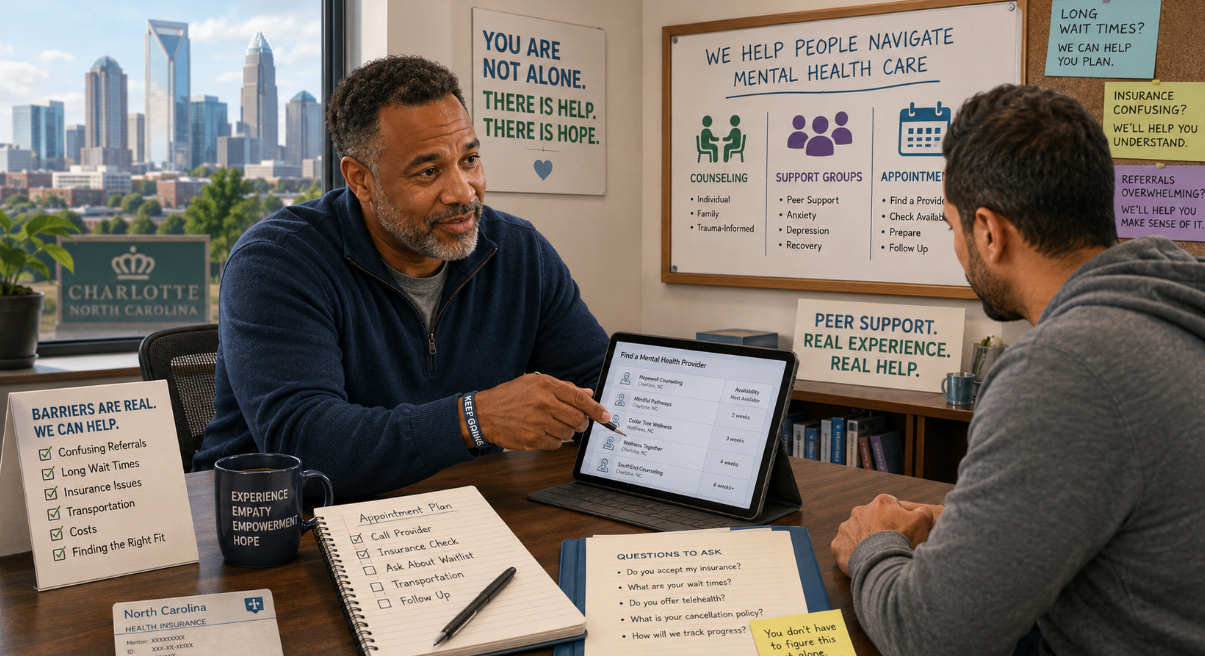
A man in Charlotte, North Carolina has turned his personal experience with the mental healthcare system into a full-time effort to help others find their way through it. According to Spectrum News, the man now works to connect people with mental health resources and guide them through the often complicated process of getting care.
The mental healthcare system in the United States is frequently described as fragmented and difficult to navigate. Insurance requirements, provider shortages, long wait times, and confusing referral processes create obstacles that stop many people from getting help, even when they are actively seeking it. For people in crisis, those obstacles can be especially dangerous.
The Charlotte man's work centers on removing those barriers. He helps individuals identify what kind of care they need, locate providers who are accepting patients, understand their insurance coverage, and follow through on getting appointments. In many cases, he provides the sustained support that keeps people moving through a process that might otherwise cause them to give up.
His own history with the mental health system informed how he approaches the work. Having experienced the frustration and confusion firsthand, he understands where people get stuck and what kinds of help make the most difference. That background gives him credibility with the people he assists.
Mental health navigation is a role that health systems and community organizations have begun to formalize in recent years, though the work often happens informally, carried out by community members, peer supporters, and advocates who have no official institutional standing. In many communities, those informal navigators fill gaps that the formal system leaves open.
The demand for this kind of help has grown as awareness of mental health needs has expanded. More people are now willing to seek care than in previous generations, but the system's capacity has not kept pace. Navigating that gap has become its own specialized form of support work.
The Charlotte man's efforts have helped a range of individuals, including people dealing with anxiety, depression, trauma, and other conditions. His work represents one model for how communities might address the access problem by training and supporting people who can serve as guides rather than waiting for the formal system to expand on its own.