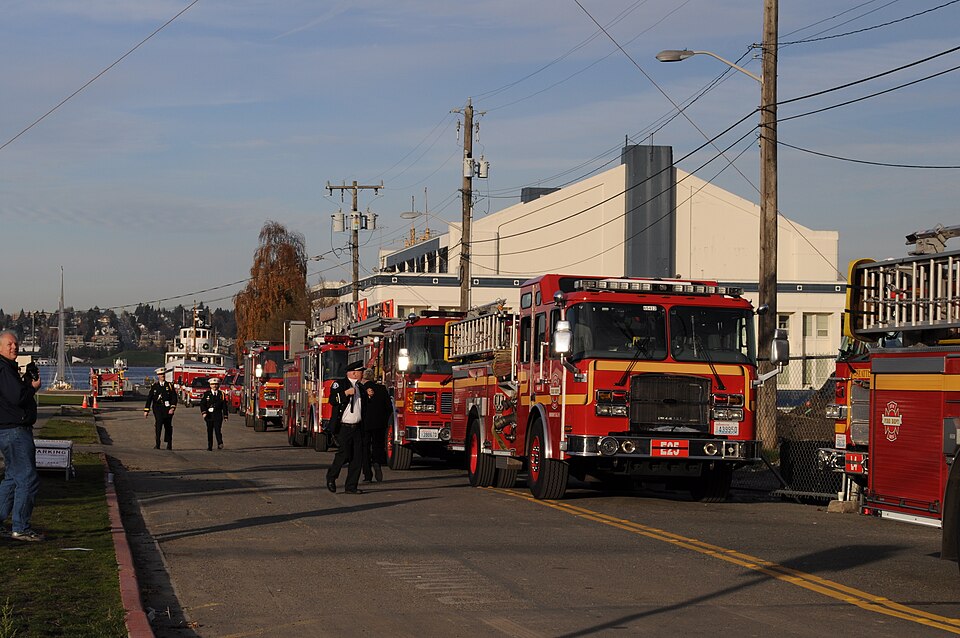
A retired firefighter who was diagnosed with post-traumatic stress disorder has started an unusual business with an unusual purpose. According to reporting by WPSD Local 6, the man launched a fire and ice cream truck as a way to connect with fellow first responders who may be dealing with their own mental health struggles.
The truck is designed to serve as more than just a novelty vehicle. For the retired firefighter, it represents a way to open conversations about mental health in a community where those conversations have traditionally been difficult to start. First responders, including firefighters, police officers, and paramedics, have long been identified as a population with elevated rates of PTSD, depression, and suicide.
The idea behind the truck is to reach people in a low-pressure, familiar setting. By combining the imagery of a fire truck with the approachable nature of an ice cream truck, the retired firefighter created something that draws people in without immediately signaling that mental health is on the agenda. Once a conversation starts, the door opens.
The man said his own experience with PTSD pushed him to act. After retiring from firefighting, he worked through his diagnosis and decided to use what he had learned to help others in the same profession. The truck became the vehicle, both literally and figuratively, for that mission.
Mental health challenges among first responders have received increasing attention in recent years. Research has shown that repeated exposure to traumatic events, combined with a workplace culture that often discourages showing vulnerability, creates conditions where serious psychological harm can go unaddressed for years. Some first responders do not seek help until a crisis forces the issue.
The ice cream truck model allows the retired firefighter to show up at fire stations, community events, and gatherings where active and retired first responders are likely to be present. The informal setting lowers the barrier to engagement and makes it easier for people to approach the subject of mental health without feeling singled out or stigmatized.
The project is one of a number of grassroots efforts that have emerged in recent years aimed specifically at the mental health needs of first responders. While formal programs exist through many fire departments and law enforcement agencies, advocates have argued that peer-to-peer outreach, particularly from someone who has lived through the experience, can reach people that institutional programs miss.