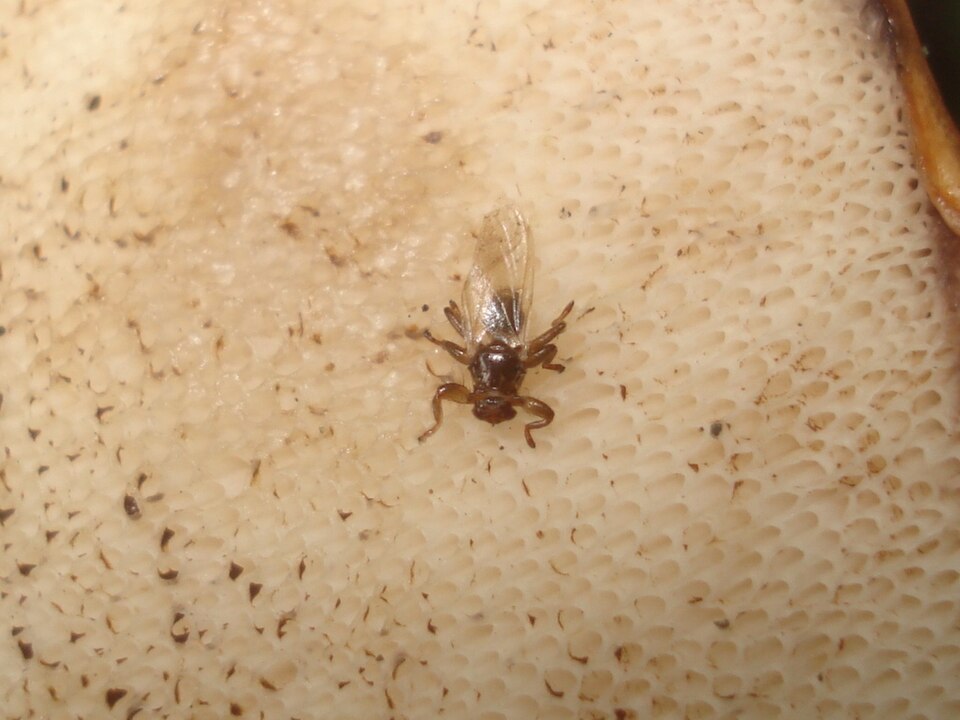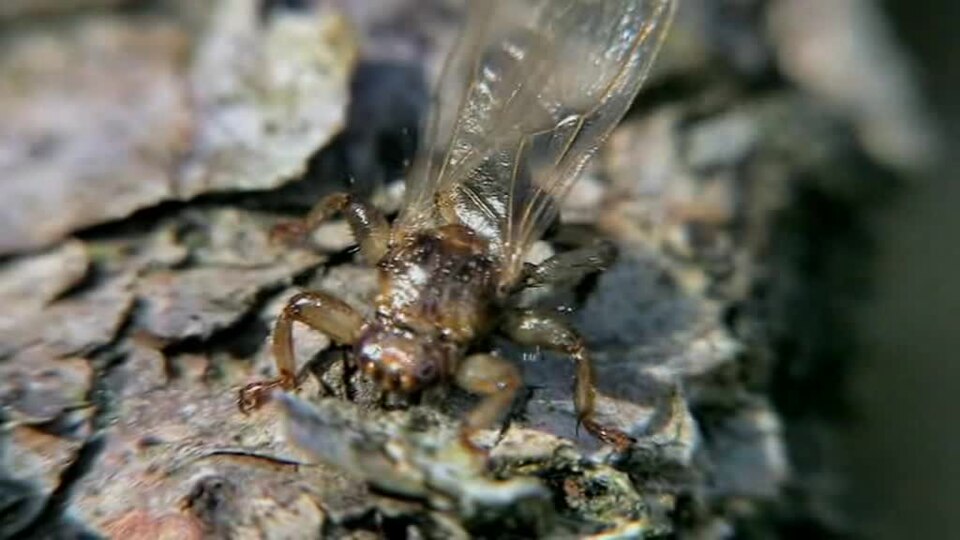
A biting fly that spends the first part of its life hunting for a host and the rest of it crawling through fur appears to trade away much of its vision once it no longer needs to fly.
Deer keds are found across Europe, Asia, Africa, and the Americas. They use their eyesight and wings to track down hosts, usually deer, but sometimes humans or other mammals. Once they land, they shed their wings permanently and spend the rest of their lives feeding on blood from deep inside an animal's coat.
Researchers at Aberystwyth University and the University of Florence wanted to know whether the insect's sensory system changes along with its lifestyle. Their study was published in the Journal of Experimental Biology.
The team collected deer keds at two stages: winged adults captured while searching for a host, and wingless adults taken from deer after they had already settled in as permanent parasites. The scientists then examined the activity of opsin genes, which control visual sensitivity, to compare the flies before and after their transformation.
According to Phys.org, the results showed a clear shift. Dr. Roger Santer, who led the research from the Department of Life Sciences at Aberystwyth University, said, "We found that a flying deer ked's visual system is much like that of a tsetse fly, which famously hunts out mammal hosts in Africa. However, after a deer ked loses its wings and becomes an ectoparasite, activity of its opsin genes reduces to around half the previous level."
The flies do not appear to go completely blind. Santer said, "This suggests that the flies do not lose vision entirely, but that their visual sensitivity is reduced. We think the fly might be sacrificing sight to conserve energy for functions such as digestion and reproduction."
The broader finding points to a principle that runs through evolutionary biology: sensory systems are not fixed. They shift in response to what an animal actually needs. Santer noted earlier in the study that "evolution favors sensory systems that are efficiently matched to an animal's way of life" and that deer keds are unusual because they switch between two very different ways of living within a single lifetime.
The researchers say a better understanding of how deer keds and other biting flies use their senses could improve monitoring and control strategies for these insects in the future.