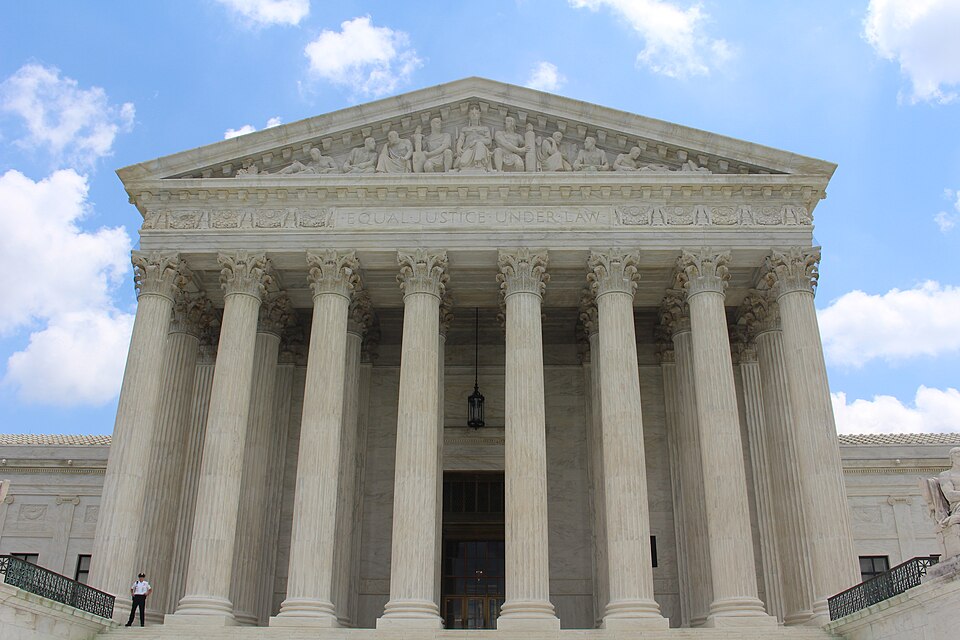
The Supreme Court cleared the way Tuesday for Alabama to use a congressional map that a lower court had found intentionally discriminated against Black voters. The 6-3 decision freezes that lower court ruling and allows the state to swap in a 2023 map drawn by Republican legislators for the upcoming midterm elections, according to CBS News.
Under the 2023 map, which includes only one majority-Black congressional district out of seven, Republicans are likely to hold a 6-1 advantage in Alabama's House delegation. The court-selected map that had been in use for the 2024 elections included two districts where Black voters had the opportunity to elect their preferred candidates, resulting in a 5-2 Republican-to-Democrat split.
The ruling directly affects Democratic Rep. Shomari Figures, whose district is reconfigured under the 2023 plan. A special primary for four House seats changed by that map is scheduled for Aug. 11. Primaries for three other districts were held May 19.
In its unsigned opinion, the Supreme Court wrote that the lower court "interposed itself into Alabama's ongoing efforts to conduct its imminent 2026 congressional elections under maps that its elected representatives selected. Its view that conducting the elections under court-imposed maps would be more convenient for the State was not a valid justification for that intervention." The high court also said Alabama was likely to prevail on its argument that the 2023 map is lawful.
Justice Sonia Sotomayor wrote a dissent joined by the court's two other liberal justices. She argued that putting aside the current map and reassigning many voters to new districts could lead to a "chaotic election, held under a never-before-used congressional map that intentionally discriminates against Black Alabamians." She said the conservative majority "disregards both democratic values and the rule of law."
Alabama GOP officials had asked the Supreme Court for emergency relief after the district court ruled the 2023 map unlawful. State mapmakers, they argued, had aimed to keep the Gulf Coast region together in one congressional district and help Republicans, not to discriminate based on race. The Trump administration backed Alabama's position, arguing that federal courts should not interfere with elections or take over states' role in drawing district lines.