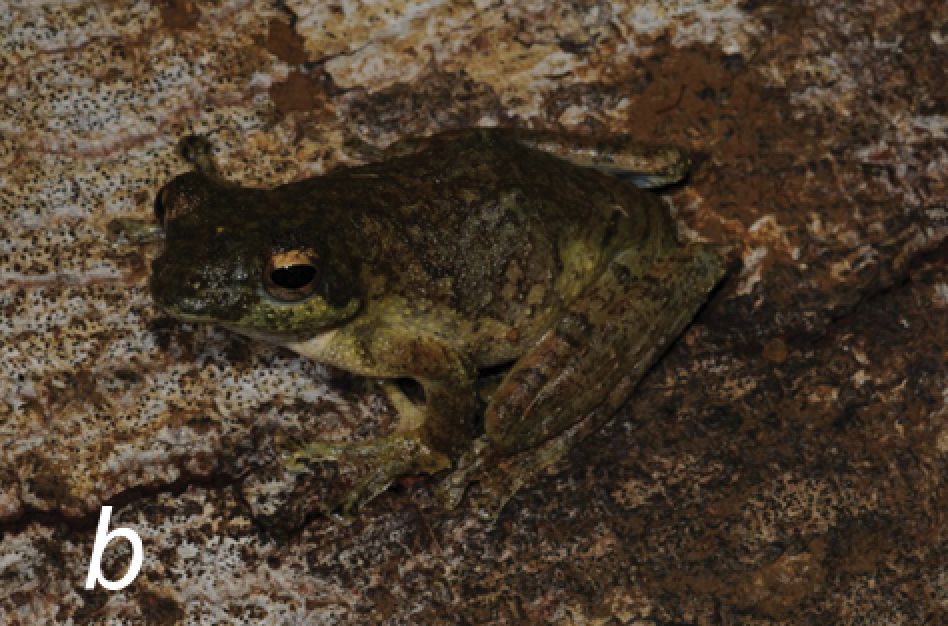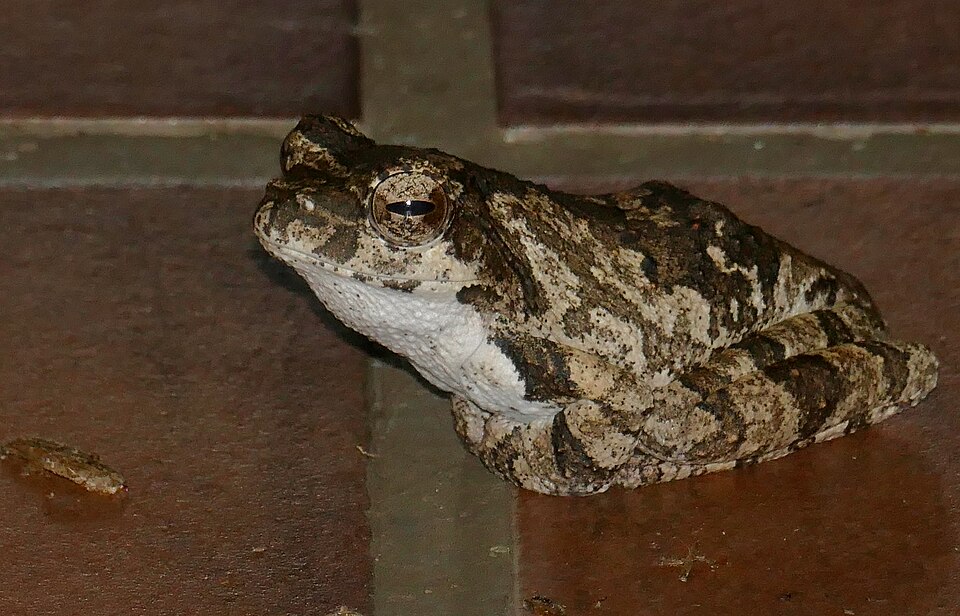
Female African foam-nest tree frogs that mate with multiple males produce stronger, larger nests that give their offspring a much better chance of surviving. That is the central finding of a new study led by researchers at the University of Wollongong, published in the journal Evolution.
The study tracked the frogs' behavior over a six-month breeding period, combining direct observation with paternity analyses. The results showed that nests built with contributions from more than one male were larger and far less likely to dry out. Nests built by a single male were far more likely to fall apart entirely.
"We discovered that polyandrous matings are almost essential for offspring survival, with helping males gaining a share of paternity as a reward for their assistance," said lead author Professor Phillip Byrne, a frog researcher in UOW's School of Science.
According to a report by Phys.org, the research presents a new hypothesis for how polyandry evolved across the animal kingdom. The idea is that in species where nest building is critical to offspring survival, females benefit from securing multiple male helpers, and those males benefit by gaining partial paternity. The arrangement is cooperative rather than competitive.
That finding cuts against the common assumption that male animals fight for exclusive mating rights. In this species, the opposite pattern held.
"Unlike most other animals where males fight to gain the attention of females, the amorous frogs displayed almost no aggression towards each other," Professor Byrne said. "Reproduction is more of a coordinated activity than a brutal competition. This pattern may have evolved because any antagonistic behaviors that compromise nest construction would be detrimental to both sexes. It is a remarkable case of reproducing harmoniously or the house collapses and no one wins."
The research team worked with colleagues from Australian National University and Macquarie University. The study was focused specifically on African foam-nest tree frogs, which construct foam nests that must hold together long enough to protect eggs in a hot, dry environment. A nest that fails means no offspring survive, which creates strong pressure on females to find a strategy that improves nest quality.
The researchers noted that nest building is widespread in nature, and that many nest-building species are already known to have multiple paternity. There is also anecdotal evidence across various species of males providing direct or indirect assistance with nests. Professor Byrne suggests that studying these systems more closely may show that nesting assistance explains the evolution of polyandry in a far wider range of animals than currently understood.
The study was published in Evolution under the title "Nesting assistance: a new hypothesis for the evolution of polyandry and a test in an African foam-nesting treefrog."