Without urgent action, the Ebola outbreak in Africa will very likely exceed 20,000 cases and 4,000 deaths within three months. That projection comes from a new modeling estimate released Friday by the U.S. Centers for Disease Control and Prevention.
The CDC modeled several scenarios based on how well public health measures were put in place, including isolating sick patients to stop transmission. If those measures fall short, the agency warned the outbreak could grow to match the scale of the 2014 to 2016 West Africa crisis. If "large-scale and sustained public health interventions are not rapidly implemented to reduce disease transmission, this outbreak could become as large as the 2014-2016 West Africa Ebola virus disease outbreak, which resulted in more than 28,000 cases and more than 11,000 deaths," the CDC wrote in its report.
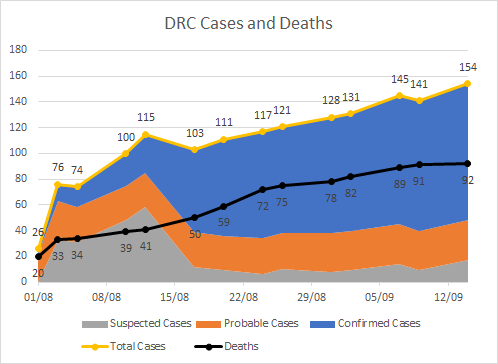
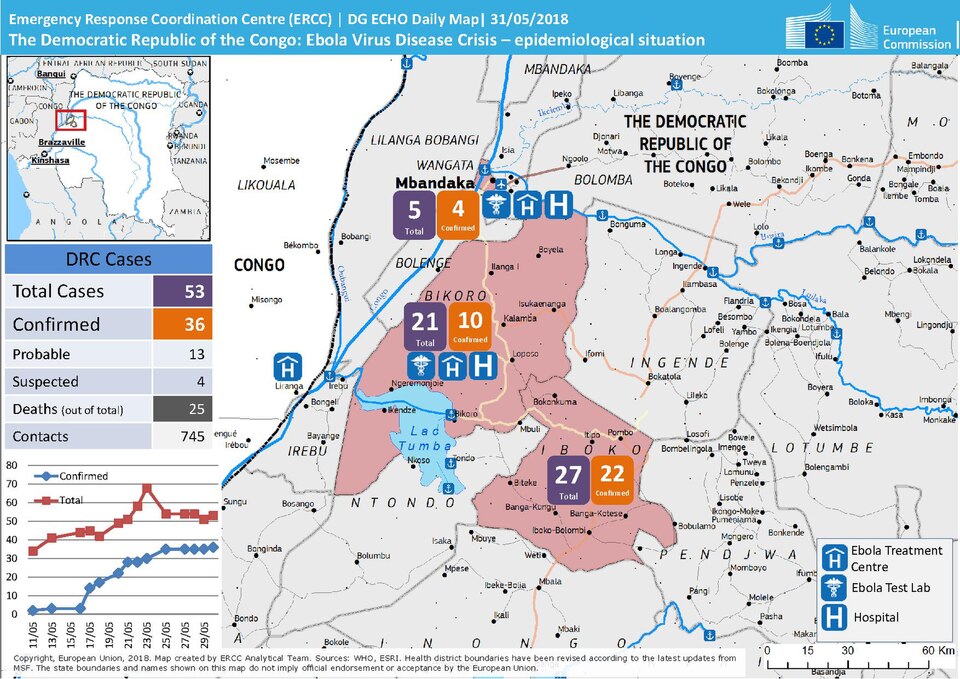
As of Thursday, 452 cases and 82 deaths had been confirmed in the Democratic Republic of Congo, according to the CDC. In neighboring Uganda, 19 cases and two deaths were confirmed as of Friday. The CDC's modeling suggests the outbreak likely began in mid-to-late February through transmission from an animal to a human. It is already the largest known outbreak of the Bundibugyo virus disease, a type of Ebola. Because the Bundibugyo strain is much rarer than other types of Ebola, there is no vaccine or proven treatment, though several teams are working to develop them.
Officials said a key problem is that not enough sick people are currently being isolated. "Currently, the situation is very fluid, and while the numbers are not completely known, based on the trajectory of the outbreak and the rapid extension into multiple different health zones over a short period of time, this appears to be in one of the lower end of the percentage of individuals that are being detected and isolated," said Dr. Satish Pillai, the incident manager for the CDC's Ebola response, during a press briefing Friday.
The World Health Organization declared the outbreak a public health emergency of international concern on May 17. According to BBC News, contact tracing remains one of the biggest challenges. Only about 45% of people who have had direct contact with an Ebola patient are currently being followed up. The WHO says at least 90% of contacts must be traced to bring an outbreak under control. Part of the difficulty is that the epicenter of the outbreak sits in an area affected by armed conflict in eastern DR Congo, a region roughly the size of the United Kingdom that is largely rural and difficult to reach.
Community mistrust is also slowing the response. An Ebola burial team was reportedly attacked this week in South Kivu province, forcing responders to abandon a coffin. Traditional burial practices in the region often involve washing and touching the body, and funerals typically draw large crowds, both of which carry high transmission risk. WHO Director General Dr. Tedros Adhanom Ghebreyesus said building trust with communities was critical to bringing the outbreak under control.
The apparent drop in official case numbers has caused some confusion. Earlier reports cited more than 1,000 suspected cases and nearly 250 suspected deaths. The current figures are lower, but that reflects improved laboratory data, not a reduction in danger. Laboratories were able to rule out many patients who had fevers caused by other conditions, including malaria, which is common in DR Congo. Tedros acknowledged the outbreak had a "big head start" but said response teams are now "catching up."
For Americans, the CDC assessed the risk to the general U.S. population as low. A separate model released Friday found that even if a case were imported into the United States, the risk of further spread would also be low, "given the strength of our public health system and clinical infection control measures," the report stated. The CDC noted that entry restrictions and traveler screening would further reduce the chance of imported cases. Only 11 people infected with Ebola have ever been treated in the United States, all connected to the 2014 to 2016 outbreak. Tedros also said he did not expect Ebola to spread worldwide, noting the virus is not airborne, unlike the coronavirus that caused the COVID pandemic.