Consciousness does not require flesh and blood. That is the central claim of a new working paper from two philosophers who argue that the property of awareness can exist in life forms built from entirely different materials than those found on Earth.
According to a report by Phys.org, Eric Schwitzgebel, a distinguished professor of philosophy at the University of California, Riverside, and Jeremy Pober, a postdoctoral researcher at the University of Lisbon, assert that consciousness is likely possible in life forms made of very different stuff. Pober was a graduate student at UC Riverside before completing his doctorate.
The paper does not attempt to define consciousness. Instead, Schwitzgebel and Pober begin from the position that consciousness is a real and recognizable phenomenon, then ask a narrower question: does it have to be tied to the specific biology found on Earth? Their answer is almost certainly no.
At the center of their argument is the philosophical concept of substrate flexibility. A property is considered substrate flexible if it can exist in different kinds of materials. A cup can be made of glass or plastic. A book can be printed on paper or stored as a digital file. Music can be encoded on vinyl or on a server. Schwitzgebel and Pober argue consciousness belongs in the same category. "The universe may contain minds stranger than we can imagine," Schwitzgebel said.
To support the plausibility of non-Earth consciousness, the authors point to the scale of the observable universe, which contains roughly 1 trillion galaxies, and to the likelihood that many planets host conditions and biochemistries quite different from Earth's. Astrobiologists have already hypothesized about life built from alternative amino acids, different solvents, and even different chemical structures altogether.
For the purposes of their argument, Schwitzgebel and Pober estimate that at least 1,000 behaviorally sophisticated extraterrestrial civilizations have existed at some point in the cosmos. They describe this as a conservative estimate, noting that one recent survey found median scientific estimates over one civilization per galaxy at some point in that galaxy's lifetime.
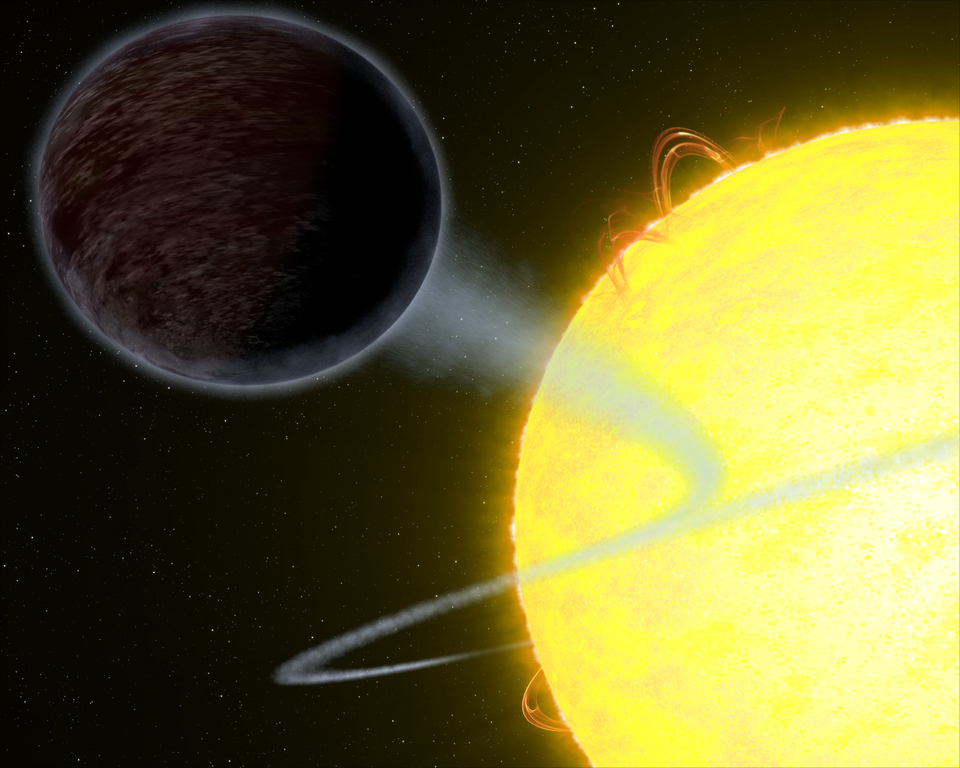
To illustrate the kind of radically different biology their argument covers, the paper references author Andy Weir's novel Project Hail Mary, in which an alien character has a shell of oxidized minerals, two circulatory systems, mercury blood, steam-powered muscle, and a crystal brain, and comes from a superhot planet with an ammonia-saturated atmosphere. Weir is known for grounding his science fiction in scientifically viable concepts.
The paper also touches on artificial intelligence, a topic that has pushed questions of consciousness into public debate. Schwitzgebel and Pober do not take a firm position on whether current or future AI systems could be conscious, and the two authors diverge in their own views. But the framework they build leaves open the possibility that AI consciousness is not ruled out, though they suggest current AI systems may not meet the threshold.
The working paper has not yet completed peer review. Schwitzgebel holds a distinguished professor title at UC Riverside, where the research originated.