

Elon Musk told a crowd of SpaceX employees in Texas that in the early days of the company, he gave it "less than 10% chance of succeeding." On Friday morning, that same company hit the public market at a valuation of around $2 trillion, instantly becoming the sixth most-valuable company in the United States.
According to a report by CNBC, SpaceX priced its IPO at $135 per share and raised $75 billion, an amount roughly triple the size of the next-biggest U.S. offering, which was Alibaba's in 2014. The stock closed the day up 19%, giving SpaceX a final market cap of $2.1 trillion and a multiple of 112 times last year's revenue. The company recorded a $4.9 billion loss last year.
Musk, who founded SpaceX in 2002 and has grown it to 22,000 full-time employees, addressed staffers shortly before Nasdaq trading opened. He reflected on the company's origins and told the crowd that had anyone predicted this outcome, he would have been skeptical. "If people had told me this was going to happen, I was like, man, you must be smoking some really good crack," Musk said. "Because I think this company is going to fail."
The offering was unlike most IPOs in one important way. SpaceX gave investors no price range and left no room for negotiation. It set a price and told buyers to take it or leave it. Investment banker Lloyd Greif of Greif & Co. in Los Angeles put it plainly. "This was not a deal that was priced based on market forces," Greif said. "This was a deal based on what one man wanted. And when one man wants it, one man gets it, if that one man is Elon Musk."
The IPO made Musk the world's first trillionaire. He now runs two of the ten U.S. companies worth at least $1 trillion. The milestone drew immediate political reaction. Sen. Bernie Sanders of Vermont wrote on social media that Musk's new status is "a call to action to take on the unprecedented income and wealth inequality that now exists." California Governor Gavin Newsom wrote on X, which is owned by SpaceX, that "Americans are struggling to pay for groceries and gas while Elon Musk becomes a TRILLIONAIRE."
Bloomberg reported that investor Steve Rattner described the scale of the valuations and fundraising involved as unprecedented, saying the offerings reflect optimism about artificial intelligence and a belief that the technology could transform the economy. Rattner also noted that the offerings raise broader questions about concentration in technology and whether retail investors will be able to participate.
The IPO is expected to send money flowing through SpaceX's supplier network. According to Yahoo Finance, Alphabet made a $900 million investment in SpaceX in 2015 when the company carried a $12 billion valuation. At the IPO valuation, that stake is worth approximately $150 billion. Nvidia is considered another likely beneficiary, as SpaceX has deals to provide computing infrastructure to Anthropic and Google that require the continued purchase of hundreds of thousands of GPUs. Moog, a manufacturer of precision motion control systems for the aviation, space, and defense industries, is also seen as a potential winner as SpaceX's deeper pockets could accelerate the volume of new satellite deployments.
The successful debut lifted confidence across Wall Street, which has seen a historically slow period of IPO activity dating back to late 2021. Former Nasdaq CEO Robert Greifeld said he "would definitely bet" that OpenAI and Anthropic will go public in 2026. Both companies are each valued at close to $1 trillion on the private market. SpaceX itself will soon appear in mutual funds and 401(k) portfolios across the country, Bloomberg noted.
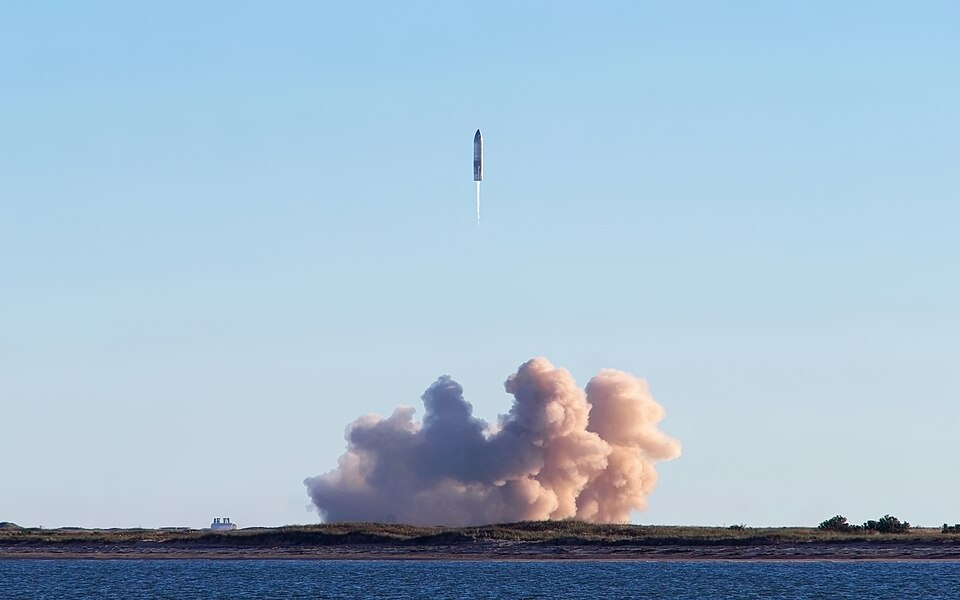
![[RAW] SpaceX Starship IFT-1 NASA WB-57 Cam 0
TLP Network via a NASA FOIA has acquired 2 of 5 videos recorded by NASA WB-57 during the Starship IFT-1 flight. The other 3 cameras from NASA WB-57 have been classified.
Thank you to NASA HQ for their support in releasing this footage to TLP Network.](https://freenewspress.com/media/2026/05/21/spacex-starship-6191d1.jpg)