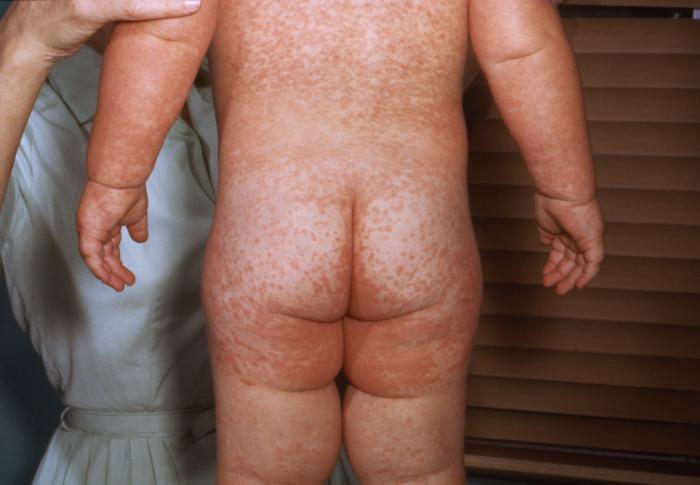
The United States eliminated measles decades ago. Now, experts say it is likely back, and they are not confident the spread can be stopped.
According to Live Science, researchers from Boston Children's Hospital have issued a progress report on the country's ongoing measles situation. The U.S. could officially lose its measles elimination status if the country has experienced sustained spread for more than a year. An assessment is scheduled for November. The U.K. and Canada have already lost their own elimination status after vaccination rates declined in both countries.
Two authors of the report spoke with Live Science about how the situation developed and what to expect. Dr. Anne Bischops is a pediatrician and postdoctoral research fellow. Maimuna Majumder is a distinguished scholar in the Computational Health Informatics Program at Boston Children's Hospital.
Majumder said her concerns about the country's elimination status go back well before cases started rising in January 2025. When the spike began, she described it as a turning point. "I felt like this might be the point of no return," she said. "But it was not in any way the first red flag. I do want to just stress that measles elimination has always been a tenuous prospect, and it is, by design, tenuous. Maintaining elimination status is, by design, difficult."
She described the warning signs that signaled the outbreak had moved beyond routine containment. "When you start to see these clusters turn into outbreaks that threaten to spill over into neighboring states, when you see the rapidity with which small outbreaks become larger outbreaks — those tend to be the signals that [say] 'I don't think that we're going to be able to get the cat back in the bag here.'"
Bischops pointed to longer-term trends that contributed to the current situation. "The trend of the increase of vaccine-preventable diseases has been ongoing for several years already, and it's something that has spilled into the daily life working in the ER," she said. "We've seen increasing cases of measles. And especially after the COVID-19 pandemic, we have this increase of vaccine fatigue adding to that."
Measles is one of the most contagious diseases known. Before vaccination programs became widespread, it infected millions of Americans each year. The measles, mumps and rubella vaccine is highly effective, but the virus can spread rapidly through communities where vaccination rates fall below about 95 percent.
If the U.S. officially loses its elimination status in November, it will mark a significant setback for a public health achievement that took decades of vaccination campaigns to build. Experts say what happens between now and that assessment will depend heavily on whether ongoing outbreaks can be contained before they spread further.