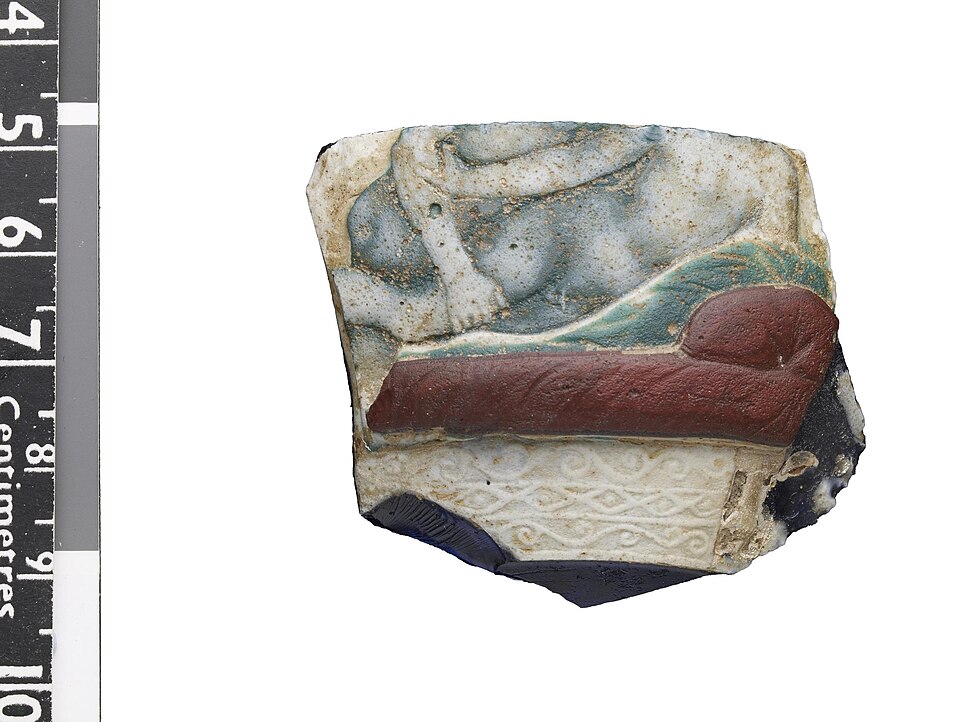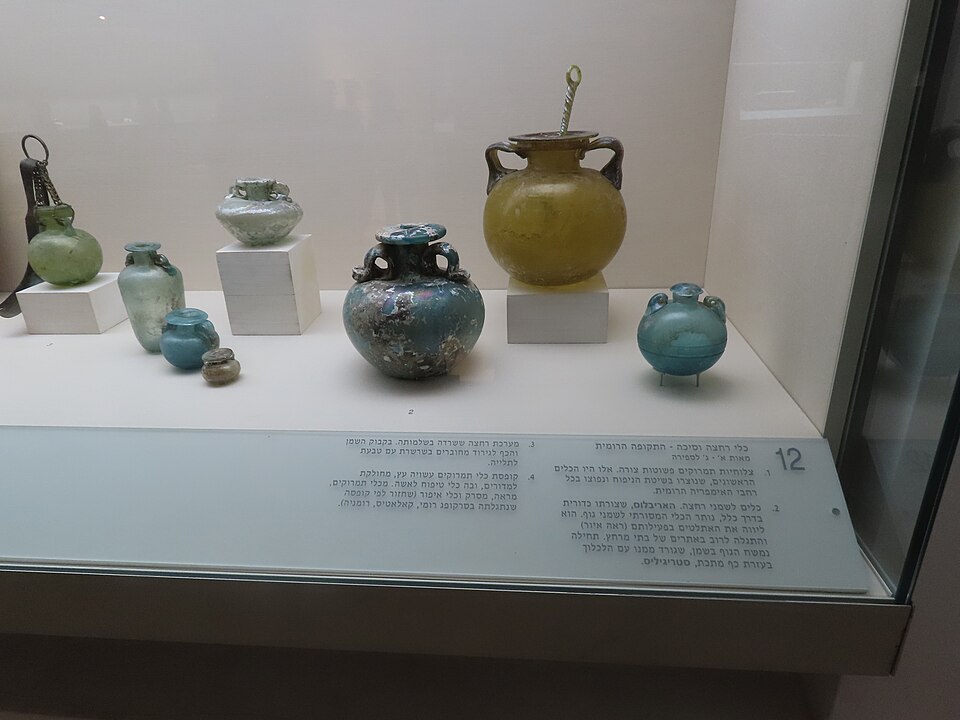
Before glassblowing existed, owning a glass vessel meant you were wealthy. The process of making one took tens of hours. It required heating glass, laying it over a mold, then grinding and polishing the result by hand. Glass was not an everyday object. It was a luxury.
That changed around the end of the first century BCE, according to a report by Phys.org. Someone working in the coastal Levant, in the region that is now Syria, Lebanon, Israel, Palestine, and Jordan, blew air into a heated glass tube and transformed an entire industry.
The earliest evidence of this new technique comes from modern-day Jerusalem. At the time, the city was governed by Roman Jewish client kings Herod the Great and Herod Archelaus, ruling on behalf of Rome's Emperor Augustus. Scholars believe furnace workers there were experimenting with heating the ends of glass tubes to rework them, likely as a form of glass recycling. At some point during those experiments, a worker blew into one of the tubes. The result was a closed glass container made in minutes rather than hours.
Glass itself had existed for thousands of years before that moment. The earliest known glass beads were produced in ancient Mesopotamia roughly 4,500 to 4,000 years ago. The first closed glass vessels appeared about a thousand years later, around 1500 to 1400 BCE, in Mesopotamia and ancient Egypt. Those early containers were made through a process called core-forming, which involved coating a plug of animal dung, clay, mud, and sand with molten glass that was more than 1,000 degrees Celsius. After the glass was worked, decorated, and cooled, the hardened plug had to be scraped out manually. Later, casting techniques replaced core-forming, but the work remained slow and difficult.
Glassblowing eliminated most of that labor. Once the technique existed, glassworkers spread it across the Mediterranean. Some of the only named glassworkers known from that period, such as Ennion, were Greek-speaking Syrians. As those workers traveled, they brought the technology with them, following Roman expansion across the region.
Glass vessels and the trade they enabled reached far beyond Roman borders. According to Phys.org, goods made with the new technique traveled as far as northern Scotland and Scandinavia. Roman experimentation with recycling glass had produced something that outlasted the empire itself. The basic method developed in the Levant roughly 2,000 years ago remains closely similar to how glassblowing is practiced today.
The transformation was not only technological. Cheaper, faster glass production opened up new possibilities for storing and transporting goods. That had direct consequences for trade and economic activity across the ancient world. Containers that had once been available only to the elite became common objects. The economics of everyday life shifted along with the technique.
The history of how that single moment, one worker blowing into a tube, cascaded across centuries of human civilization continues to be studied by archaeologists and historians working across the Mediterranean region.