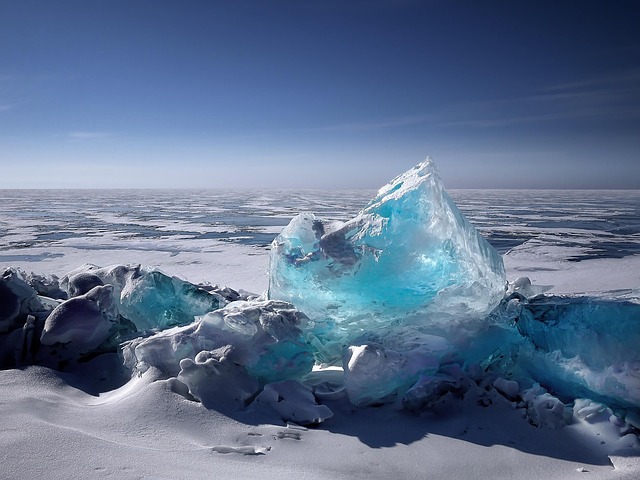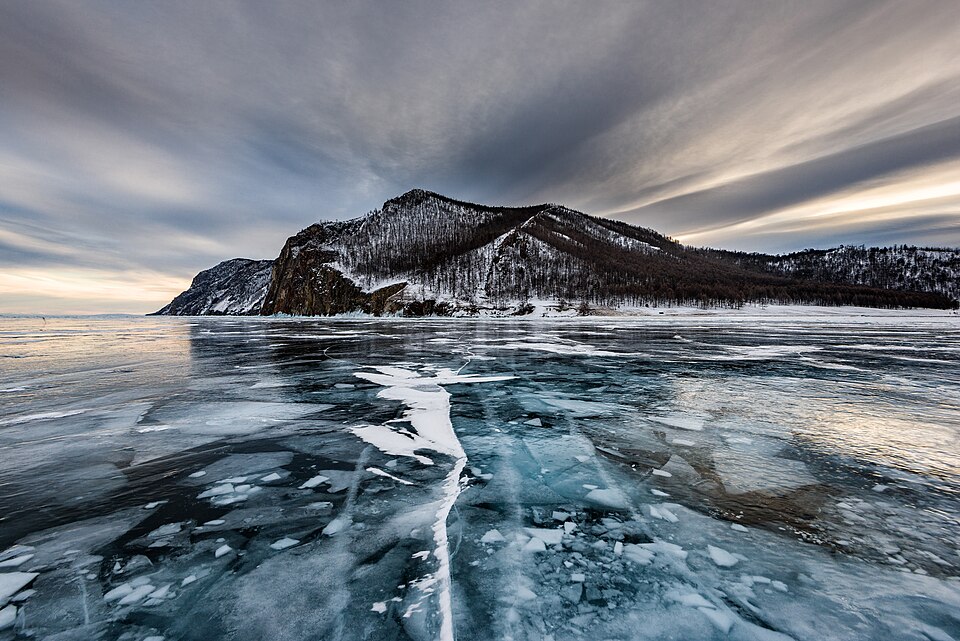
Lake ice across the Northern Hemisphere is vanishing faster than expected, and a new study shows the loss can accelerate sharply once winter temperatures cross specific critical thresholds.
The research, published July 27 in Proceedings of the National Academy of Sciences, was led by scientists from the Nanjing Institute of Geography and Limnology of the Chinese Academy of Sciences, Nanjing Normal University, Bangor University, and the University of Regina. The team analyzed ice records and air temperature data from 724 lakes between 2000 and 2022, according to Phys.org.
One of the study's central findings is that lake ice does not respond to warming in a steady, predictable way. Instead, the relationship between temperature and ice loss is asymmetrical. Spring ice-off dates are far more sensitive to rising temperatures than autumn freeze-up dates, meaning that as the climate warms, lakes lose ice much faster than they gain it back.
More significantly, the researchers identified a range of winter temperature thresholds, spanning from -13.7 degrees Celsius to -6.8 degrees Celsius. Once average winter air temperature climbs above those thresholds, the rate of ice loss increases sharply. In some cases, sensitivity to warming may increase by up to 22 times.
Dr. Zhou Jian of Nanjing Normal University, the study's first author, explained what that shift means in practice. "Below these thresholds, ice cover responds to warming in a gradual manner," he said. "But once the threshold is crossed, the system enters a fundamentally different regime where each additional degree of warming triggers a disproportionately large loss of ice cover."
The researchers also found that whether a lake crosses one of these thresholds depends more on large-scale climate conditions than on the individual shape or depth of the lake. Factors like regional winter air temperature and surface albedo, which measures how much light a surface reflects, were the primary drivers. Local lake morphology played a smaller role.
Looking ahead, the team projected that under a high-emission scenario, the winter ice-cover season across Northern Hemisphere lakes will shrink by roughly 40 days by the end of this century. The share of lakes that have already crossed critical thermal thresholds is expected to grow from 23% today to 70% by 2100.
Winter lake ice functions as a seasonal regulator for underwater ecosystems and the energy balance of the water body. A shorter ice season affects everything from the organisms that live beneath the surface to the way heat is absorbed and released. The study does not offer a policy recommendation, but the projected scale of change across 70% of monitored lakes by century's end gives researchers a concrete benchmark to track.