

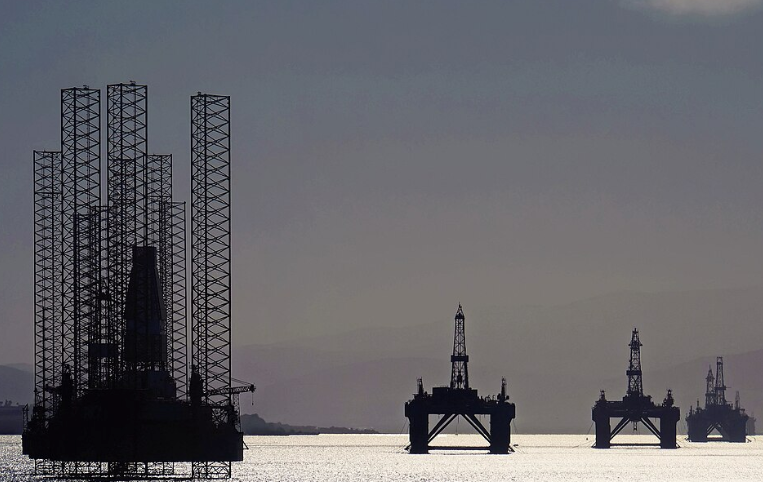
Political tensions are growing in the United Kingdom over the proposed Rosebank oil field, with reports of disagreements among senior government ministers about whether development should proceed. The project, located northwest of Scotland's Shetland Islands, remains without final approval following a court ruling that overturned its original authorization.
The dispute intensified after the government approved the separate Jackdaw natural gas project on October 21, 2026. That decision increased pressure for a ruling on Rosebank, which has become a major test of the government's approach to domestic energy production, investment and climate commitments.
Government Faces Divisions Over Rosebank Approval
The Guardian reported on October 25 that senior government figures were divided over whether to authorize Rosebank. Chancellor John Healey was reportedly supportive of the development, while Energy Secretary Miatta Fahnbulleh was understood to have reservations about its environmental impact and economic benefits.
The reported disagreement centers partly on the difference between producing oil and natural gas. Jackdaw is primarily a gas development that could supply British consumers, while Rosebank would produce mostly oil destined for international markets.
The government has not publicly confirmed the reported division between ministers. Fahnbulleh, who is responsible for the energy portfolio, has emphasized that the regulatory process must be completed before a decision can be announced.
On October 14, Fahnbulleh indicated that the Rosebank decision would take longer than the ruling on Jackdaw. Although the government subsequently approved Jackdaw, it has not announced a final decision on Rosebank as of October 26.
The dispute has also attracted attention from members of Parliament representing Scotland and other regions with connections to the offshore energy industry. Some lawmakers have raised concerns about protecting employment and investment, while others have questioned whether additional oil extraction is compatible with Britain's environmental commitments.
Rosebank Could Become a Major North Sea Development
Rosebank lies approximately 130 kilometers, or 81 miles, northwest of Shetland in the Faroe-Shetland Channel. The field sits in water approximately 1,100 meters deep and was discovered in 2004.
The project is operated by Adura, a joint venture involving Norwegian energy company Equinor and Shell, with an 80 percent interest. Ithaca Energy holds the remaining 20 percent, according to the companies' published project information.
Developers estimate that Rosebank contains approximately 300 million barrels of recoverable oil resources across its planned development phases. Production would rely on subsea wells connected to a floating production, storage and offloading vessel.
The project received development consent in September 2023 under the previous Conservative government. At that time, Equinor and Ithaca Energy announced a $3.8 billion investment for the first development phase.
The companies have argued that Rosebank would support British employment, strengthen energy security and provide continued investment in the North Sea. Adura estimates that the project could sustain an average of approximately 525 UK-based full-time jobs during its operating life.
The field's development plans call for oil to be transported by tankers to refineries and natural gas to enter an existing pipeline system. Adura has identified 2027 as its target for initial production, although that timetable depends on regulatory approval and the project's remaining development requirements.
Court Ruling Changed the Approval Process
Rosebank's original approval was effectively overturned in January 2025 after environmental groups challenged the way its climate impact had been assessed. Scotland's Court of Session ruled that the development consent was unlawful because regulators had not properly considered emissions produced when the extracted oil and gas would eventually be burned.
The judgment followed a major UK Supreme Court ruling in June 2024 concerning environmental assessments for fossil fuel projects. That earlier decision established that emissions resulting from the eventual use of extracted fossil fuels must be considered when evaluating relevant development proposals.
The Rosebank case was brought by environmental organizations including Greenpeace and Uplift, which argued that the initial assessment understated the project's broader climate consequences. The court ruling required the approval process to be reconsidered rather than permanently prohibiting the development.
Developers were allowed to continue certain preparatory activities while the regulatory process was revisited. However, production cannot begin without the necessary fresh consent.
Revised environmental information was submitted for consideration, and a public consultation ran during July and August 2026. The government must assess the updated material before the North Sea Transition Authority can make its final consenting decision.
Energy Companies Warn About Investment Risks
Equinor has warned that rejecting Rosebank could discourage further investment in the British offshore energy industry. Chief executive Anders Opedal raised the issue in early October, suggesting that the company's future commitment to UK projects could be reconsidered if Rosebank and Jackdaw failed to receive approval.
Reuters reported on October 6 that Opedal considered rejection of the developments a potentially serious setback for Adura. He argued that companies need confidence in the British regulatory system before committing substantial amounts of money to long-term projects.
The warning reflects concerns among oil and gas producers about regulatory uncertainty, production decline and the costs of developing offshore resources. Companies maintain that domestic production can preserve specialized employment and contribute to energy supplies during the transition toward lower-carbon technologies.
Industry supporters also point to the continued demand for petroleum in transportation, manufacturing and other sectors. They argue that reducing domestic production does not automatically eliminate consumption, particularly when imported oil remains available.
However, the government's own parliamentary research notes an important distinction between domestic production and domestic consumption. Most oil produced in the United Kingdom is exported, meaning Rosebank's output would not necessarily be refined or used within Britain.
Environmental Groups Challenge Economic Arguments
Environmental campaigners maintain that Rosebank would add substantial greenhouse gas emissions at a time when Britain is legally committed to reaching net-zero emissions by 2050. They argue that allowing another major oil development could make that target more difficult to achieve.
Greenpeace and Uplift have focused particularly on emissions generated when Rosebank's oil is burned by customers. Those emissions can be much greater than the pollution associated with drilling, processing and transporting the fuel.
Developers have emphasized measures intended to reduce emissions during production, including equipment designed to accommodate future electrification. Environmental groups counter that lower operational emissions do not eliminate the climate impact of burning the oil itself.
The debate also involves the marine environment surrounding the proposed development. Offshore drilling and construction require environmental assessments covering potential disturbances to marine habitats, underwater noise, accidental spills and other operational risks.
Rosebank's supporters argue that the project would be subject to established British environmental regulations. Opponents say the possible consequences must be considered alongside the wider impact on the climate and the country's long-term dependence on fossil fuels.
Jackdaw Approval Increases Political Pressure
The government's decision to approve Jackdaw on October 21 has complicated the political debate surrounding Rosebank. Jackdaw is expected to provide domestic natural gas, while Rosebank's production would be predominantly oil.
Government officials have defended the distinction between the projects by emphasizing the role of domestically produced gas in meeting British energy needs. Rosebank's critics argue that producing oil for international markets offers a less direct benefit to British consumers.
The government has also reaffirmed its policy against issuing new oil and gas exploration licenses. That position does not automatically prevent development of fields such as Rosebank, which already hold licenses but require additional production consent.
Supporters of the project say rejecting development after companies have invested in existing licenses would raise questions about Britain's investment environment. Environmental groups maintain that holding a license does not guarantee approval when updated assessments identify significant climate impacts.
Parliamentary researchers have estimated that Rosebank could potentially produce hundreds of millions of barrels of oil over its lifetime. Those figures describe potential production rather than guaranteed output and depend on the scale of development ultimately authorized.
The Rosebank decision now rests with the government's regulatory process and the North Sea Transition Authority. With Jackdaw approved and Rosebank still awaiting a ruling, ministers face competing demands involving energy supply, employment, investment and the UK's climate obligations.