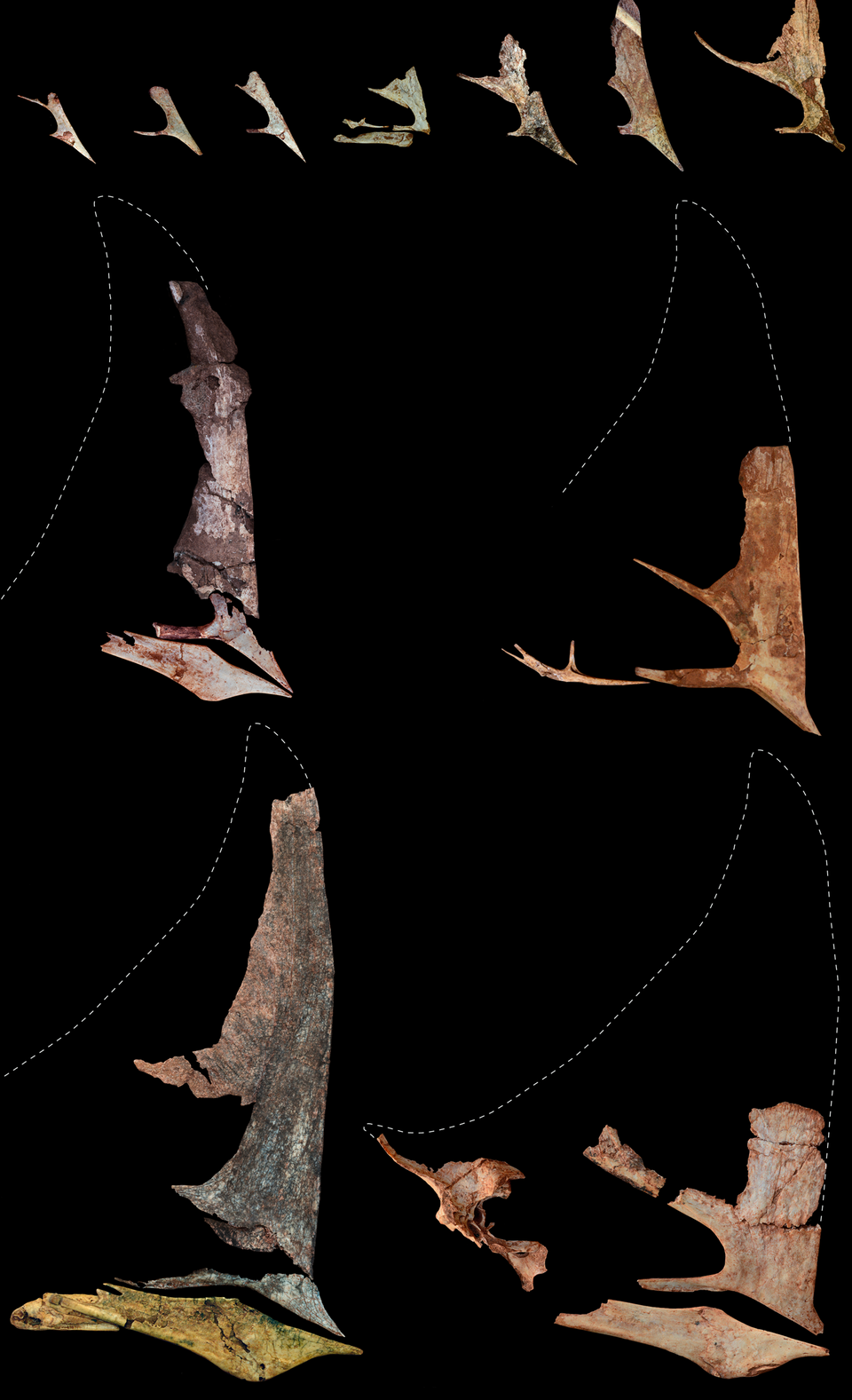
More than 100 million years ago, a flying reptile called a pterosaur hunted fish and squid over ancient oceans. One of its wing bones eventually settled to the seafloor, and over time it became something remarkable: a fossil still holding clues to the animal's life, biology, and diet.
According to a report by Phys.org, researchers publishing in the journal iScience examined the fossil, which was found in the Romualdo Formation in the Araripe Basin of northeastern Brazil. The site is known for producing exceptionally preserved remains, including fish, turtles, crocodile relatives, and pterosaurs. Many of the fossils there are sealed inside rounded rock structures called carbonate concretions, which form shortly after burial and act as natural time capsules.
The fossil itself is a hollow wing bone called a phalanx. Pterosaur bones were thin and lightweight to support flight, which makes detailed preservation rare. The researchers used high-resolution CT scanning to examine the bone's interior without breaking it open. The scans revealed layers of minerals with different densities, showing evidence of a long sequence of chemical changes inside the bone over millions of years.
The preservation process appears to have started with decay. As the pterosaur's body decomposed on the ancient seafloor, microbes broke down tissues and changed the chemistry of the surrounding sediment. Those changes triggered the rapid formation of phosphate minerals. One mineral in particular, called fluorapatite, formed within and around the bone, stabilizing delicate structures before they were lost. Under the microscope, researchers could still see tiny canals that once carried nutrients through living bone tissue.
Mineral analysis also turned up evidence of specific microbial activity. The team detected barite and celestite, two minerals associated with sulfur-using bacteria. Those microbes drove chemical reactions that helped create the conditions needed for long-term preservation. In other words, the same biological processes that broke the animal down also helped lock it in place for science.
After the early phosphate minerals stabilized the bone, a series of calcite layers formed inside and around it over a longer period. These layers derived largely from carbon released during the decay of fatty tissue. First a thin layer of fine-grained calcite formed along the bone surface, then a slightly coarser layer followed. Eventually, larger calcite crystals grew in and filled the hollow cavity entirely.
The result was a fossil that preserved not just the bone's shape, but also its microscopic internal architecture and molecular traces of the animal's biology. The Romualdo Formation continues to be one of the most productive fossil sites in the world, and this specimen adds detail to what researchers understand about how soft tissues and bone chemistry survive across geological time.