

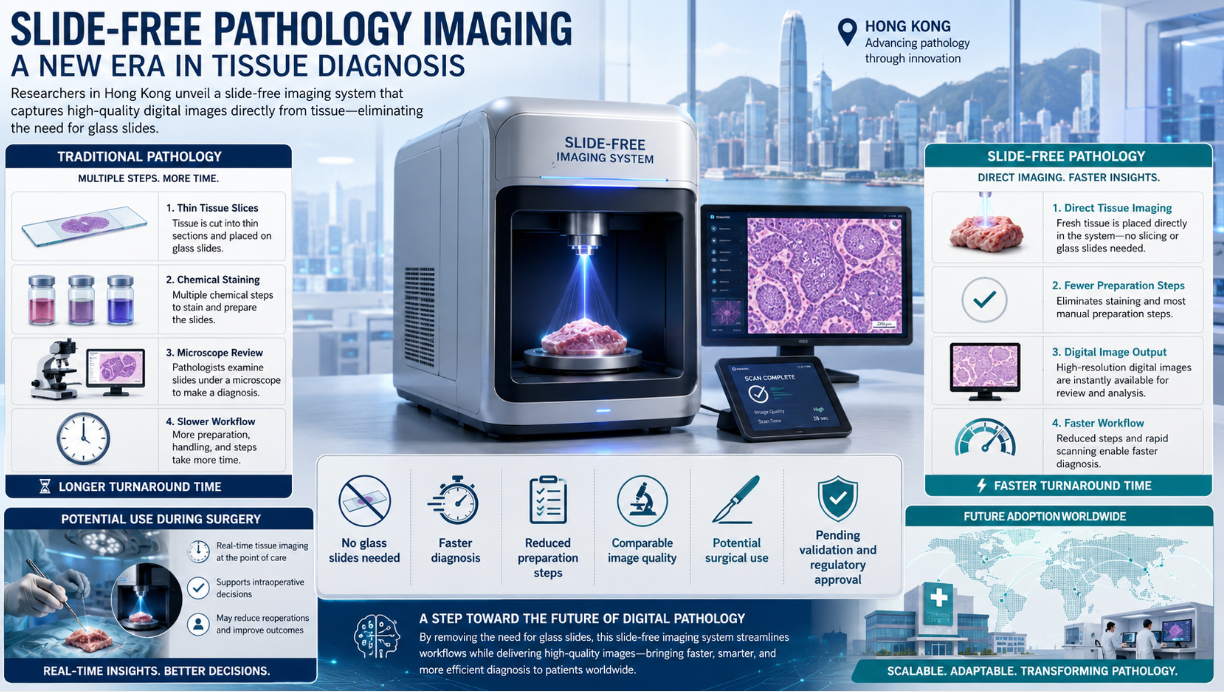
A new imaging system that removes the need for glass slides in tissue pathology has been unveiled at a research institution in Hong Kong. According to MobiHealthNews, the slide-free system uses advanced optical technology to produce detailed images of tissue samples without the time-consuming preparation steps required by traditional pathology methods.
Standard pathology procedures require technicians to mount thin slices of tissue onto glass slides, treat them with chemical stains, and prepare them for examination under a microscope. The process can take hours or days, and any errors in preparation can affect the quality of results. A slide-free system would bypass several of those steps, potentially accelerating the time it takes to reach a diagnosis.
The technology could have particular value in surgical settings, where pathologists are sometimes asked to analyze tissue samples while a patient is still on the operating table. Faster results in those situations can help surgeons make real-time decisions about how much tissue to remove or whether additional procedures are needed.
Researchers behind the system say it produces image quality comparable to conventional slide-based pathology, while reducing the labor and materials involved. The system has not yet received regulatory approval for clinical use, and further validation studies are expected before it moves toward broader deployment.
Hong Kong has become an active site for medical technology research, with several universities and hospital systems investing in diagnostic innovation. The slide-free pathology project is part of a wider push to modernize laboratory medicine using optical engineering and computational imaging techniques.
If the technology clears clinical trials and regulatory review, it could eventually be adopted by hospitals and pathology labs around the world. Demand for faster and more cost-effective diagnostic tools has increased as health systems face pressure to process larger volumes of patient samples with limited staffing resources.