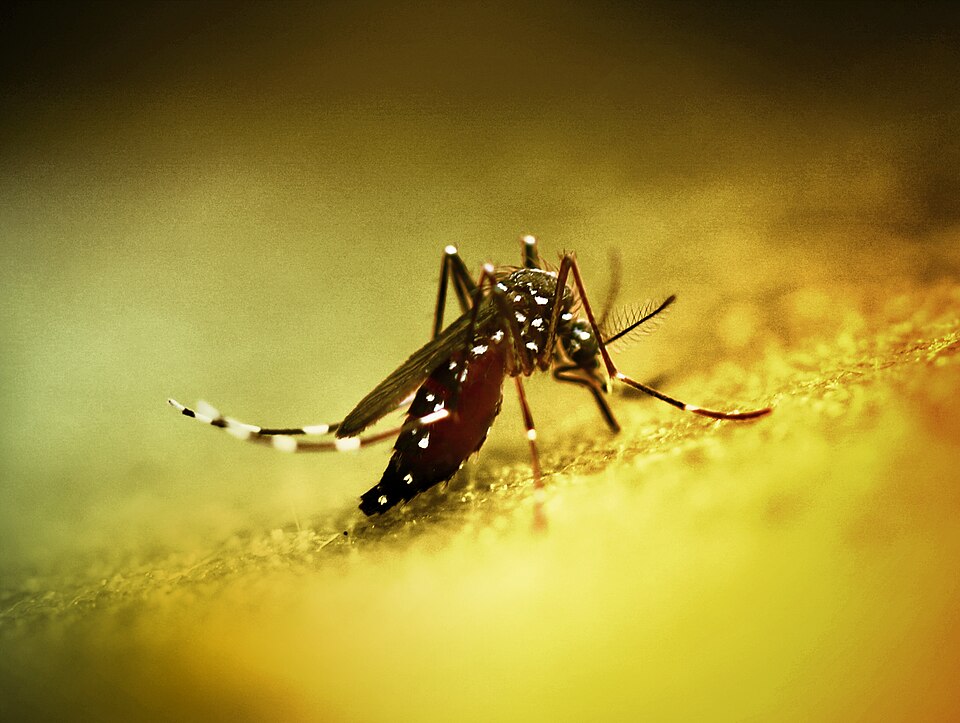
Kissing bugs, fruit flies, mosquitoes, and spider beetles all appear to run on a humidity clock. A new study from the University of Cincinnati found that insects respond to daily cycles of moisture and dryness the same way they respond to light and temperature, adding humidity to the short list of environmental signals that can set a biological clock.
According to Phys.org, the research was published in the journal npj Biological Timing and Sleep. Researchers isolated the four insect species in a climate- and light-controlled environment, then exposed them to repeated cycles of humidity. The insects responded predictably each time. When the humidity cue was removed, they kept responding to the pattern that had been established, suggesting the rhythm had been internalized.
"They take humidity cues as a biological clock," said UC Professor Joshua Benoit, who led the lab where the work was conducted.
The study's lead author, Shyh-Chi Chen, is a former researcher in Benoit's lab and is now an assistant professor at Georgia College and State University. Chen said humidity has been largely overlooked in circadian research even though it shifts on a predictable daily schedule just like light and temperature do.
"Light and temperature are well-known environmental factors that can entrain the circadian clocks," Chen said. "Humidity, like light and temperature, fluctuates daily."
For humans, high or low humidity is mostly a comfort issue. For insects, the stakes are much higher. Their bodies are small, their surface area is large relative to their size, and water loss can happen fast.
"This could be critical for terrestrial organisms, as their survival depends on staying hydrated or avoiding dehydration," Chen said.
Knowing when dry or wet conditions are coming gives an insect a way to plan. A creature that can anticipate the most favorable window of the day for foraging or moving around wastes less energy and takes fewer risks. Circadian rhythms already govern things like body temperature and hormone levels across many species. Adding humidity to that picture makes the clock more complete.
The results were statistically significant, but researchers noted that humidity appears to be a weaker signal than light or temperature for most of the species tested. Mosquitoes showed the weakest behavioral connection to humidity of the four insects studied.
This is not the first time the Cincinnati lab has found unexpected navigational or timing tools in insects. UC researchers previously found that monarch butterflies use daylight as a sun compass during their long-distance continental migrations. The humidity finding adds another layer to how insects read the environment around them.
Chen said the research may also open questions about mammals, including humans. The effects in people would likely be too small to notice, but the possibility has not been ruled out.
"While our current study focuses on animal models, it opens a fascinating door to human biology," Chen said. "Although mammalian circadian biology is heavily dominated by the light-dark cycle, the potential for subtle, multisensory integration—including humidity—cannot be ruled out."
The study used the term zeitgeber, a German word meaning time-giver, to describe environmental cues that synchronize biological clocks. Light is the most powerful zeitgeber known. This research suggests humidity may function as one as well, at least for insects that depend on it to survive.