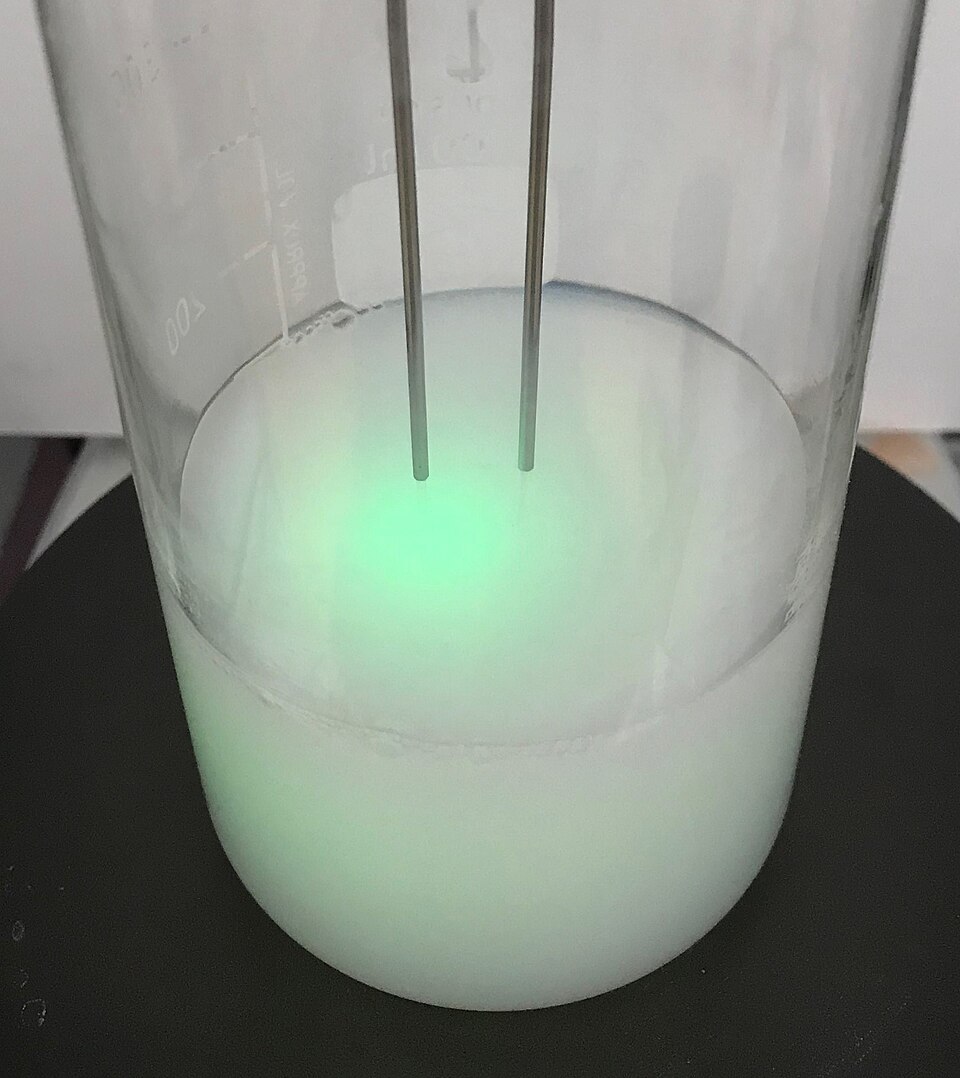
A research team at DTU Electro in Denmark has found a way to double the usable wavelength range of ultra-low-noise supercontinuum lasers without increasing noise levels, according to a study published in the journal Optica.
Supercontinuum light sources, often called white lasers because they emit a continuous broad spectrum of colors, are used in medical imaging, environmental gas detection and industrial sensing. The longstanding problem with these sources has been a trade-off: wider spectrum meant higher noise, and higher noise made it harder to detect faint signals.
The DTU team's system spans from 0.86 to 2.90 micrometers, nearly doubling the spectral range of comparable low-noise systems. Crucially, that expanded range comes without sacrificing the stability of the light source.
The method behind the advance is called thermal dispersion engineering. Normally, researchers join different types of fiber together to shape and compress light pulses, a process that adds complexity, introduces losses and makes systems less reliable. The DTU approach is different: researchers heated a short section of a single optical fiber, subtly changing its internal properties. That change allowed the fiber to reshape light passing through it, producing shorter, more intense pulses that generate a broader spectrum while remaining stable.
"What we have shown is that you can push the spectral width significantly without paying the price in noise, and we do it in just one fiber," said postdoc and first author Andrea Arduin.
"Noise is what limits sensitivity, and it's the natural enemy of practical applications. If the light fluctuates, it becomes harder to detect weak signals. By keeping the noise low, we make these sources much more useful."
Arduin also described the approach in terms of simplicity. "We essentially let the fiber do the work for us," Arduin said. "By carefully shaping its properties, we can boost performance in a very clean and controlled way."
The practical benefits could reach several fields. In medical imaging, steadier light can produce clearer images and cut scanning times. In environmental monitoring, the source could allow faster detection of trace amounts of pollutants or greenhouse gases. The extended range into the infrared is particularly useful for spectroscopy, because many molecules have strong spectral signatures in that region, making them easier to identify at low concentrations.