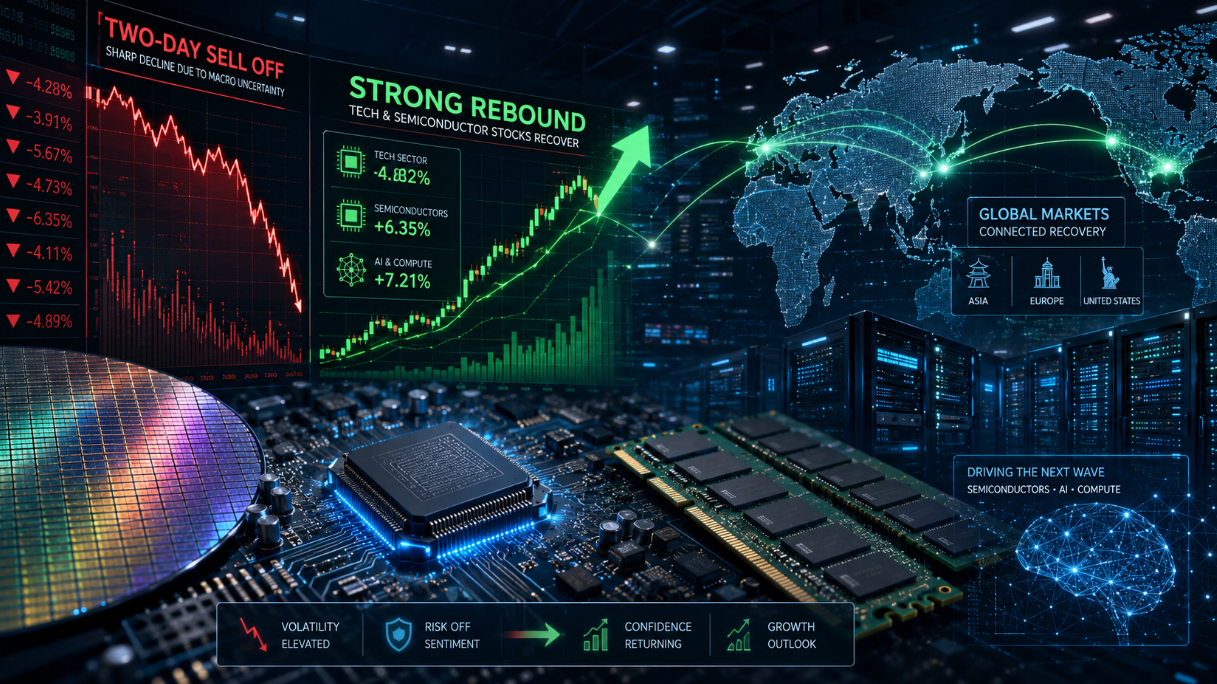
Technology stocks mostly rebounded Wednesday after a brutal two-day selloff wiped out billions in market value from chipmakers and AI-linked companies around the world.
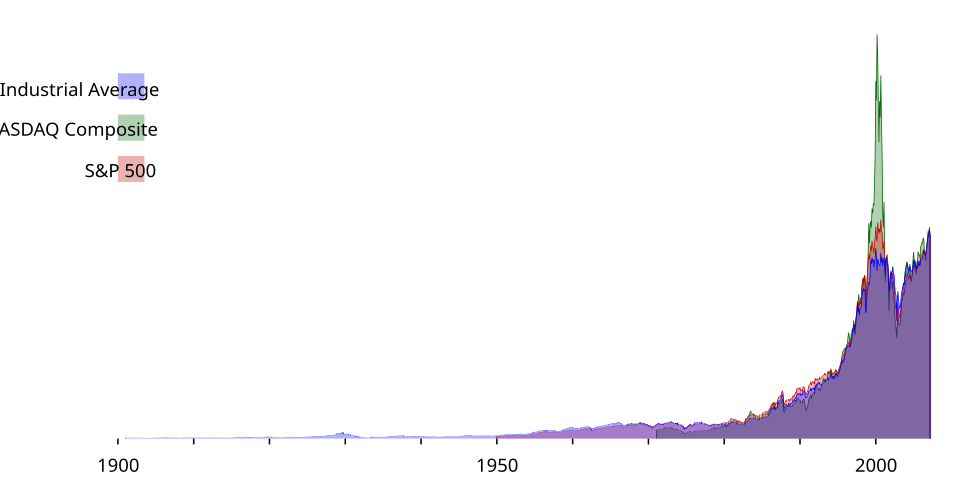
Shares of Micron rose about 1% on Wednesday, as did those of Sandisk. Both memory stocks had tumbled 13% on Tuesday. The Roundhill Memory ETF, which lost 14% on Tuesday, moved about 2% higher. The recovery came after the Nasdaq Composite fell 2.2% on Tuesday and the Philadelphia Semiconductor Index slid as investors sold off chipmakers and AI-linked stocks. Intel, Advanced Micro Devices, and Qualcomm each lost more than 5% in that session.
The selloff had started in Asia before spreading to Wall Street. South Korean chip heavyweights Samsung Electronics and SK Hynix both plunged over 12% on Tuesday. On Wednesday, Samsung bounced back 10% while SK Hynix added 0.98%. The broader benchmark Kospi Index in South Korea rose more than 3.26%.
Dan Ives of Wedbush Securities pushed back against the idea that the selloff reflected weakening demand for AI technology. His firm's channel checks across Asia and enterprise AI demand trends showed "no cracks in the armor," he said, arguing that the drop in South Korean technology stocks was more likely a pause after a near 100% rally in the Kospi this year rather than a sign of deteriorating fundamentals, according to CNBC.
Other South Korean technology names were mixed. Samsung SDI rose 4.26% and Seoul Semiconductor advanced 5.38%. In Japan, chip-equipment maker Advantest was down 0.73%, while SoftBank Group added 1.29%. Tokyo Electron fell 4.19%.
Chinese technology stocks also delivered mixed results. Tencent was up 3.38% and Xiaomi added 1.5%, while Baidu was down 1.01% in premarket trading and JD.com dropped 1.65%.
European chip stocks were mostly steady. ST Microelectronics rose 1.70% and ASML gained 0.77%. Infineon was flat and Besi dropped 0.27%. ASM International was down 1.27%.
The broader Stoxx 600 index in Europe traded largely flat on Wednesday, suggesting the damage was concentrated in technology and semiconductor names rather than spreading across the wider market.