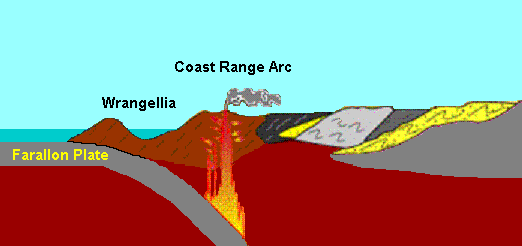
A new study from geoscientists at the University of Sydney has found that ancient subduction zones, where one tectonic plate sinks beneath another, played a central role in creating the conditions for major mineral deposits to form, even when those deposits ended up hundreds of miles away from the plate boundaries themselves.
The research, published in Nature Communications, focused on sediment-hosted copper, zinc, and lead deposits. These metals are used widely in infrastructure, manufacturing, and clean-energy technologies. The question the researchers set out to answer was why some ancient continental edges became rich in these minerals while others with similar geology did not.
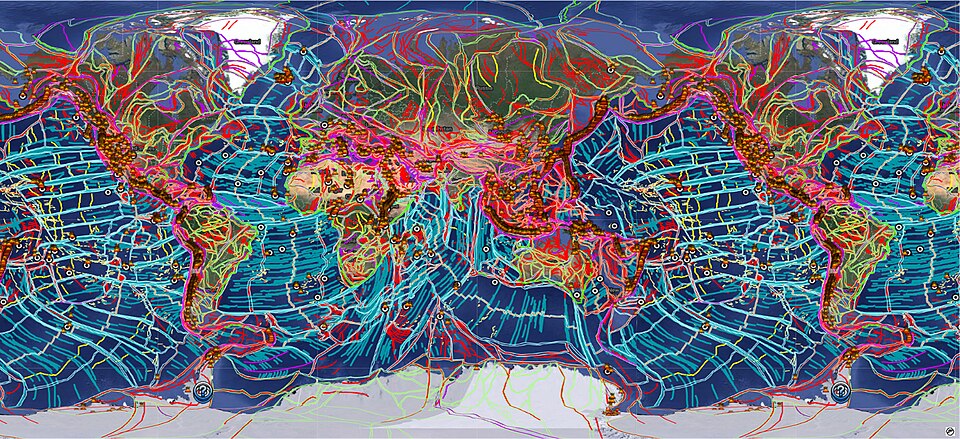
According to Phys.org, the study was led by Ph.D. student Hojat Shirmard and Professor Dietmar Müller from the School of Geosciences at the University of Sydney. The team developed a dynamic model of Earth going back 1.8 billion years to track how mineralized ores formed in specific locations rather than in other, apparently similar areas.
Scientists had already known that many of these deposits occur along the edges of ancient stable cores of continents, called cratons. The new research went further by identifying which parts of those edges were most likely to contain deposits. The team found that mineral-rich craton edges commonly formed between 800 and 1,800 kilometers away from ancient subduction zones. That specific distance matches zones where deep-Earth flows can concentrate stress and cause weakening in the continental lithosphere, which is the crust and upper mantle combined.
"Many of these deposits formed far from tectonic plate boundaries, but our results show they were still linked to subduction," said Shirmard. "Deep mantle flow can transmit stress thousands of kilometers into a continent, helping to weaken craton edges and create the conditions needed for mineralization."
Mineralization happens when magma and heated fluids are pushed through Earth's crust. Changes in temperature, pressure, or chemistry cause solid minerals to form ores inside faults, rifts, or other openings. Those ores are what mineral exploration companies search for.
Co-author Müller said the study changes how researchers should think about where mineral systems come from. "Our work shows that mineral deposits are not just controlled by local geology," Müller said. "They are also part of a much larger tectonic system linking subduction, mantle flow, continental deformation and the long-term" history of the planet.
The research provides a new framework that could reduce uncertainty in mineral exploration and support long-term resource security. By connecting surface geology to the deep movement of tectonic plates and mantle circulation across nearly two billion years, the model offers a way to narrow down which areas are worth investigating for future mining operations.
The mantle itself, the nearly 3,000-kilometer-thick layer of heated rock sitting beneath Earth's crust, plays a key role in the model. Slow circulation within that layer transmits forces across enormous distances, which the study shows had direct consequences for where commercially significant ore deposits ended up forming.