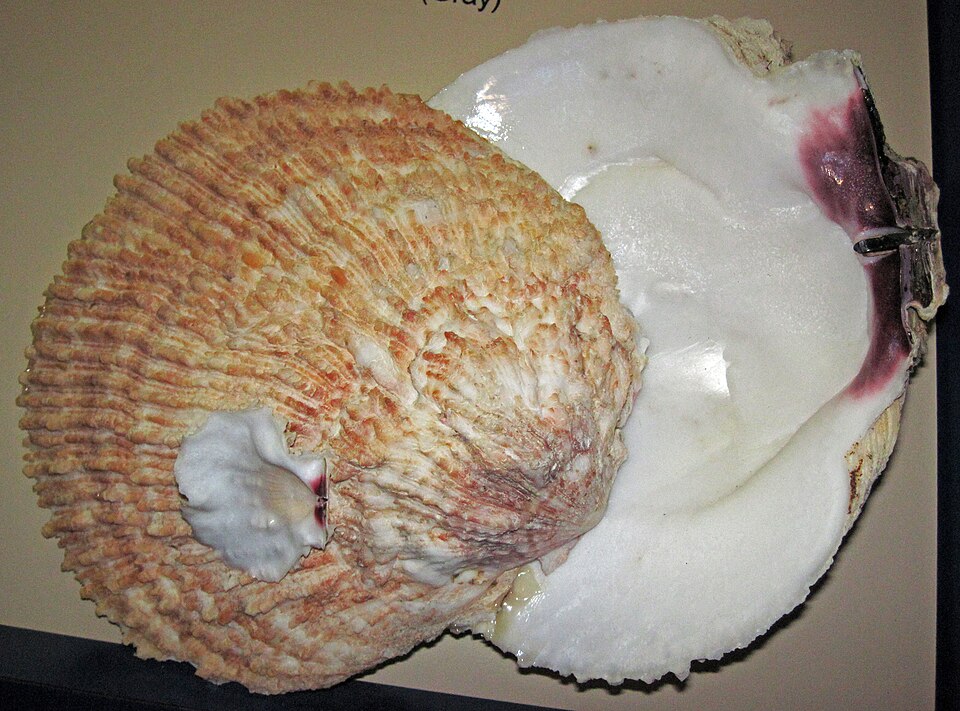
Archaeologists have found what is now the oldest known giant rock scallop bead ever discovered, and it was found far from the ocean where such shells come from. The bead, dated to 8,508 years old, was recovered more than 42 miles from the nearest coastline, suggesting that coastal trade networks in California were active thousands of years earlier than researchers had previously believed.
According to a study published in California Archaeology, the bead was one of two giant rock scallop beads found during excavations at two sites in Monterey County between 2012 and 2020. The digs took place before construction of the California Flats Solar Project, a 280-megawatt facility. Archaeologists worked alongside representatives of the Salinan, Chumash and Yokuts tribes, who granted permission to date the beads.
The globe-shaped bead from the Turkey Flats site was dated to 8,508 years old. A second bead, from the Lichtenstein site, was dated to 3,674 years old. Together, the two shells suggest a tradition of coastal-to-inland trade stretching back more than 5,000 years.
Giant rock scallops live in the warm waters of the Santa Barbara Channel. They grow below the tide line, making them hard to reach. Their thick, hard shells are difficult to shape and drill. That combination of rarity and difficulty may have made the finished beads markers of high social status among ancient Indigenous communities.
The beads were found well outside the coastal range where such objects had previously been documented, extending the known reach of these ornaments from the Channel Islands into the California interior.
To confirm the shells came from the Channel Island tradition rather than another coastal source, researchers used oxygen and carbon isotope analysis. The technique works like a chemical fingerprint, identifying unique markers in the shell material and matching them to known coastal environments.
Barry A. Price, an archaeologist at Applied EarthWorks Inc. and one of the study's authors, said the find fits into a larger pattern of early cultural activity in the region.
"It's cool that this is the oldest of its kind identified so far, but cooler still to view it as part of a broader Early Holocene cultural landscape seemingly well-established in this locale as much as 10,000 years ago," he said.
The study's authors also include Simone Schinsing and Jasmine Kidwell.