

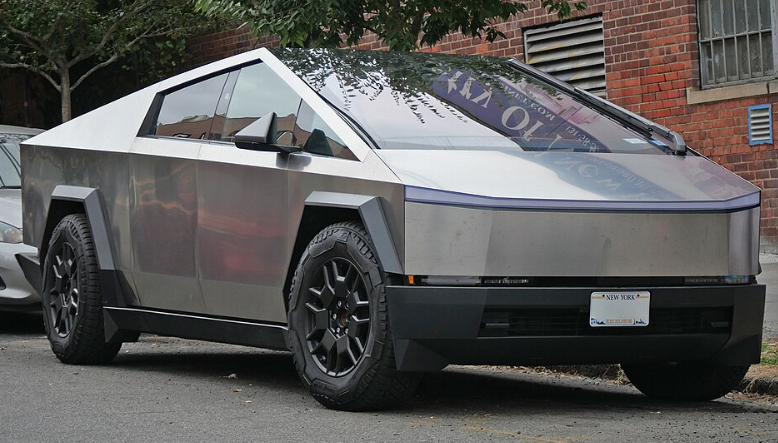
Tesla plans to wind down production of its Cybertruck electric pickup around the middle of 2027, marking a major change in the company's vehicle strategy. CEO Elon Musk announced the decision Friday, November 6, 2026, saying the Texas Gigafactory would redirect manufacturing capacity toward the Cybercab, Tesla's autonomous robotaxi.
The announcement comes less than three years after the Cybertruck began reaching customers in November 2023. Despite years of publicity and ambitious sales targets, the stainless-steel pickup has struggled with weak demand, repeated recalls and a higher price than originally promised.
Musk did not specify whether Cybertruck manufacturing would move to another factory or stop permanently. However, Tesla currently produces the pickup exclusively at its Texas facility, making the announcement a significant step toward ending the model.
Cybertruck Sales Fall Far Below Tesla's Expectations
The Cybertruck was originally promoted as a vehicle that could transform the American pickup market. Musk predicted annual sales of approximately 250,000 units, positioning the truck as a serious competitor to established models from Ford, General Motors and other manufacturers.
Actual sales have been substantially lower.
According to Kelley Blue Book estimates reported by the Associated Press, Tesla sold approximately 38,965 Cybertrucks in the United States in 2024. That number fell to 20,237 in 2025, representing a decline of nearly 48%.
Sales weakened further during 2026. Car and Driver reported that approximately 11,586 Cybertrucks were sold during the first nine months of the year, indicating that demand continued to decline despite changes to the vehicle's available configurations.
Tesla does not disclose Cybertruck deliveries separately in its quarterly production reports. Instead, the vehicle is grouped with other products under the company's "Other Models" category, making it difficult to determine exact sales and production figures from Tesla's own disclosures.
The company's third-quarter 2026 report showed just 8,295 deliveries across the entire category. That was considerably below the manufacturing capacity Tesla had prepared for the Cybertruck.
Tesla's October shareholder update listed installed annual Cybertruck production capacity exceeding 125,000 vehicles at Gigafactory Texas. The difference between that capacity and estimated sales suggests that much of the company's manufacturing potential remained unused.
The weak performance has raised questions about whether the Cybertruck could become a profitable mass-market vehicle. Tesla has not disclosed the model's individual profitability, so claims about its total financial losses remain estimates rather than confirmed company figures.
Delays, Rising Prices and Recalls Hurt the Cybertruck
Tesla introduced the Cybertruck in November 2019 with a design unlike anything offered by major automotive manufacturers. Its sharp angles, exposed stainless-steel exterior and unusual body construction immediately attracted widespread attention.
The unveiling also became memorable for an unexpected demonstration failure. During an attempt to show the strength of the vehicle's windows, metal balls thrown at the glass caused visible cracks.
Musk initially suggested the truck would reach customers much sooner than it eventually did. Production delays pushed the first deliveries to November 2023, four years after the vehicle was introduced.
Pricing became another obstacle.
At the original unveiling, Tesla advertised an entry-level version costing less than $40,000. When deliveries began, the available configurations were considerably more expensive, placing the truck beyond the budget of many potential buyers.
Tesla subsequently introduced and withdrew different configurations while adjusting prices in response to market conditions. By November 2026, several versions remained priced well above the original estimate.
The Cybertruck also faced recurring reliability and safety concerns. Federal regulators issued recalls involving multiple components, including accelerator pedals, exterior trim, windshield wipers and other equipment.
Reuters reported that the vehicle had experienced 11 recalls since entering production. Although recalls do not necessarily indicate that every vehicle is defective, their frequency added to questions about Tesla's unconventional design and manufacturing approach.
The truck's appearance also divided potential customers. Some owners praised its performance and distinctive styling, while others considered the vehicle too large, expensive or impractical for everyday driving.
The Cybertruck became increasingly associated with Musk's political activities as well. Some critics targeted Tesla vehicles during protests and boycotts, although the extent to which those controversies affected Cybertruck sales cannot be measured precisely.
Tesla Redirects Resources Toward Cybercab Production
Musk said the planned manufacturing changes would create room for increased Cybercab production at Gigafactory Texas. The two-seat autonomous vehicle is central to Tesla's effort to expand beyond traditional electric car sales.
Tesla introduced the Cybercab concept in 2024 as a purpose-built robotaxi intended to operate without a human driver. Unlike conventional passenger vehicles, its design does not include a traditional steering wheel or pedals.
The company has promoted a long-term goal of producing the Cybercab at a price below $30,000. However, the eventual retail price and the economics of large-scale commercial operation have not been established.
Tesla began introducing Cybercabs into limited operations in Austin during 2026. The program remains in its early stages, and the company faces regulatory questions about vehicle safety and its autonomous driving technology.
The National Highway Traffic Safety Administration has examined how Tesla certified certain Cybercab vehicles as meeting federal safety requirements. Those questions are especially important because vehicles designed without conventional driver controls must satisfy applicable safety regulations or obtain appropriate exemptions.
Tesla's broader strategy increasingly emphasizes autonomous driving, artificial intelligence and robotics. The company has also redirected manufacturing resources toward its Optimus humanoid robot program.
Earlier in 2026, Tesla ended production of the Model S sedan and Model X SUV as it prepared to expand robotics manufacturing at its California facilities. The Cybertruck wind-down represents another reduction in the company's traditional vehicle lineup.
Tesla's Model 3 sedan and Model Y crossover remain central to its passenger vehicle business. The Cybercab and the planned Roadster are expected to play different roles in the company's future, although their long-term commercial prospects remain uncertain.
Affordable Electric Trucks Present New Competition
Tesla's decision comes as automakers reassess demand for large electric pickups. High purchase prices, heavy batteries and changing consumer preferences have made it difficult for some manufacturers to reach their original sales expectations.
Ford is developing a smaller electric pickup called the Fathom, scheduled to arrive in 2027. The company has announced a starting manufacturer's suggested retail price of $28,350 before destination charges and other fees.
The Fathom will use Ford's new Universal Electric Vehicle Platform, which is designed to simplify manufacturing and reduce costs. Ford says the vehicle will offer seating for five adults and features including bidirectional power capability.
Startup Slate Auto is also developing a compact electric pickup aimed at customers seeking a less expensive alternative. Rivian, meanwhile, is expanding into smaller electric vehicles through its R2 platform.
These products demonstrate how manufacturers are exploring different approaches to electric vehicles. Rather than competing primarily through size, extreme performance or unusual styling, some companies are focusing on affordability and practical transportation.
Battery costs remain an important consideration because larger vehicles generally require more battery capacity. Reducing vehicle weight and improving manufacturing efficiency can help lower prices, although the final cost also depends on materials, production volumes and technology.
Not every large electric vehicle has struggled equally. Models such as the Rivian R1S and Kia EV9 continue to attract buyers, showing that demand remains for spacious electric vehicles even as manufacturers reconsider their pricing strategies.
Cybertruck Owners Face Questions About Long-Term Support
The planned production wind-down raises practical questions for existing Cybertruck owners. Tesla has not announced when it will stop accepting new orders, how long remaining inventory will be sold or whether any other factory could eventually produce the vehicle.
Owners will also be watching for information about replacement parts, repairs and long-term service support. Ending production does not automatically eliminate a manufacturer's warranty or applicable obligations under consumer protection laws.
For Tesla, the decision represents a departure from one of Musk's most ambitious automotive projects. The Cybertruck attracted enormous attention when it was introduced, but its commercial performance never approached the sales volume originally forecast.
The company's next challenge will be demonstrating that the Cybercab can deliver stronger demand and operate successfully within the rules governing autonomous vehicles. Tesla has committed substantial manufacturing resources to that strategy, but its commercial results remain uncertain.
Cybertruck production is expected to wind down around mid-2027 at Gigafactory Texas. Tesla has not provided a more specific shutdown date or announced whether another manufacturing location will take over production.