

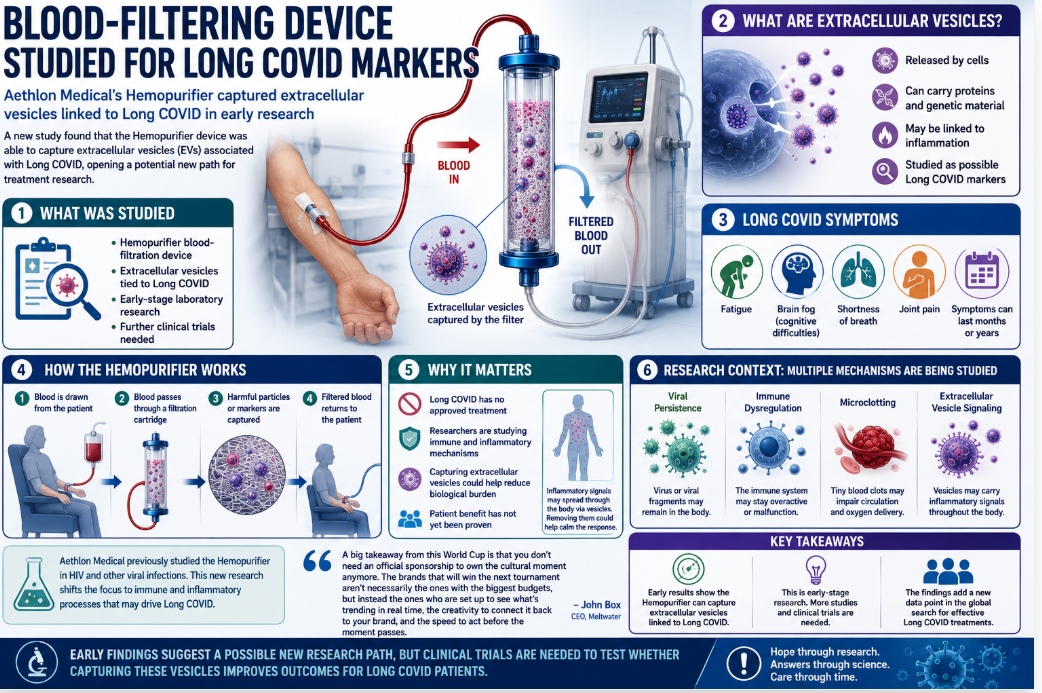
A medical device designed to filter the blood has shown a new potential use, this time targeting biological markers tied to Long COVID. A study from Aethlon Medical found that its Hemopurifier device was able to capture extracellular vesicles linked to the condition, raising the possibility of a treatment approach for a syndrome that has so far resisted most interventions.
According to reporting by Investing.com Canada and Stock Titan, the study examined whether the Hemopurifier could capture extracellular vesicles, which are tiny particles released by cells that can carry proteins and genetic material. In Long COVID patients, certain vesicles have been associated with ongoing inflammation and other symptoms that persist long after the initial infection clears.
Long COVID affects a significant portion of people who have been infected with the coronavirus. Symptoms can include fatigue, cognitive difficulties often called brain fog, shortness of breath, and joint pain, among others. The condition can persist for months or years and has no approved treatment as of now.
The Hemopurifier was originally developed to remove viruses and other harmful particles from the bloodstream. The device works outside the body in a process similar to dialysis, pulling blood through a filtration cartridge before returning it to the patient. Aethlon has previously studied the device in the context of HIV and other viral infections.
The new study represents a shift in focus toward the immune and inflammatory mechanisms that may drive Long COVID rather than the virus itself. Extracellular vesicles are believed to play a role in spreading inflammatory signals throughout the body, and removing them from circulation is the hypothesis behind this line of research.
Stock Titan reported that the study results showed the Hemopurifier was able to capture the types of vesicles identified in Long COVID patients, which the company described as a meaningful step in exploring whether the device could reduce the biological burden associated with the condition.
Aethlon Medical is a small medical device company, and the study represents early-stage research. Further clinical trials would be needed to determine whether capturing these vesicles through the Hemopurifier actually improves outcomes for Long COVID patients. The company has not yet announced plans for a full clinical trial focused specifically on Long COVID, but the study results are expected to inform the direction of future research.
The broader scientific community has been racing to understand Long COVID since the pandemic began. Multiple potential mechanisms have been proposed, including viral persistence, immune dysregulation, and microclotting. The extracellular vesicle hypothesis is one thread in that larger effort, and the Aethlon study adds a new data point to a field still working toward its first proven treatment.