

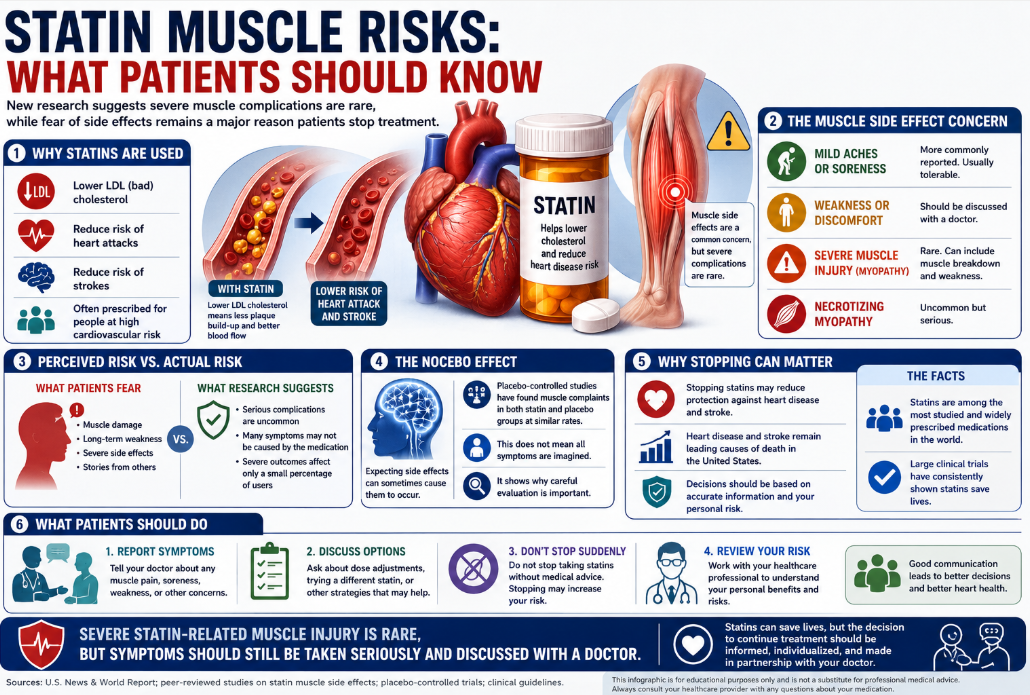
Millions of Americans take statin drugs every day to lower their cholesterol and reduce the risk of heart disease. One of the most common reasons people stop taking them is fear of muscle pain. But new research suggests the most severe muscle complications from statins are far rarer than many patients believe.
According to U.S. News and World Report, researchers say that serious muscle problems tied to statin use occur in only a small percentage of people who take the drugs. Muscle aches and mild discomfort are more common side effects, but the severe form of muscle damage, sometimes called statin-associated myopathy or necrotizing myopathy, is uncommon.
Statins are among the most widely prescribed medications in the world. They work by blocking a substance the body needs to make cholesterol, reducing levels in the blood and lowering the risk of heart attacks and strokes. Doctors have prescribed them for decades, and large clinical trials have consistently shown they save lives in people with high cardiovascular risk.
Despite that track record, patient concern about muscle side effects remains one of the biggest barriers to statin adherence. Many people report stopping the drugs after experiencing soreness or weakness, even when those symptoms may not be directly caused by the medication. Some patients avoid starting statins altogether because of stories they have heard about muscle damage.
The new findings draw a distinction between mild, tolerable muscle discomfort and the rare but genuine risk of severe muscle injury. The research indicates that while some patients do experience real muscle-related side effects, the most dangerous outcomes are not nearly as widespread as public perception suggests.
The gap between perceived risk and actual risk has real consequences. When patients stop taking statins because of fear of side effects that may not materialize, they may be giving up meaningful protection against heart disease and stroke, which remain leading causes of death in the United States.
Researchers have noted that some muscle symptoms reported by statin users may be the result of what is sometimes called the nocebo effect, where patients experience negative symptoms because they expect to. Studies in which neither doctors nor patients knew who was taking a real statin versus a placebo have found that many reported muscle complaints occurred at similar rates in both groups.
The new research does not dismiss the reality of statin side effects. It supports a more precise conversation between patients and their doctors about actual risk levels, so that decisions about continuing or stopping the drugs are based on accurate information rather than widespread but potentially overstated fears.