

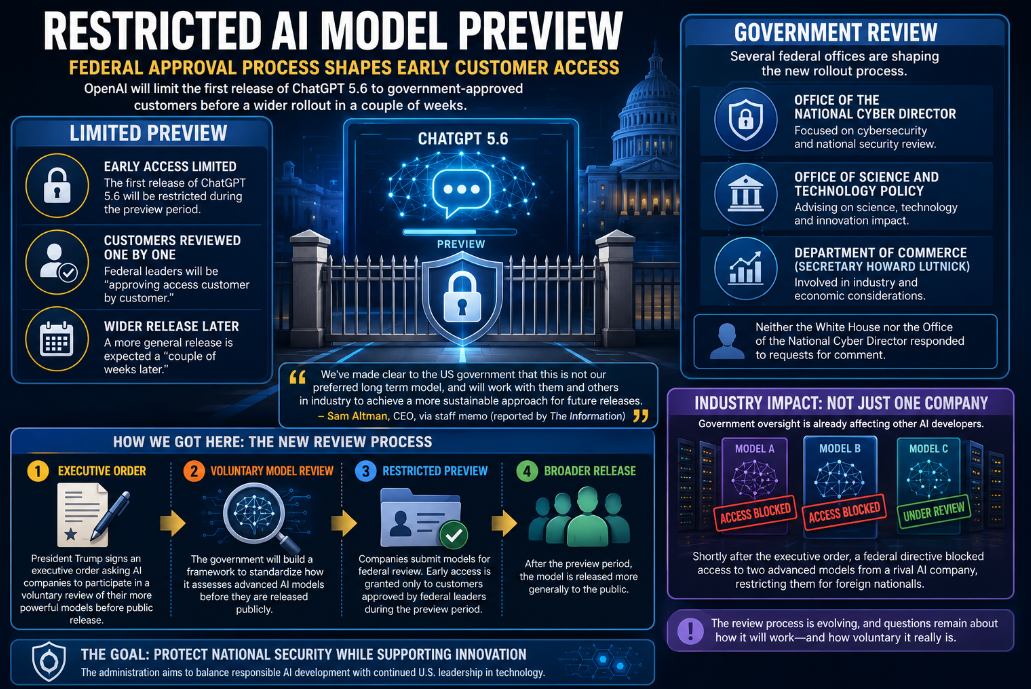
OpenAI plans to limit the first release of its ChatGPT 5.6 model to customers approved by the federal government, according to a report by Engadget citing The Information. The rollout represents a significant shift from how the company has handled previous model releases.
According to a staff memo from CEO Sam Altman, federal leaders will be "approving access customer by customer during this preview period," with a more general release expected a "couple of weeks later." The Information cited two sources familiar with the internal communications.
Altman reportedly acknowledged in the memo that this arrangement is not permanent. "We've made clear to the US government that this is not our preferred long term model, and will work with them and others in industry to achieve a more sustainable approach for future releases," he wrote, according to the report.
Several federal offices appear to be involved in shaping the new rollout process. The Information cited the Office of the National Cyber Director and the Office of Science and Technology Policy, along with Department of Commerce Secretary Howard Lutnick. Neither the White House nor the Office of the National Cyber Director responded to requests for comment from the publication.
The development follows an executive order that President Donald Trump signed earlier this month. The order asked AI companies to participate in a voluntary federal review of their more powerful models before public release. The government is expected to build a framework to standardize how it will assess new models going forward.
OpenAI is not alone in navigating government involvement in its releases. Shortly after Trump signed the executive order, OpenAI rival Anthropic disabled all access to two of its recent models following a federal directive. That order did not spell out specific security concerns but blocked access to Anthropic's tools for foreign nationals.
The sequence of events involving both companies has left the process looking far from settled. How the review process will work, and how voluntary it actually is, remain open questions as the government continues to shape its approach to regulating powerful AI systems.