A dog buried alongside a human nearly 14,000 years ago. That single archaeological fact sits at the center of a new book on the history of dogs and people, and it sets the tone for everything that follows. Dogs have been found in ancient graves, depicted in art from every continent, and woven into the mythology and religion of virtually every human culture on earth.
According to a report by Phys.org, archaeologist Peter Mitchell has written a new book titled First Dogs: Hunter-Gatherers and their Canine Companions from Prehistory to the Present, which argues that dog domestication was not a simple process driven entirely by humans. Instead, Mitchell suggests both people and wolves likely participated as equal partners, at least in the beginning, and that hunter-gatherer communities were central to the process long before humans brought any other animals or plants under close control.
The result was not one kind of dog, but many. Over roughly 15,000 years of shared history, dogs developed specialized traits that closely matched the needs and environments of the human societies they lived alongside. As Mitchell puts it: "The connections between dogs on the one paw and people dependent on wild plant and animal resources on the other are ancient, diverse and profound."
That diversity is visible across every environment where humans have lived. In the far north, Indigenous peoples developed sophisticated dog sledding cultures, and the dogs themselves changed to match. Archaeological evidence shows that Arctic dogs evolved distinctive skeletal features tied to their role as draft animals, including specific patterns of vertebral stress and robust limb bones capable of withstanding the demands of pulling heavy loads across ice and snow. These dogs are physically different from the lean, heat-adapted hunting dogs found in equatorial regions, and those differences did not happen by accident.
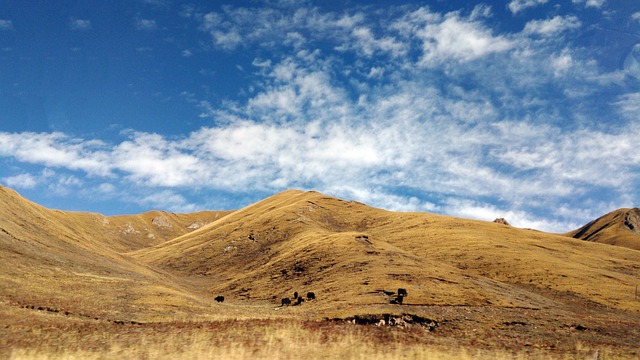
On the Tibetan Plateau, the parallel between human and canine adaptation becomes especially direct. Both dogs and the people who kept them evolved similar genetic changes to cope with oxygen-poor air at high altitude. Researchers have identified specific genes in Tibetan dogs that allow them to thrive at elevations where lowland breeds would struggle, mirroring adaptations found in the human populations of the same region. As Mitchell explains: "We do not know when dogs first joined them, and the genetic variants needed to thrive there may have been quickly acquired, but until that was achieved hypoxia presumably acted as a constraint on canine presence."
The range of physical forms that emerged from this long shared history is striking. From the compact, thick-coated sled dogs of the Arctic to the small frame of a chihuahua or the towering height of a Great Dane, dogs have been shaped into hundreds of specialized breeds. Today, more dogs live with humans than at any point in history, a fact that Mitchell uses not as a conclusion but as a starting point for asking how that relationship was built, one environment and one community at a time.
Mitchell's book draws on archaeological evidence, genetics, and the study of contemporary hunter-gatherer communities to piece together a picture of domestication as something that unfolded through multiple pathways, not a single origin point. Different human groups, living in different landscapes, developed different kinds of relationships with dogs, and those relationships left permanent marks on the animals themselves.
The book does not treat dogs simply as tools that humans shaped for practical purposes. The evidence of dogs buried in human graves, treated with care across thousands of years and dozens of cultures, points to something more than utility. Whether hunting partners in the forests of Central Africa, sled pullers on the Arctic coast, or companions in a modern apartment, dogs have occupied a place in human life that no other domesticated animal has matched, and First Dogs attempts to explain how that happened across the full span of human prehistory.