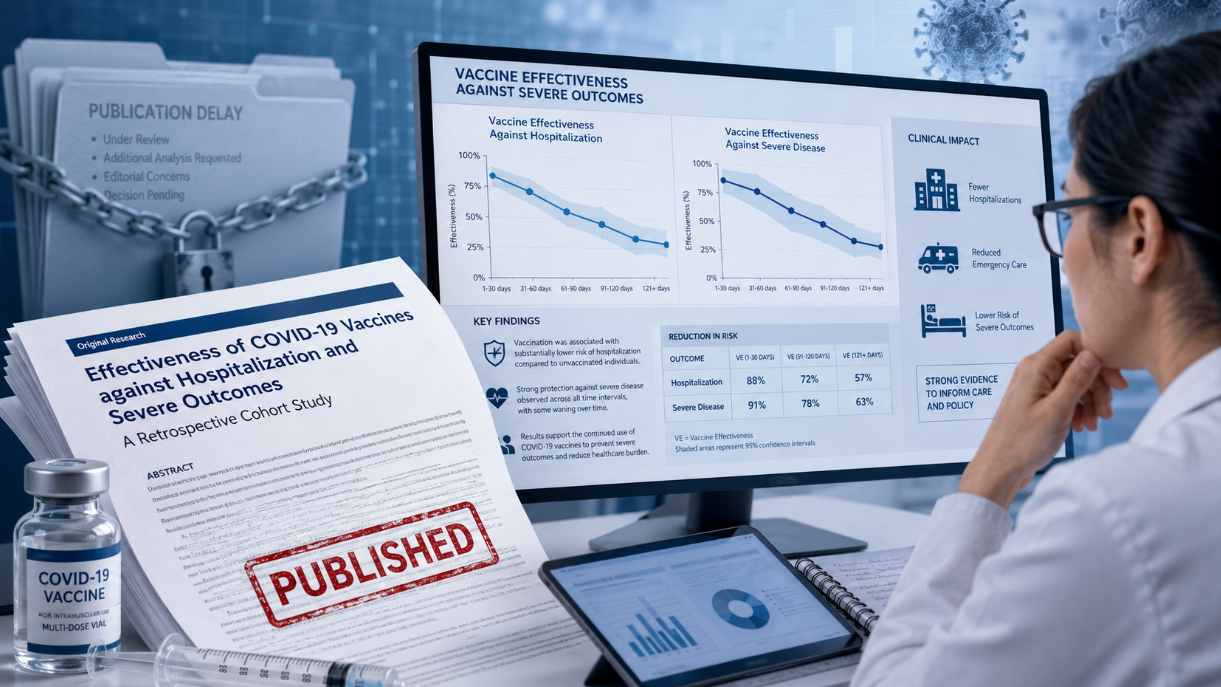
A COVID-19 vaccine study blocked from publication by the acting director of the Centers for Disease Control and Prevention has now appeared in a medical journal. The study found that adults who received the updated 2025-2026 COVID-19 vaccine were substantially less likely to need emergency, urgent, or inpatient care for COVID-19 than comparable adults who had not received that season's vaccine.
According to Healthline, the research was published on June 23 after months of controversy. The study had originally been scheduled for publication in the CDC's Morbidity and Mortality Weekly Report. Acting CDC Director Jay Bhattacharya blocked it after it had already completed scientific review and received editorial approval, citing concerns about the study's methodology.
The research examined adults who sought medical care for COVID-19-like illness across hospitals and emergency departments in seven states. It concluded that COVID-19 vaccines reduced the likelihood of COVID-19-related hospitalization and severe illness among adults by about half. The study also examined whether seasonal COVID-19 vaccines continue to provide meaningful benefit after previous vaccinations and infections.
Much of the debate surrounding the study has focused not on what it found, but on the research method used to measure vaccine effectiveness. Experts who reviewed the situation said nothing in the study or its design was significant enough to justify pulling it from publication.
Robert Glatter, MD, an attending physician in the Department of Emergency Medicine at Lenox Hill Hospital in New York City and assistant professor of Emergency Medicine at Zucker School of Medicine at Hofstra/Northwell, weighed in on the situation, though he was not involved in the study. He described the circumstances under which pausing a study would be legitimate.
"There are legitimate reasons to pause — a serious error, a data problem, conclusions that go further than the evidence supports," Glatter said. "But the fix for all of those is the open scientific process: revise, respond to reviewers, replicate. Quietly halting accepted research without a transparent scientific reason falls outside how regulators are supposed to operate," he told Healthline.
The Washington Post first reported in April that the study had been blocked. Its publication this week closes a months-long gap between when the research was ready and when the public could access its findings. The study's conclusions add to the existing body of evidence on updated COVID-19 vaccines and their ability to reduce serious illness in older adults.