

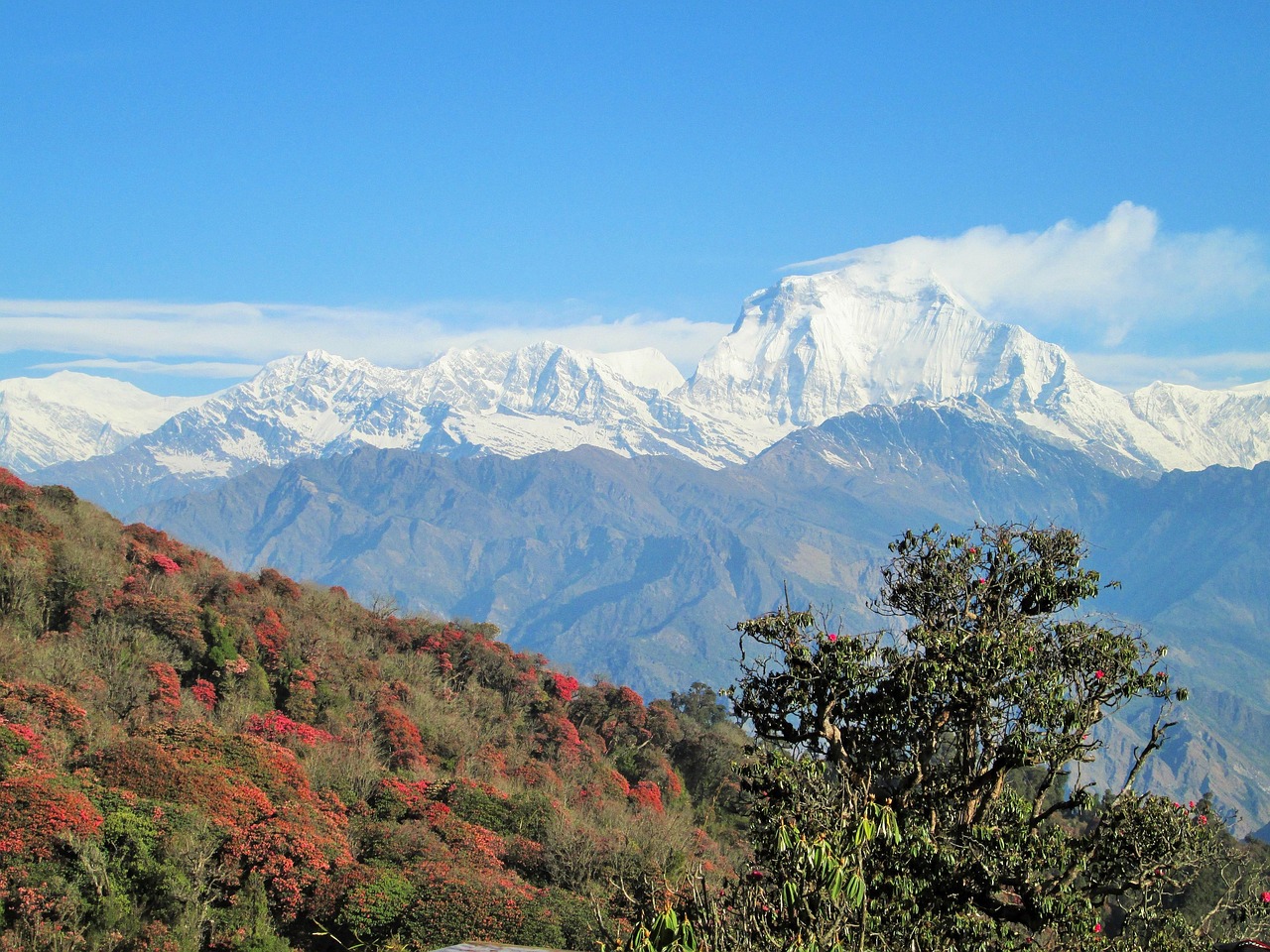
The Himalayas have long been considered a natural wall separating the heavily industrialized regions of South Asia from the remote Tibetan Plateau. New research suggests that barrier is not as solid as it appears, at least not for air pollution.
Scientists have found direct evidence that pollution from coal combustion can travel across the Himalayas during the summer monsoon, reaching the southern Tibetan Plateau. The findings were published in Geophysical Research Letters, and reported by Phys.org.
The research team used an unusual detection method. Unlike most plants, mosses absorb nutrients and water directly from the atmosphere rather than through roots, which means they also collect tiny airborne particles over time. That makes them natural recorders of air pollution. Researchers collected moss samples along an elevation transect in the Yarlung Tsangpo Grand Canyon, ranging from 750 to 4,100 meters above sea level.
Xiaoyu Jiao of the China University of Geosciences and colleagues measured concentrations of several potentially harmful metals in those samples, including zinc, lead, arsenic, nickel, and cobalt. They also examined stable zinc isotopes, slightly different forms of the same element that act as chemical fingerprints. Different industrial processes produce distinct isotope signatures. Coal combustion tends to produce relatively heavy zinc isotope signatures, while high-temperature metal smelting releases isotopically light zinc.
On the southern side of the Himalayas, mosses at lower elevations contained high concentrations of heavy metals alongside lighter zinc isotope signatures. The analysis suggested that between 42 and 50 percent of the pollution in those areas came from metal smelting, consistent with nearby industrial emissions. As the researchers moved higher up the mountain, overall metal concentrations declined, but the zinc isotope signatures became progressively heavier, pointing to an increasing contribution from coal combustion. Coal accounted for 35 to 50 percent of pollution sources at higher elevations.
North of the Himalayan crest, overall pollution levels were lower. But mosses collected above 3,500 meters consistently showed the heavier isotope signatures associated with coal combustion. The pattern suggests that coal pollution is making the full crossing during the summer monsoon season, when atmospheric conditions allow particles to be carried hundreds of kilometers through the air.
The findings have implications well beyond the Himalayas. They suggest that even the most isolated high-altitude environments on Earth are not insulated from industrial emissions generated far beyond their borders.