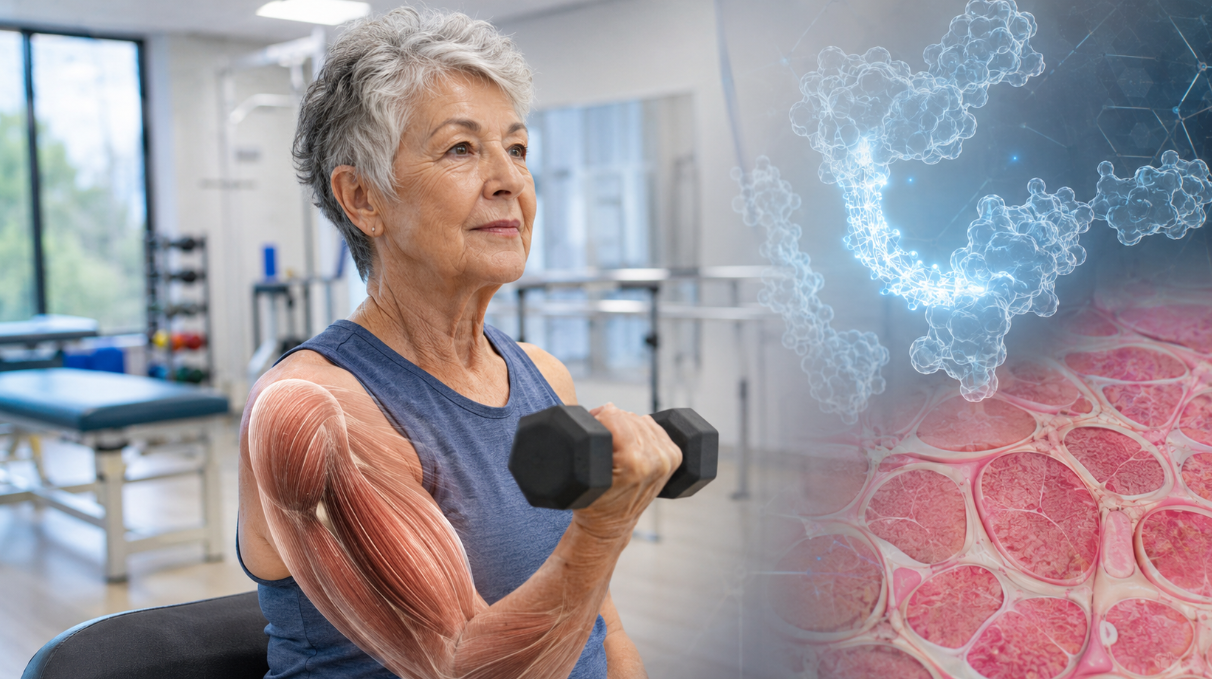
A study of 117,025 women found that doing at least two hours of strength training per week was linked to a lower risk of cardiovascular disease. The findings, published June 17 in JACC, the flagship journal of the American College of Cardiology, showed that the heart health benefits grew larger when strength training was combined with aerobic exercise.
According to Healthline, researchers drew from two long-running datasets: the Nurses' Health Study and the Nurses' Health Study II. The average baseline ages of participants in those two groups were 66.8 years and 48.1 years. Researchers assessed strength training every four years, tracking arm and leg training separately. They measured sedentary behavior by averaging the hours per week participants spent watching television at home.
The primary outcome the researchers tracked was major cardiovascular disease events, including heart attacks. In both groups, higher levels of strength training were associated with a lower risk of major cardiovascular disease, particularly heart attack. The association did not hold for stroke.
Study co-authors Tianyue Zhang, MD, and Edward Giovannucci, MD, addressed why heart attacks and strokes showed different results. "One possible explanation is that heart attacks and strokes do not arise through identical pathways," they told Healthline. "Resistance training is thought to improve factors such as cholesterol and other blood lipids, insulin sensitivity, and overall body composition, all of which are strongly linked to coronary artery disease and myocardial infarction."
They also noted the complexity of stroke as an outcome. "Stroke, however, is a more heterogeneous outcome that includes several subtypes, ischemic, hemorrhagic, and cardioembolic, which may not all respond in the same way to the physiological changes associated with resistance training. In addition, we cannot fully exclude the role of chance, so these subtype-specific differences should be interpreted with some caution," the co-authors said.
Mary Greene, MD, a board-certified cardiologist with Manhattan Cardiology in New York City who was not involved in the study, pointed to additional reasons why resistance training matters specifically for women past midlife. "Beyond heart disease, resistance training uniquely addresses osteoporosis by improving bone mineral density at the femoral neck and lumbar spine, frailty due to muscle loss, and fall risk, which are all conditions that disproportionately affect postmenopausal women," Greene said.
She added that this combination of effects makes the activity especially valuable for that population. "This makes resistance training a particularly high-value intervention in this population, [as it addresses] multiple morbidities simultaneously," she said.
The study adds to existing research on the benefits of strength training, which has already been linked to stronger bones and muscles, improved heart health, and decreased abdominal fat. Researchers noted that cardiovascular disease remains the leading cause of death among women.