Female baboons that stay close to their mothers and sisters live longer and raise more offspring than those with weaker family ties. That finding comes from four decades of field research on baboons across sub-Saharan Africa, and it offers a window into how evolution may have shaped the social behavior of early humans as well.
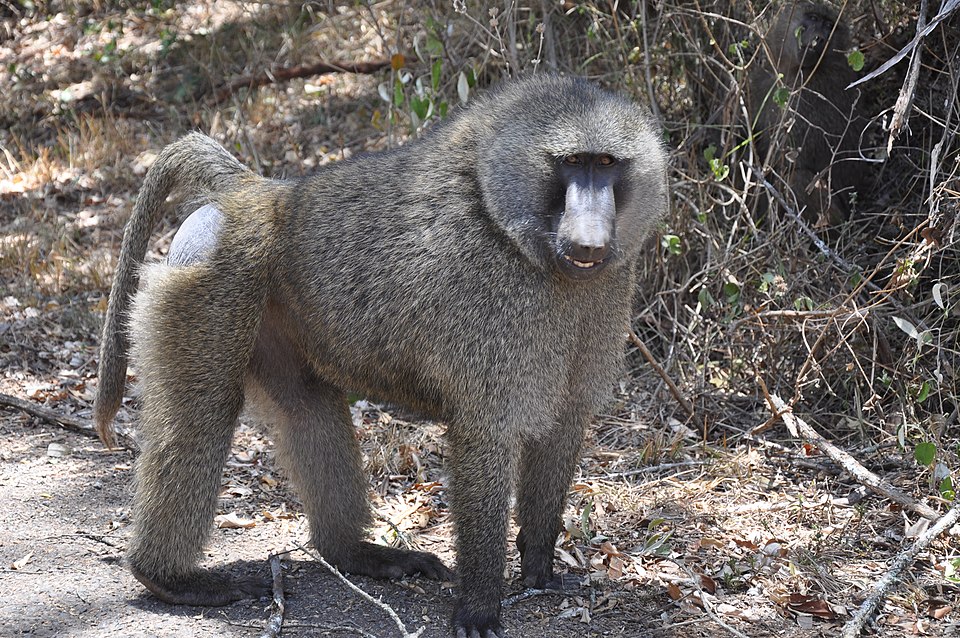
According to a report by Phys.org, the research draws on long-term studies of three baboon species: chacma baboons, olive baboons, and yellow baboons. The work was carried out by an evolutionary anthropologist who has spent 40 years studying these animals in the wild. Baboons are among the most widespread primates in Africa, ranging across sub-Saharan Africa and into the Arabian Peninsula. Their success across such a large territory comes from their adaptability, allowing them to live in deserts, swamps, open grasslands, woodlands, and tropical forests.
In baboon groups, males leave their birth groups near the time of sexual maturity to prevent inbreeding. They may live in several different groups over the course of their lives. Females, by contrast, remain in their birth groups for life. This means that baboon groups are built around sets of females connected through their maternal ancestors, a structure called matrilines.
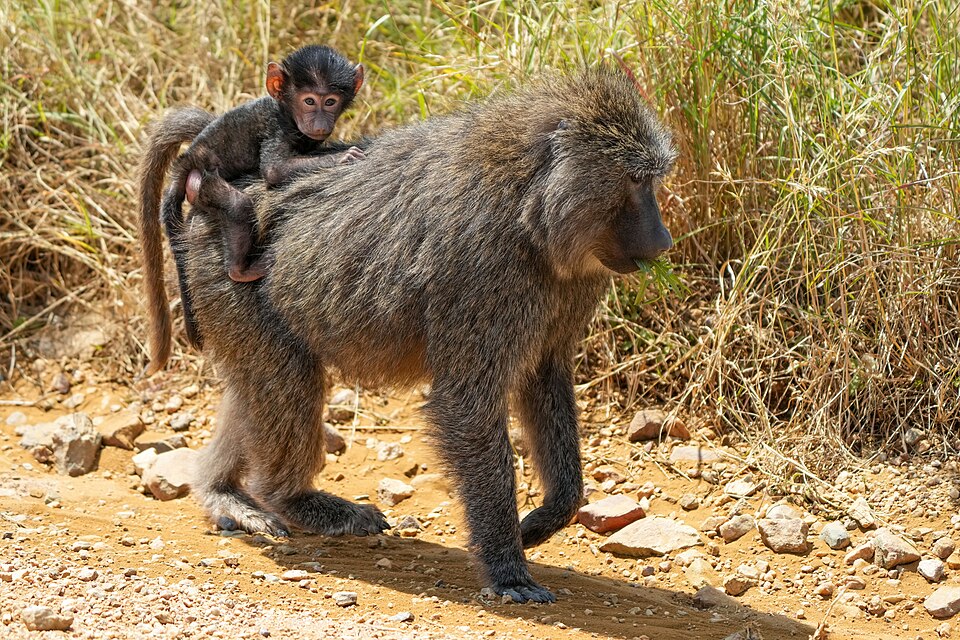
The bonds formed within those matrilines shape nearly every aspect of a female baboon's life. Pregnant mothers nourish their developing young and buffer them from outside stressors. After birth, mothers nurse their infants, carry them from place to place, and keep them warm and safe. Even after weaning at around 18 months, young baboons stay close to their mothers, seeking protection and reassurance when threatened.
Mothers also intervene directly in conflicts on behalf of their offspring, especially their daughters. With a mother's backing, a young female can defeat any female that her mother can defeat. This process drives the formation of dominance hierarchies in which females inherit rank positions just below their own mothers. A daughter's place in the social order is not random. It is built on her mother's standing.
As females mature and begin reproducing, the connections to mothers and sisters do not fade. Adult females spend significantly more time near their female relatives than near unrelated group members. These relationships are not just social comfort. They have measurable consequences for survival and for lifetime reproductive success, which researchers define as the number of surviving offspring a female produces over her entire life.
The research sits within the field of behavioral ecology, which examines how ecological conditions and evolutionary pressures shape the behavior of animals. Studies of non-human primates are particularly valuable to researchers trying to understand human origins because baboons are closely related to humans and live in complex social groups that share features with early human societies. The patterns seen in baboons, where maternal kinship structures survival and reproduction, may reflect deep evolutionary forces that also shaped human social behavior.
The 40-year span of the research is itself significant. Long-term studies allow researchers to track individuals across their entire lives, linking early social conditions to outcomes that only become visible years or decades later. Short-term studies cannot capture those connections. The baboon data, built across multiple species and multiple research sites, provides one of the most detailed pictures available of how kinship operates in a wild primate population.