

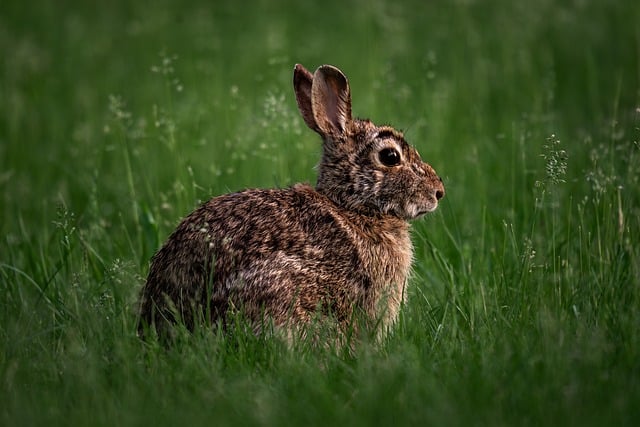
Farmers in an Indigenous community in eastern Honduras had long blamed a large, endangered animal for destroying their cassava fields. They were wrong. New research shows the actual culprit was a small rabbit that locals did not even know was living in their fields.
According to Phys.org, researchers from the Wildlife Conservation Society installed camera traps around a 10-hectare cassava field in the Miskitu community of Mavita, located in the Honduran Mosquitia. The cameras were equipped with solar-powered motion-activated LED lights. The goal was to document which mammals were actually visiting the crops, not which ones residents assumed were responsible.
Community members had long believed the damage was caused by Baird's tapir, an endangered species and the largest terrestrial mammal in Central America. They also suspected pacas and armadillos were contributing to losses. The study's findings contradicted both assumptions.
Over two months of monitoring, the cameras recorded seven mammal species in and around the field. These included tapirs, ocelots, jaguarundis, agoutis, opossums, and rabbits. The species most frequently detected interacting with the cassava was the Honduran cottontail rabbit, known scientifically as Sylvilagus hondurensis. Locals had not known the species was present in their fields at all. The cameras found no evidence that armadillos or pacas were feeding on the cassava. Tapirs appeared in the area but far less often than expected.
The full results were published in Neotropical Biology and Conservation.
"Many conservation conflicts begin with assumptions. Without evidence, it is easy to blame large and conspicuous animals. Camera traps allowed us to identify which species were truly interacting with the crops and helped us separate perception from reality," said lead author Manfredo Turcios-Casco.
The stakes of misidentification are significant. Across Latin America, wildlife has historically faced persecution after being blamed for crop losses. In Honduras, Baird's tapir has faced retaliatory hunting in areas where farmers believe it threatens their fields. If the tapir is not actually responsible, that hunting accomplishes nothing except pushing an already endangered animal closer to local extinction.
Correctly identifying the species responsible for agricultural damage is a first step toward solutions that actually work. Targeting rabbit deterrents, for example, makes more practical sense than measures aimed at tapirs. The researchers also set out to evaluate whether the solar-powered LED light systems used in the camera traps could eventually help reduce crop losses directly, though that phase of the work was not the focus of this initial study.
The Honduran Mosquitia is one of the largest remaining blocks of tropical forest in Central America, and Mavita sits within a landscape that blends Caribbean pine forest with tropical rainforest. Communities living there depend on cassava as a food source, making crop protection a practical concern, not just an ecological one.
The study is an example of how relatively low-cost technology can resolve conservation disputes that persist for years on rumor and assumption alone. Noninvasive monitoring through camera traps does not require capturing animals, harming them, or extensive scientific infrastructure. It requires placing equipment in the right place and waiting.
For communities in the Honduran Mosquitia, the findings reframe who is responsible for their losses and open new possibilities for protecting crops without targeting an animal that conservation efforts have worked for decades to protect.