

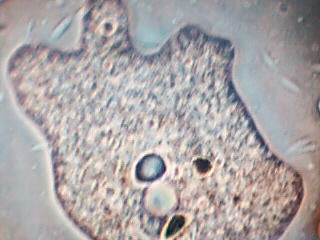
A single-celled aquatic organism can shrink to one-quarter of its body length in less than 5 milliseconds. That is hundreds of times faster than a human blink. Researchers studying the creature, Spirostomum ambiguum, have now figured out how it does it, and the findings could change how scientists design artificial muscles.
The study was published in the Proceedings of the National Academy of Sciences. According to Phys.org, the organism is a giant single-celled ciliate, named for the fringe of hairlike cilia it uses to swim. It can contract at a rate of about 100 body lengths per second and repeat the motion rapidly, a skill it may use to escape predators or signal other ciliates nearby. Human muscle fibers can shorten by similar fractions, but it takes roughly 10 times as long to do so.
The key difference is what powers the movement and what the machinery looks like. The research team used electron and immunofluorescence microscopy to examine the organism up close. They found that Spirostomum does not have muscle fibers at all. Instead, it has myonemes, which are fibrous structures inside the cell made up of calcium-binding proteins called centrin and Sfi1. These myonemes form a fishnet-shaped web across the outside of the organism.
When contraction is triggered, the net pulls tight and then springs back. The Sfi1 protein is central to that process. In the presence of calcium ions, Sfi1 shifts from stiff to flexible, clumping together, which causes the fishnet to contract and the organism to shrink.
"The fishnet geometry is unique because it lets Spirostomum contract uniformly, which protects its internal organelles (single cells' versions of organs) while it moves so quickly," said Mary Elting, associate professor of biophysics at North Carolina State University. "It works because the Sfi1 protein in the myoneme can shift from stiff to flexible. In the presence of calcium ions, Sfi1 loses its stiffness and clumps up like a ball of wet spaghetti, which causes the fishnet to pull tight, shrinking the organism."
In humans, adenosine triphosphate, known as ATP, stores and releases energy to trigger muscle contraction. Spirostomum skips that process entirely, relying instead on calcium ions as the trigger.
"Comparing the way our muscles contract to the way Spirostomum works is like comparing gas to electric power," Elting said. "ATP undergoes a chemical change and gets 'burned up,' like gas."
The implications of this research extend beyond understanding one unusual microorganism. Elting and her team believe the findings could guide engineers building synthetic systems that need to move fast.
"The difference between what Spirostomum can do and what we can do comes down to what is powering the contraction, and what the machinery behind it looks like," Elting said. "If we can understand those processes, it could help us build synthetic systems that mimic the speed and power of this single-celled organism."
Scientists have long been interested in Spirostomum because of the mechanical gap between what it can do and what human biology can manage. The fishnet protein structure, the calcium trigger, and the speed of the whole system together represent a design that nothing humans have built yet fully replicates. The research team's next steps were not specified in the published findings, but the study opens a concrete path toward faster artificial muscles and synthetic cellular machinery.