Sydney already holds some of Australia's most extreme heat records. In January 2020, Penrith in western Sydney reached 48.9 degrees Celsius, the highest temperature ever recorded in Greater Sydney. New research suggests that by 2050, that kind of heat could become a routine threat inside the very apartments being built right now.
A study published in the journal Energy and Buildings, and reported by Phys.org, tested apartments built to current Australian building codes in two Sydney locations: inner-city Redfern and western Sydney's Penrith. Researchers used the latest climate projections for Sydney to model what indoor conditions might look like in the 2050s.
Under a high greenhouse gas emissions scenario known as SSP3-7.0, Sydney's median outdoor temperatures could be up to 5 degrees Celsius higher than today in its hotter inland areas, with hot days becoming longer and more frequent. The study found that apartments built to today's standards could be too hot for comfort for the equivalent of about four weeks a year in Redfern and more than seven weeks in Penrith.
The researchers concluded that the level of indoor overheating could pose a serious heat stress risk to residents. Western Sydney residents could face almost twice as much overheating inside their homes as those in Redfern.
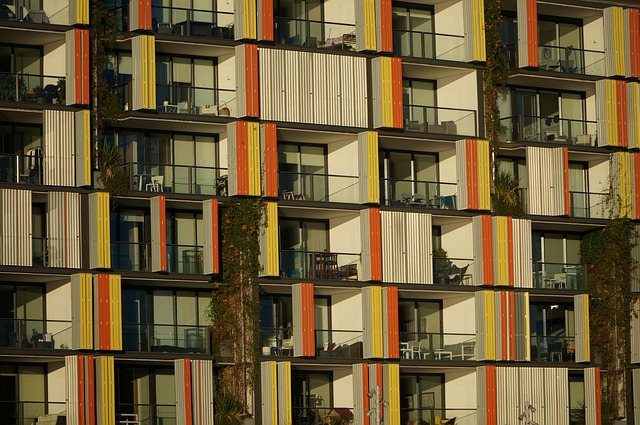
Building design plays a significant role. West-facing homes receive intense afternoon sun. Top-floor apartments absorb heat radiating through the roof. Many apartments lack cross-ventilation, and others have windows too small to remove the heat that builds up indoors.
Not everyone will be equally exposed to that risk. The study identified older people, lower-income households, and people with chronic illnesses as facing the greatest danger. These groups make up much of western Sydney's growing apartment population.
Air conditioning is not a guaranteed solution. Some renters are not permitted to install units. Even where air conditioning is already installed, running it carries a cost that many households cannot absorb. One national longitudinal study estimated that about one in 14 Australian households already spends more than 10 percent of its income on energy bills. A separate survey of more than 1,000 Australians found that 49.7 percent of households resist using their air conditioning on hot days to save on costs.
Air conditioning is also not mandatory in new apartment builds in Australia. That means many of the developments being approved today, which will still be standing in 2050, could be built without it.
Sydney leads the nation in apartment living and is currently rezoning rapidly to build more homes. The researchers argue that buildings being designed now are being built for a past climate, not the one those structures will actually have to withstand across their lifespans.