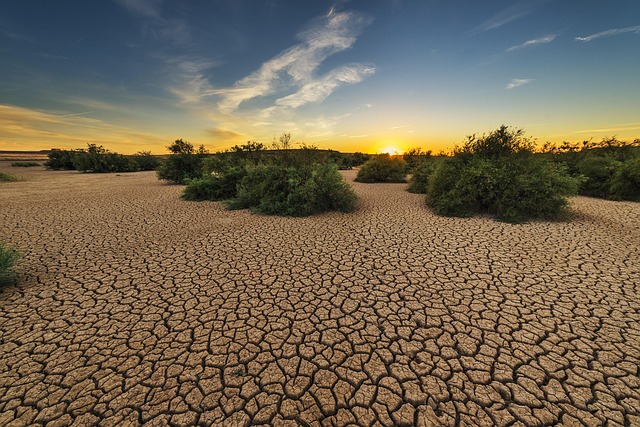
A new study from the University of Innsbruck found that grasslands could lose far more carbon uptake under future drought conditions than scientists previously estimated, upending a key assumption used in climate modeling.
The research, published in Science Advances, was led by Maud Tissink and Michael Bahn from the Department of Ecology. The team ran a multiyear field experiment combining three climate factors at once: elevated CO2, warming, and drought. Most previous research had tested these factors one or two at a time, then added the results together to estimate combined effects. The new study shows that approach may seriously underestimate what droughts will actually do to grasslands in the coming decades.
Until now, climate researchers largely assumed that the effects of elevated CO2 and warming could be added together like separate line items. The new study provides evidence that this simplification is reaching its limits. When CO2 and warming occur together, their combined effect is greater than the sum of the individual effects. When drought is layered on top of both, the impact on carbon uptake, respiration, and water balance is amplified even further.
Tissink conducted the measurements using special ecosystem chambers that capture CO2 and water flows under controlled conditions. The experiment simulates conditions expected over the coming decades. According to the study, the setup functions almost like a time machine for the ecosystem, showing how it responds before those conditions arrive.
Bahn described what made the results surprising. Scientists had expected that elevated CO2 would cause plants to conserve water, while warming would increase water demand, and that the two would roughly cancel each other out. That is not what the data showed. According to Phys.org, Bahn explained: "It was actually expected that with increased CO2, plants would conserve water, while warming would increase water demand, so the two effects would buffer each other in combination. However, the effect of warming was so strong that water conservation was insufficient. The negative effects of drought were thus intensified."
The implications for carbon storage are significant. Drought under current conditions already restricts how much carbon grasslands pull from the atmosphere through photosynthesis. Under the simulated future conditions, with both higher CO2 and higher temperatures present, that restriction became much stronger.
Three-factor field experiments like this one are rare. Most ecosystem studies track one or two variables at a time because coordinating more is extremely demanding. As Bahn noted in the study, "Such three-factor experiments in ecosystems are rare worldwide because they are extremely labor-intensive. There are only a handful of such experiments systematically considering more than two factors."
Grasslands cover a large portion of Earth's land surface and play a substantial role in the global carbon cycle. If their ability to absorb CO2 is more vulnerable to drought than current models reflect, projections of how much carbon the land can absorb in a warming world may need to be revised downward.
The research team is based in the Department of Ecology at the University of Innsbruck in Austria.