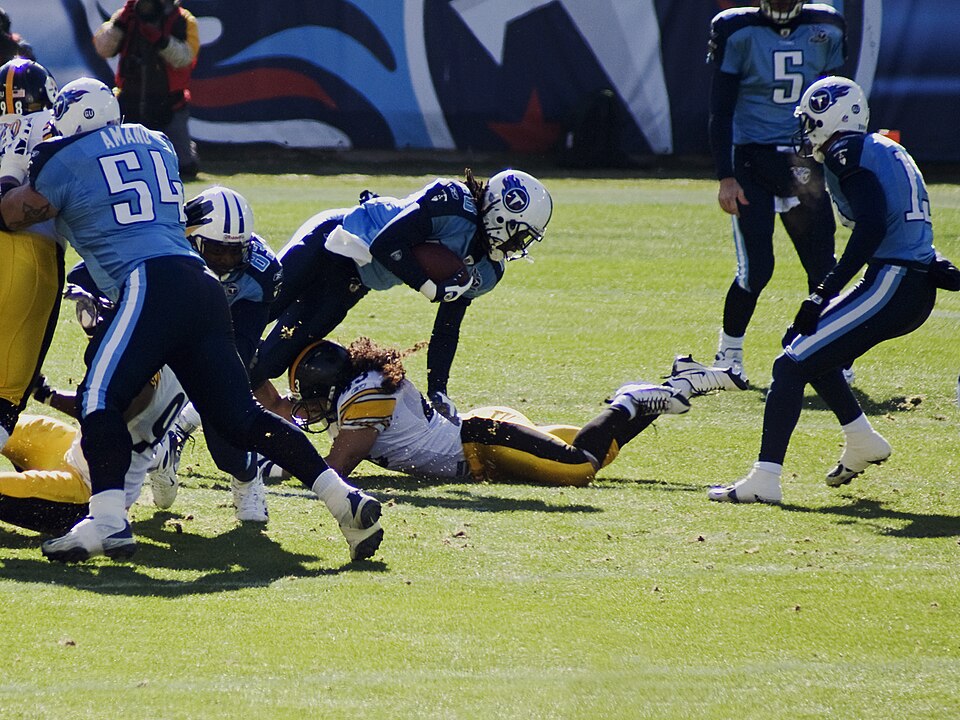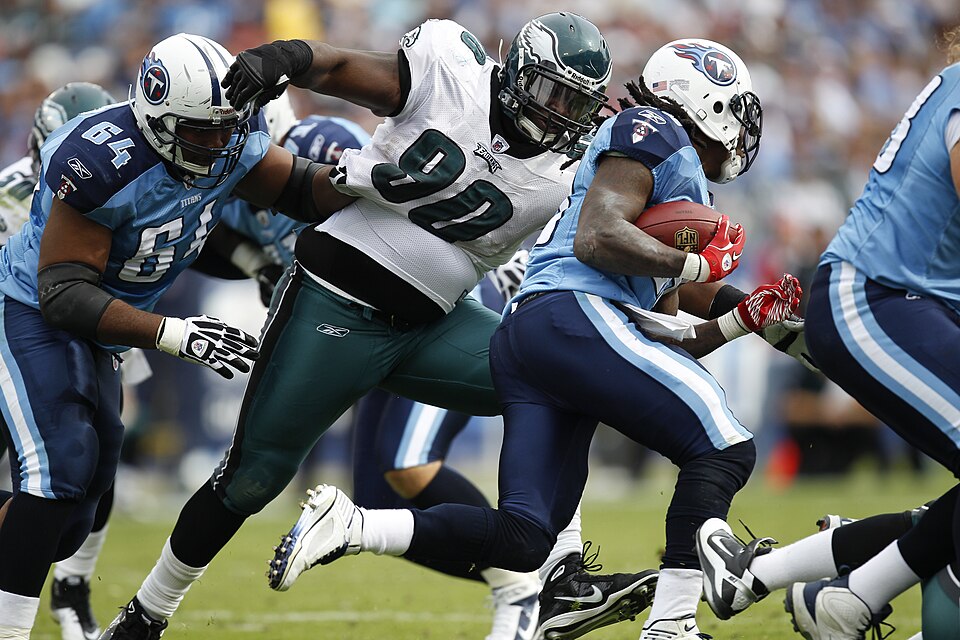
Former NFL running back Chris Johnson revealed this week that he was diagnosed with Amyotrophic Lateral Sclerosis in 2025. Johnson made the announcement during an interview with Michael Strahan on Good Morning America. The disease has already progressed to the point that Johnson uses a computerized speech-generating device to communicate and can no longer hold a cup.
ALS is a progressive neurodegenerative disease that affects the nerve cells, known as motor neurons, in the brain and spinal cord. As the motor neurons deteriorate, the brain gradually loses its ability to communicate with muscles, leading to weakness, twitching, and difficulty speaking, swallowing, and breathing.
According to Yahoo Sports, New Orleans Saints legend Steve Gleason, who was diagnosed with ALS in 2011, responded publicly to Johnson's announcement on Twitter/X and Instagram.
"Chris is my NFL brother, but more importantly, he is my fellow human. When ALS enters your life, it is a relentless tsunami. I want Chris and his family to know they are not alone. We are here for him. Every person living with ALS has a story, a family, a purpose, and a future that matters. Chris has spent his life showing strength, speed, and heart. Now he and everyone diagnosed with ALS deserve all of that strength, heart, and urgency returned to them," Gleason wrote.
Gleason has spent the 15 years since his own diagnosis working through his foundation, Team Gleason, which has provided more than 65 million dollars in support to improve quality of life for people living with ALS through adventure, technology, equipment, and care services. His philosophy, described as "No White Flags," has grown into a guiding principle for the foundation's work.
Johnson addressed his condition directly in the interview. "Your mind stays sharp. People sometimes look at a person with a physical disability and assume you're not still the same person inside," he said. "I still think the same. I still dream. I still love my family. My body just doesn't cooperate."
Johnson also said there was no family history of the disease. "My doctors believe my case is what's called sporadic ALS, which is actually how the vast majority of ALS cases happen. That's one of the reasons this disease can be so shocking. It can happen to someone who never expected it," he said.