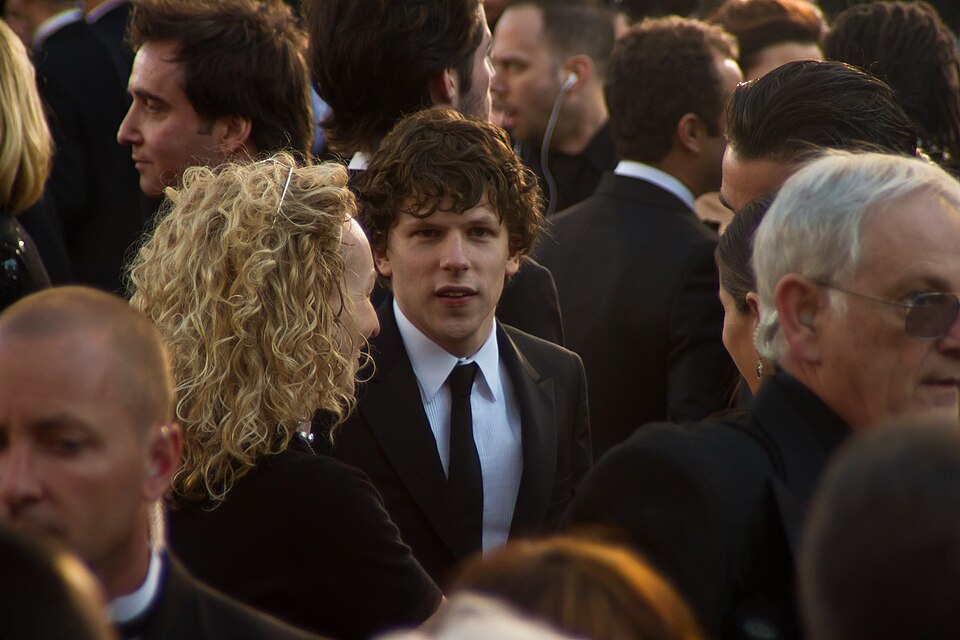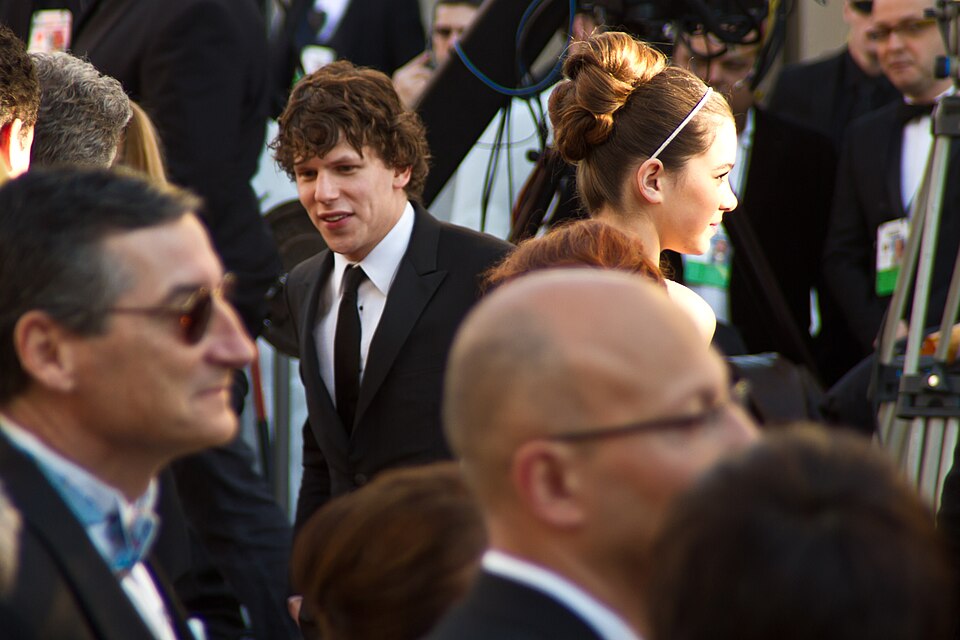
Jesse Eisenberg said he has no plans to leave the United States despite recently obtaining Polish citizenship. He made the remarks at the Karlovy Vary International Film Festival in the Czech Republic, where he received this year's President's Award, according to Variety.
"I am a very lucky American," he said. "I have a nice life. My wife is a teacher, and she teaches a lot of students who are not as lucky as we are. I think we feel, if anything, a responsibility to stay in New York and help those who are struggling through a tougher period in American history. No, I'm not going to leave because I don't like the politics of America. That seems a little silly, because my life is very good."
Eisenberg directed A Real Pain, which earned him significant critical recognition. His next film as director is a musical comedy called The Debut, starring Julianne Moore and Paul Giamatti. A24 will release it in the U.S. on December 3. The first official trailer came out last week.
The trailer arrived one day after A24 announced a research partnership with Google's DeepMind unit to develop AI-powered technologies for filmmakers. The announcement drew backlash from fans on social media, many of whom expressed frustration in the comments of the trailer. Eisenberg addressed the timing directly. He said the AI partnership had nothing to do with his film.
"A24 could not have been better about making our movie analog," he said. "The movie takes place in the 1990s, with two stars who have been working forever and who are just brilliant in the movie. We shot on film, which is very rare, so the movie felt like a movie from the 90s, which was my era growing up and starting to watch independent movies. Our movie could not have been more analog."
He continued: "Our movie is the opposite of AI. It really doesn't affect our movie at all. A24 is a really smart studio. All I could say is that my interactions with them over the last five years have been the most artist-friendly. I've never worked with a studio so closely, where every decision they make is about what would make the thing better. I'm sure they're worried about economics, but never to me. It feels like winning the lottery to work at a company like that, where the only thing they seem to care about — and the only thing they ask from you — is to make the best possible version of your movie."
The Karlovy Vary International Film Festival is in its 60th edition and 80th year of existence this year. The Hollywood Reporter noted that artistic director Karel Och described the main program as having extraordinary geographical diversity, with close to 40 titles in competition. The festival runs through July 11.
One prominent figure working behind the scenes at the festival is interpreter Helena Koutná, who has been handling major Q&As and award ceremonies since 1997. She appeared on stage with both Dustin Hoffman and Eisenberg in the first two days of this year's festival alone.
Also premiering at Karlovy Vary was Robert Richardson: The White Devil, a documentary about three-time Oscar-winning cinematographer Robert Richardson. The film was directed by Czech filmmaker Jana Hojdová and began as a student project in 2016. Hojdová wrote Richardson a letter without expecting a reply. Not only did he respond, he invited her to visit him in the United States. The COVID-19 lockdown then extended her stay far longer than either had anticipated, according to Deadline.
Richardson has ten Oscar nominations and three wins, with credits alongside Oliver Stone, Quentin Tarantino, and Martin Scorsese. Tarantino is quoted in the film saying, "There's Bob Richardson and there's everybody else." Richardson is now 70 years old.
The Crystal Globe competition at this year's festival also includes Chica Checa, a Czech comedy-drama directed by Šimon Holý. Variety reviewed the film and described it as a commercial, middlebrow crowdpleaser aimed at local audiences. The film centers on a middle-aged woman whose adult son comes out to her as gay and tells her he works as a drag queen, set against the backdrop of a potential sale of the family home. Variety called the film "worthy but clumsy," noting that its conflicts resolve too easily and that the filmmaking itself suffers from inconsistencies.