

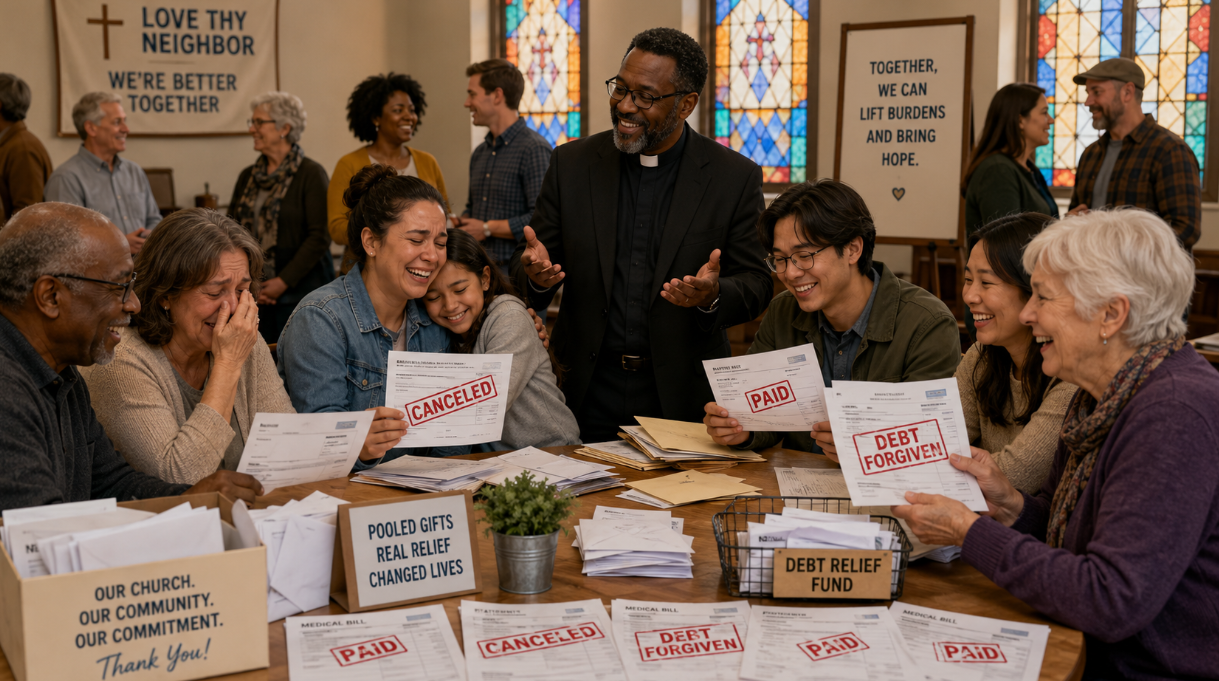
A group of church members in the Chattanooga area found common ground on medical debt even when they could not agree on much else politically, according to a report by the Chattanooga Times Free Press. Together they raised money that was used to buy and cancel medical debt for people in their community who had no way to pay it.
The effort brought together congregation members who described disagreeing sharply on political issues. What united them was a shared view that neighbors should not be crushed by medical bills they could not afford, and that the church had a role in doing something about it.
Medical debt in the United States works in a specific way that makes it possible for outside groups to intervene. Hospitals and medical providers frequently sell unpaid debt to collection agencies at a steep discount, sometimes for just a few cents on the dollar. Nonprofit organizations have developed a model where they purchase that debt at the same low rates and then cancel it entirely rather than collecting on it, meaning a relatively small amount of donated money can eliminate a much larger total amount of debt.
The Chattanooga group worked with one of these nonprofit organizations to direct their fundraising toward local debt. The result was that residents who had been carrying the weight of unpaid medical bills, sometimes for years, received notice that the debt was gone.
Medical debt is one of the leading causes of personal bankruptcy in the country and affects tens of millions of Americans. It can damage credit scores, lead to wage garnishment, and create ongoing financial stress that affects other areas of health. Advocates who work on the issue argue that eliminating debt not only relieves financial pressure but can also remove a barrier that keeps people from seeking medical care in the future, because some people avoid doctors out of fear of adding to debt they already cannot pay.
The Chattanooga effort is part of a broader national trend of community groups, churches, and local organizations using the debt-purchasing model to target medical debt in specific regions. The approach has attracted attention because it allows a relatively modest fundraising effort to produce results that feel large and immediate to the people receiving the relief.
The church members involved described the project as one of the few things that brought their congregation together across political lines. The practical focus, helping specific people in a specific place, appeared to cut through disagreements that might otherwise have made cooperation difficult.