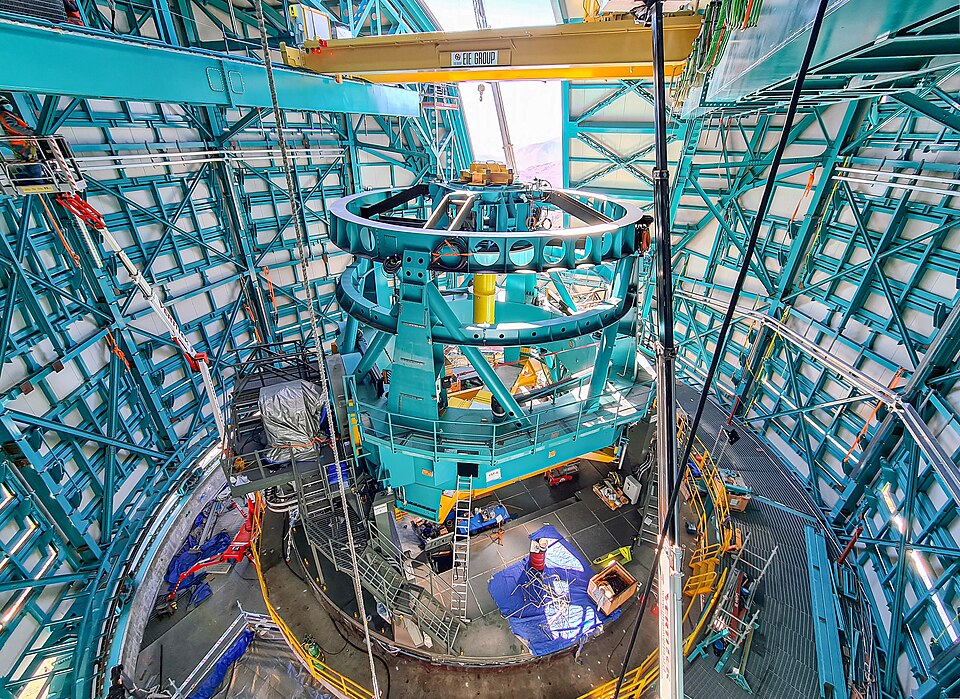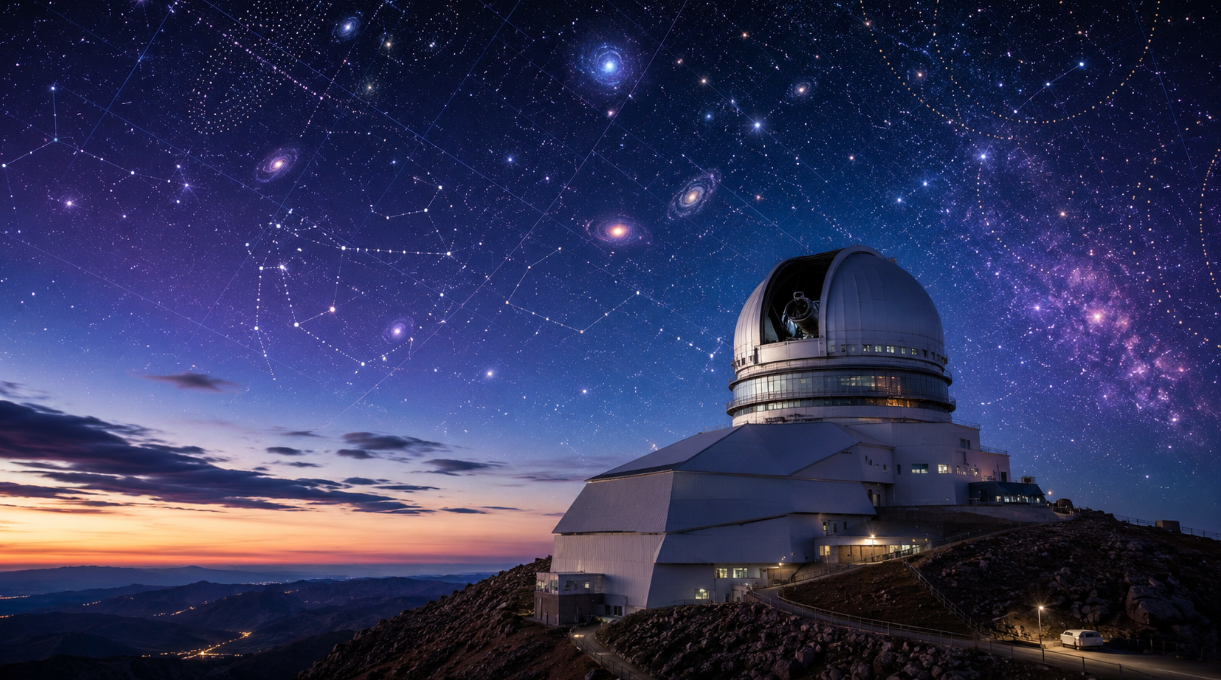
A telescope in Chile has started what scientists are calling one of the most ambitious sky surveys ever attempted. The Vera C. Rubin Observatory officially began its Legacy Survey of Space and Time on June 30, kicking off a decade of nightly observations that researchers say could reshape the understanding of the universe.
According to Engadget, the observatory houses the largest digital camera in the world at 3,200 megapixels. It will capture a new image roughly every 40 seconds, observing the entire southern sky every few nights for the next ten years. Over that span, it will revisit each point in the sky roughly 800 times, allowing scientists to record changes, track cosmic events, and build what one official described as an unprecedented record of the cosmos.
"Today, we begin filming the greatest cosmic movie ever made," said Brian Stone of the National Science Foundation at the survey's launch. The observatory produced its first test images last summer, revealing millions of galaxies and stars along with thousands of previously unseen asteroids.
The survey, known by its acronym LSST, will generate approximately ten terabytes of data per night and about a thousand images every evening. Scientists plan to use the data to investigate some of the deepest unsolved problems in physics, including the nature of dark energy and dark matter, and to track how the universe has expanded over time.
"It is embarking on a mission that will redefine modern cosmology and astrophysics," said Darío Gil, Under Secretary for Science at the U.S. Department of Energy. Gil added, "By seeking to understand the enigmatic phenomena of dark energy and dark matter, we are not just observing the stars; we are striving to grasp the fundamental laws that govern our existence."
The project has been more than two decades in development. Scientists hope that by building what a press release called an "ultrawide, ultrahigh-definition time-lapse record of the universe," the LSST will also improve knowledge of near-Earth asteroids and the outer solar system.
The survey is now underway, with new data flowing nightly from Chile to researchers around the world.