Russian tanks entered battle with a new active protection system designed to shoot down incoming drones. The technology's combat debut in Ukraine produced mixed results.
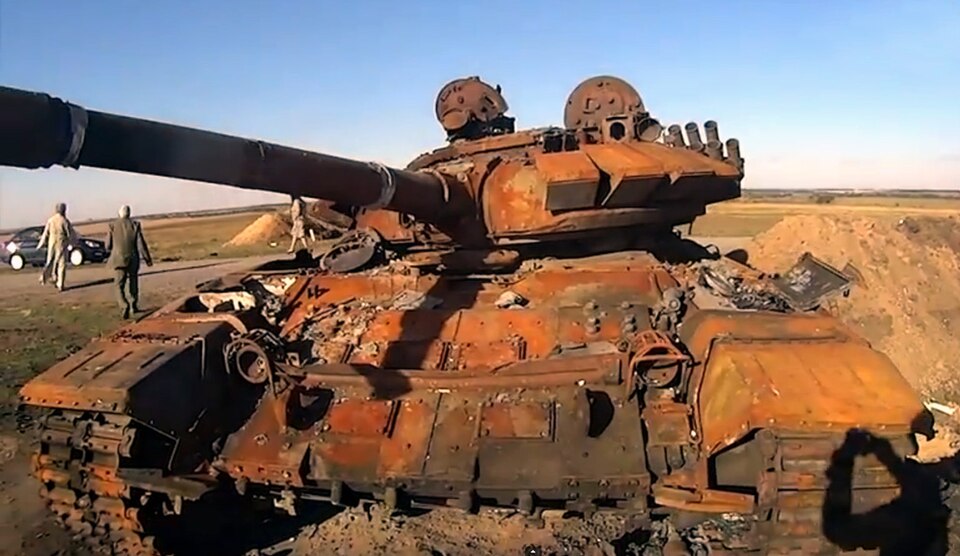
The first documented battlefield appearance of the Arena-M active protection system came on July 22, when Russian forces launched a company-size assault with tanks and other armored vehicles in the Donetsk Oblast of eastern Ukraine. Ukrainian defenders repelled the attack and posted video footage of kamikaze drone strikes destroying at least seven T-72B3A tanks, including some carrying the Arena-M system, according to reporting by Ars Technica, which cited Euromaidan Press.
The Arena-M did not fail entirely. Ukrainian soldiers described the system successfully shooting down some incoming drones during the engagement. To destroy each tank, Ukrainian forces reported needing between 15 and 20 drones per vehicle, a significantly higher number than would be required against tanks without the protection system.
Journalist Rob Lee wrote on X that the incident "demonstrated that the Russian military is learning and is experimenting in how to employ armor on a drone-saturated battlefield." He added that "the Arena-M [active protection system] demonstrated effectiveness and will likely be improved."
The engagement took place more than four years after Russia launched its full-scale invasion of Ukraine in February 2022. Mass armored assaults have become increasingly rare on a battlefield now dominated by drone warfare. The July 22 incident fits into a broader arms race that multiple militaries are navigating as they try to protect expensive main battle tanks against swarms of inexpensive drones.
Russia has tried other approaches. Earlier in the war, Russian forces added physical armor in the form of cage structures welded or bolted onto tanks and other vehicles, which then prompted the Ukrainian military to do the same. Russian forces also constructed so-called turtle tanks covered in metal spikes and other improvised armor. Those add-ons often limited tank mobility and the use of main guns, reducing their battlefield utility even as they offered some protection.
The Arena-M represents a more sophisticated approach, using a detection and intercept system rather than passive armor. Whether Russia can deploy it at scale, and whether Ukrainian drone operators can continue to adapt by overwhelming it with numbers, remains an open question as the war moves into its fifth year.